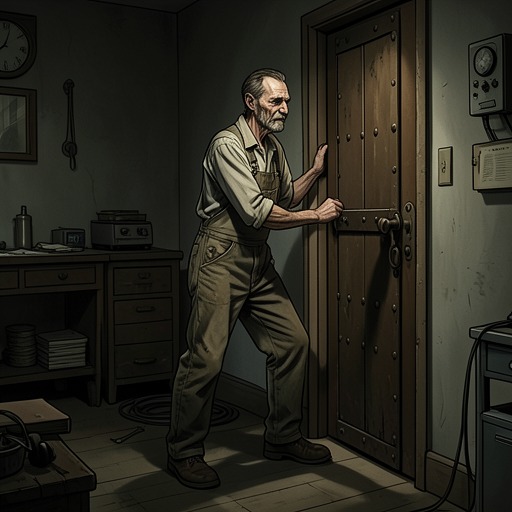
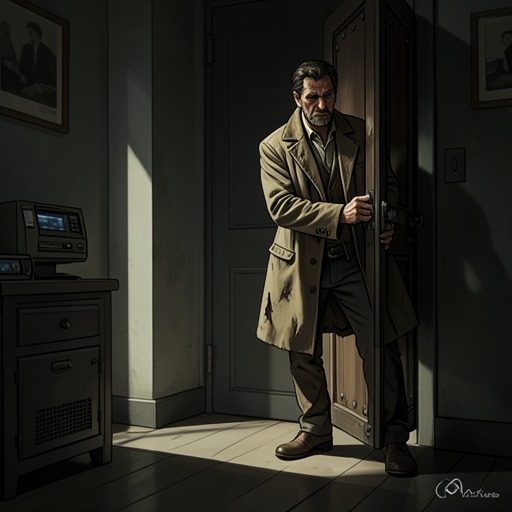
Event 1
Franz Biberkopf’s release from Tegel
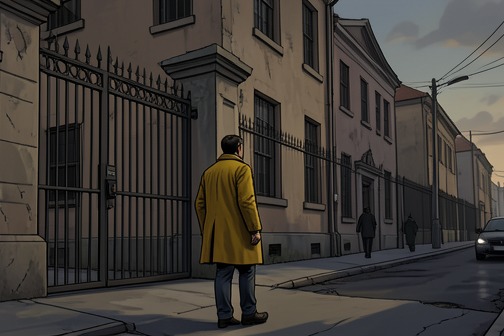
[Franz Biberkopf’s release from Tegel](entity:event-recall-event-dc67a9d99a90) marks the beginning of his difficult return to [Berlin](entity:location-recall-location-berlin-54cb4a75d0f6): freedom arrives as a shock, and the city he must re-enter initially seems more threatening than the prison he has left behind.
## Release and the Threshold
After four years, Franz stands outside [Tegel penitentiary](entity:location-recall-location-ab9b755596e5) in a yellow summer coat, while the prisoners inside continue working. Only the day before, he had been hoeing potato fields in prison clothes. The black iron wings of the gate have closed behind him, but the moment of release brings no uncomplicated relief. He lets tram after tram pass, pressed against the prison’s red wall, unable at first to leave.
The episode calls itself the beginning of punishment. That reversal gives the threshold its force: the sentence is over, yet Franz experiences freedom as something dreadful, a demand to return to a world from which he has been separated. At last he shakes himself, takes a run, and boards the tram into town.
## The City as an Ordeal
The journey does not immediately settle him. As the tram carries him away, Franz keeps turning his head toward the prison until the bend and the buildings block his view. Seestrasse and the changing passengers bring the city into focus, but not into familiarity. He gets off among the crowd, then walks through streets where shops, electric lamps, bars, and the bustle of people overwhelm him.
At Rosenthaler Platz, the cobbles are being torn up and wooden planks lie underfoot. The crowd moves like a swarm; people gather in pairs and threes near [Aschinger’s](entity:location-recall-location-70ec9515718a), smoking and looking through newspapers. Shop-window figures in suits, coats, skirts, stockings, and shoes seem to belong to a world that is active on the surface yet, to Franz, empty behind it. Even ordinary eating unsettles him: he sees a man and woman drinking beer and stabbing meat with forks, and recoils from the sight of bodies continuing their everyday routines as though nothing were wrong.
## Freedom and the Sense of Punishment
Franz’s response is both physical and perceptual. His head spins, his body knots up, and the streets acquire an unreal, lifeless quality. He tries to steady himself by thinking of familiar things, including the cobbler’s shop, but the effort does not restore his footing. The familiar city is now strange; being among people does not make him feel part of their world.
He understands that he cannot go back: he has travelled too far from the prison and must get into this place, deeper into it. At the same time, he recognizes the formal logic of his release—his sentence has been served, and the system had to let him go—without being able to accept its emotional consequence. The gap between legal freedom and his terror of re-entry defines the event’s central reversal.
## A Motif of Force
A later scene on [Alexanderplatz](entity:location-recall-location-9ddde9cf858f) gives this early ordeal a striking formal echo. In the cold, a pile driver pounds a rail into the ground in front of Aschinger’s. The onlookers watch the repeated blows reduce the pile until it finally disappears. The image does not explain Franz’s release, but its relentless impact recalls the event’s language of punishment: a person is thrust back into the city, while the city’s forces seem to press down with their own weight.
Event 2
Franz hears Zannovich’s story in a Jewish home
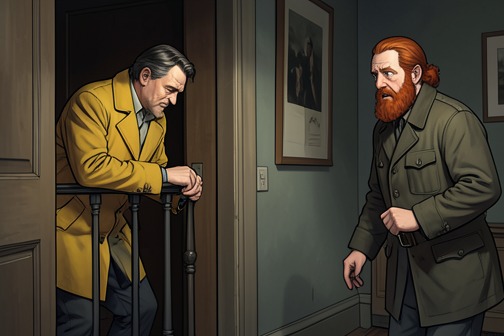
[Franz hears Zannovich’s story in a Jewish home](entity:event-recall-event-9e662c35d351) during his disoriented first days back in [Berlin](entity:location-recall-location-berlin-54cb4a75d0f6). What begins as shelter from the street becomes a confrontation over the difference between a flattering cautionary tale and its humiliating ending. As Eliser recounts how [Stefan Zannovich](entity:character-recall-character-stefan-zannovich-0b49915374e7)’s imposture was exposed, Franz recognizes a parallel between the condemned adventurer and prisoners treated as irredeemable. The story changes the terms of his distress: he argues not only for himself, but for the possibility that people who have been imprisoned can get back on their feet.
## Arrival and Shelter
Newly released and overwhelmed by the city, Franz retreats into building entrances, hunches inside his yellow summer coat, and groans to steady himself. A small, red-bearded Jewish stranger follows and asks whether he is ill. Franz tries to escape the renewed press of Berlin’s streets, moving between doorways and gripping a banister as he insists inwardly that he will not go back outside. The stranger persists, assuring him that the city is large enough for one more person.
The man brings Franz into a home where an old resident objects to the noise because sick grandchildren are resting in the back rooms. The host allows Franz to stay on condition that he be quiet. The welcome is therefore real but precarious: Franz is among strangers, and even the refuge has rules and limited room. Sitting on the sofa, he fixes on the red walls; then he slides down onto the carpet and clutches it, resisting the stranger’s effort to get him up. His fear of being moved on is expressed through his attachment to the floor and his insistence on remaining where he is.
## The Dispute over Zannovich
The household’s uneasy hospitality becomes a quarrel when Eliser, the red-bearded man’s brother-in-law, challenges the story [Nachum](entity:character-recall-character-nachum-643733cb56f3) has apparently told Franz about Zannovich. Eliser accuses Nachum of presenting the adventurer’s apparent success without telling how it ended. His intervention turns an anecdote into a dispute about what a story leaves out: Zannovich may be remembered as a man who prospered through audacity, but Eliser insists that the last part cannot be separated from the rest.
According to Eliser, Zannovich wrote letters to princes and then went to [Brussels](entity:location-recall-location-e9a4f599452a) presenting himself as the Prince of [Albania](entity:location-recall-location-d6037d02c75c). He became involved in high-level politics and offered the government an army of one or two hundred thousand men in the event of war. When officials declined to enter into such an arrangement, he used their letter—addressed to him in princely terms—to borrow money. The scheme collapsed when he could not repay the loans. He was prosecuted in Brussels, where his imposture came to light, and, Eliser says, died in prison by suicide at the age of thirty. Eliser also describes the degrading treatment of his remains after death. The tale’s apparent lesson in boldness is thus revised into a story of exposure, punishment, and posthumous indignity.
## Franz’s Response
Franz asks whether Eliser’s account is true, then presses beyond the fate of Zannovich himself. He wants to know what happened to others like him—not only ministers, bankers, or the officials involved in the case. Nachum and Eliser exchange a look, and Nachum’s answer is that the others watched. The exchange leaves Franz with a picture of people observing a man’s ruin rather than intervening, a response that sharpens his anger at the way institutions and bystanders treat the powerless.
Franz makes the comparison personal by opening his coat and showing how loose his waistcoat and trousers have become after half-starvation. He interprets the change in his body as evidence of how imprisonment breaks a person, and rejects the assumption that everyone who has been jailed is beyond recovery. He condemns the handling of Zannovich’s body as an affront to human dignity, not a just consequence of wrongdoing. His argument does not excuse Zannovich’s fraud; it separates punishment for an act from the claim that a person may therefore be treated as worthless.
## Departure and Narrative Significance
Nachum tries to qualify the lesson, saying that people cannot always do what they wish and that circumstances may turn out differently. Franz accepts the men’s good intentions without accepting that explanation as justice. He shakes Nachum’s hand, gives his name as [Franz Biberkopf](entity:character-recall-character-franz-biberkopf-29eb7a5d3879), and thanks the household for taking him in. Before leaving, he straightens the displaced carpet and moves the table, making a small, practical repair to the room in which he had just been lying on the floor. The gesture contrasts with his earlier helplessness, though it does not erase it.
The men escort him to the door and remain concerned about whether he can walk alone. Franz goes upright across the cluttered yard, stepping over a patch of petrol, and insists that he still has his hands, feet, and eyes. His words mark a brief recovery of agency after the tale has confronted him with degradation and death. Yet he leaves muttering about getting brandy and threatening to strike anyone who approaches him. The ending therefore holds resolve and instability together: he has articulated a claim for the dignity of former prisoners, but remains frightened, combative, and drawn toward drink.
The episode also establishes a pattern in the novel’s use of stories within the city narrative. Zannovich’s life reaches Franz through competing tellers, and the quarrel over what Nachum did or did not relate makes the act of telling part of the event’s meaning. Later biblical episodes, including the account of [Job](entity:character-recall-character-job-8aff911842b2)’s losses and the father-and-son sacrifice scene, likewise place suffering inside inherited narrative frames. Here, however, the immediate force of the embedded tale is social and practical: Franz turns a stranger’s downfall into an argument against treating prisoners as permanently disposable.
Event 3
Franz forces himself on Minna and reenters her life
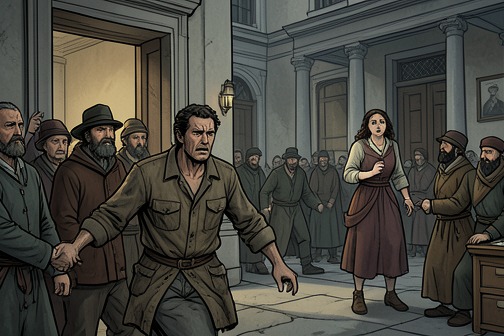
[Franz forces himself on Minna and reenters her life](entity:event-recall-event-ad81dad57705) in a scene where reunion is not consent: newly released from the [Tegel penitentiary](entity:location-recall-location-ab9b755596e5), he goes to the home of [Ida](entity:character-recall-character-ida-af62302a8868)’s sister and assaults her. The episode joins his return to freedom with a repetition of earlier violence, then follows him into a fraught series of visits that leave [Minna](entity:character-recall-character-minna-da125658d71d) distressed and exposed to suspicion. What looks, from Franz’s exhilarated perspective, like coming back to life remains for Minna a source of fear and unhappiness.
## Return to Minna’s home
On the third day after his release, a Wednesday, Franz puts on his jacket and sets out for the place where Minna lives with her husband. He blames Ida for his imprisonment, recalling that he broke Ida’s ribs and went to prison afterward. The narration gives this thought the force of an accusation, but his destination is not Ida: he runs through Invalidenstrasse and Ackerstrasse to Minna’s home, entering the building and finding his way to the second courtyard almost automatically.
The journey is rendered as a return to a past he seems to mistake for the present. Franz thinks that there was never a prison and never a conversation with the Jews in [Dragonerstrasse](entity:location-recall-location-90abd7239850); at Minna’s door, he insists that he has served his time and has been released. His words establish the immediate circumstance of the visit, while his repeated, stumbling movement and the sensation of something stuck to his tongue make his return seem disoriented rather than settled. Minna, by contrast, asks what he wants and warns that someone may have seen him on the stairs.
## Violence and the return of Ida
Minna tells Franz to leave and threatens to call for help. When she invokes her husband’s imminent return, the narration abruptly expands into images of mountains, armies, and an upheaval rising from below. That disturbance cuts across the domestic encounter rather than explaining it away: Minna cannot free her hand, Franz’s eyes are fixed in front of hers, and the image of an express train running from [Berlin](entity:location-recall-location-berlin-54cb4a75d0f6) to Hamburg-Altona turns his physical force into something she cannot stop. She cries for help and lies on the carpet as he presses his face against hers and kisses her while she turns away and begs him for pity.
The narration then makes the connection to Ida explicit through Minna’s recognition of her sister’s place in the scene. Franz seems, in his altered perception, to be holding Ida; the memory of an earlier, affectionate courtship intrudes, recalling [Treptow](entity:location-recall-location-7e67ab46f7da), a fireworks display, and the first kiss with Ida after she won a vase throwing dice. The contrast is severe: the remembered beginning of a relationship is set against Franz’s present assault on Ida’s sister. His apparent happiness cannot make the encounter mutual. Minna resists, then the narration describes her resistance weakening; that change in her physical response does not undo her cries, pleas, or inability to escape his force.
## Franz’s elation and Minna’s fear
Afterward Franz laughs, spins around, and celebrates his release as though the encounter has restored him to life. He calls himself free and human again, while Minna sits looking close to tears and says she will tell her husband. She fears that Franz has left her with a black eye; he responds lightly and tells her not to let her husband bully her. The mismatch between their interpretations is part of the event’s consequence: Franz treats his own exhilaration as the measure of what has happened, whereas Minna must account for a visible injury and the danger of being disbelieved.
Minna orders him out and tells him not to return. The next morning he comes back with a parcel of aprons. She initially refuses to open the door, and he wedges his foot into it; once inside, he throws the parcel into the room and jumps around while she holds a sweeping brush and tries to drive him out. She eventually looks at the cloth and chooses three aprons, but keeps her distance when he takes hold of her hand. The exchange gives Franz a practical reason to return and gives Minna something she accepts, yet neither gesture amounts to a reconciliation: she continues to direct him toward the door.
## A renewed, uneasy attachment
On a later visit, Minna explains why the assault has made her life harder. Her husband did not believe her explanation for the black eye, and red marks on her neck have prompted further questions. Franz suggests an excuse and tells her not to be bullied, again treating the problem chiefly as something she must manage. Minna says his repeated appearances make her miserable and worries that neighbors have seen him. Her concern makes clear that his return is not a private matter with no cost to her: the marks and the visits expose her to suspicion in her household and community.
Franz takes her by the neck, but, when he does not let go or squeeze, begins stroking her. He gently draws her toward the room; she resists, then follows step by step. They sit together on the sofa and talk peacefully for a while, and this time Franz leaves of his own accord. At the door Minna says not to come back while crying and resting her head on his shoulder; when he agrees to stay away, she clutches his hand, then lets go and gently pushes the door closed. The gestures register a real tenderness or attachment in the aftermath, but they do not erase the coercion that began the renewed contact or settle what Minna wants him to do next.
## Significance and immediate aftermath
From the street, Franz sends Minna two large pieces of veal fillet. The gift follows the scene at the door and echoes his repeated attempts to make material offerings part of his return, from the aprons to the food. It cannot resolve the unequal terms of the reunion. The event ends not with a stable restoration of intimacy but with Minna’s conflicting signals, Franz’s parting gesture, and his renewed insistence to himself that he will live decently in Berlin. The oath that follows is set against conduct that has already violated another person’s safety, giving his declared reform a sharp and unresolved contradiction.
Event 4
Franz’s vow to live decently in Berlin
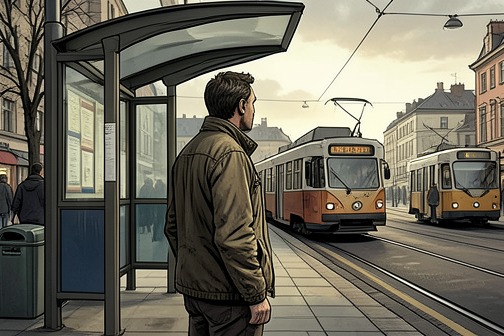
[Franz Biberkopf’s vow to live decently](entity:action-recall-action-franz-biberkopf-s-vow-6fab09904631) in [Berlin](entity:location-recall-location-berlin-54cb4a75d0f6) is made after his release from [Tegel Prison](entity:organization-recall-organization-tegel-prison-87958179be4c) and a painful parting with [Minna](entity:character-recall-character-minna-da125658d71d). It gives words to his determination to begin again, but the narrator soon tests the promise against the material insecurity of life in the city: Franz’s decency lasts only as long as his money does.
## A City That Feels Like Punishment
Newly free, Franz initially cannot make himself leave the prison gate. When he finally boards a tram and is carried into Berlin, the crowd, shops, traffic, and bright windows do not restore his sense of belonging. The city’s movement seems unreal to him; ordinary sights unsettle him, and his fear returns as he walks among strangers. He cannot go back to prison, yet being outside feels less like uncomplicated freedom than like being driven further into a place he does not know how to inhabit.
That disorientation forms the background to his attempt at a new life. The pledge is not made in a moment of secure prosperity. It follows imprisonment, the shock of release, and the struggle to find a place among the city’s people and streets.
## The Parting with Minna
Before the vow, Franz visits Minna. Their meeting begins in tension: she wants him to leave and not return. He takes her by the neck, but the gesture becomes gentle; when he draws her toward the room, she resists and then follows. They sit together peacefully on the sofa and talk, and Franz eventually leaves of his own accord.
At the door, Minna sobs and again tells him not to come back. Their hands remain clasped even after he has stepped outside; she finally lets go and gently closes the door. From the street, Franz sends her two large pieces of veal fillet. The parting is intimate but unresolved: they share tenderness, yet Minna insists on separation. Immediately afterward, the narration presents Franz’s oath to himself and to the world that he will live decently in Berlin, with or without money.
## The Promise and Its Limit
The vow is absolute in its wording, but the narrator’s account of Franz’s circumstances immediately places it under pressure. Franz has sold the furniture from his old room, received a little money from Tegel, and borrowed some from his landlady and his friend [Meck](entity:character-recall-character-meck-6a9d5231fb62). He is standing on his own feet in Berlin, but only precariously; then an official expulsion order arrives, describing his criminal record and declaring him a threat to public safety and morals.
A later retrospective account makes the gap between promise and performance explicit. Franz swears that he will remain decent, and, the narrator says, he does remain so while he has money. When the money runs out, however, Franz has been waiting for the moment to show everyone what a real man is. The pledge therefore marks a genuine aspiration, not a settled transformation: its test is the loss of the modest resources that have helped him keep it.
## Narrative Significance
The scene binds a private farewell to a public declaration. Minna’s hand releases Franz at the door; he then makes himself answerable to the whole world as well as to himself. Yet the narrative does not let the oath stand as a clean ending. It places the official threat of expulsion and the depletion of his money directly against the hope of a decent life, turning the promise into the beginning of a test rather than its resolution.
Event 5
Franz’s expulsion order and welfare supervision
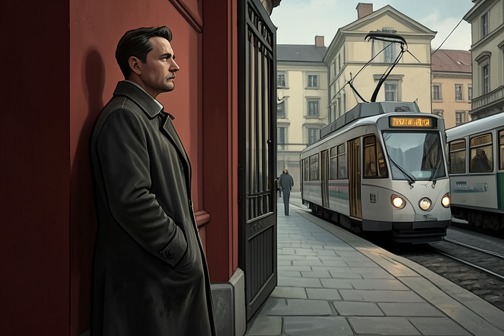
[Franz’s expulsion order and welfare supervision](entity:event-recall-event-efb196816674) turn his attempt to begin again in [Berlin](entity:location-recall-location-berlin-54cb4a75d0f6) into a contest with administrative power. The police classify him as a danger because of his criminal record and give him fourteen days to leave a broad area around the city. A former-prisoner welfare office then takes him under social-work supervision, offering a way to remain in Berlin while making his work and whereabouts subject to regular scrutiny. The sequence replaces the prison gate with new boundaries: Franz is free, but not free to settle where he chooses.
## Background: Freedom and a New Vow
Franz leaves [Tegel penitentiary](entity:location-recall-location-ab9b755596e5) after serving four years. At the gate he hesitates, letting trams pass and pressing himself against the red wall rather than boarding one. The prison is behind him, but release does not immediately feel like uncomplicated freedom. Once he finally gets on a tram and enters the city, the movement of the crowd, the shops, and ordinary street life intensify his disorientation. The narration presents this return as a difficult passage into a world that seems familiar yet strangely lifeless to him.
Franz nevertheless tries to establish himself. He has sold the furniture from his former room, receives a little money from Tegel, and borrows some from his landlady and his friend [Gottlieb Meck](entity:character-recall-character-gottlieb-meck-97b39537b502). After parting from [Minna](entity:character-recall-character-minna-da125658d71d), he swears to himself and to the world that he will live decently in Berlin, whether he has money or not. The official notice arrives against this declaration of purpose: before his promise can become a settled life, the state challenges his right to remain in the city.
## The Order and Its Reach
The notice is a yellow, official paper bearing the authority of the chief of police, Department 5. It cites Franz’s prison sentence for threatening behavior and assault resulting in death, and declares him a threat to public safety and morals. It invokes several laws governing movement and regional administration as the basis for an order expelling him from Berlin and a long list of surrounding districts. The document makes his past record the stated reason for restricting his future movement.
The prohibition extends beyond the city proper. It names Charlottenburg, Neukölln, Schöneberg, Wilmersdorf, Lichtenberg, Stralau, Friedenau, Schmargendorf, Tempelhof, Britz, [Treptow](entity:location-recall-location-7e67ab46f7da), Reinickendorf, [Weißensee](entity:location-recall-location-3ad8e42558c9), Pankow, and Tegel among the excluded areas. It also warns that settling in named neighboring places, including [Potsdam](entity:location-recall-location-d1a1a7572934), Spandau, Friedrichsfelde, Friedrichshagen, [Rahnsdorf](entity:location-recall-location-a361bf7bd9f3), Cöpenick, Steglitz, Zehlendorf, Teltow, and [Wannsee](entity:location-recall-location-5acae13f677f), would bring another expulsion. Franz is given fourteen days to leave. If he is found in, or returns to, the prohibited area afterward, the notice prescribes a fine of 100 marks or, if he cannot pay, ten days in custody.
The form’s accumulation of districts, deadlines, legal references, and penalties gives the order a reach that exceeds a simple instruction to move house. It maps the places where Franz may not live and specifies the punishment awaiting him if he stays. His declared intention to live decently does not erase his file or alter the authority’s assessment of him. The collision is therefore both personal and administrative: he claims a future in Berlin, while the document treats his past as grounds to exclude him.
## Welfare Supervision as an Alternative
Shaken by the order, Franz goes to the former-prisoners welfare center at 1 Grünerstrasse, near the S-Bahn and [Alexanderplatz](entity:location-recall-location-9ddde9cf858f). Staff question him and have him sign a statement that he has placed himself under the supervision of their social worker. They say they will investigate whether he is working and require him to report to the office every month. The arrangement gives him a practical route around immediate expulsion, but it is not unrestricted independence: his conduct and employment are to be checked, and his continuing presence is tied to a regular reporting obligation.
The narrator briskly describes the matter as settled, contrasting the frightening scale of the police notice with the office’s routine procedure. Yet the contrast does not make the surveillance disappear. The police order has defined Franz as a risk; welfare supervision allows him to stay while continuing to monitor him. The shift is from a threatened removal to conditional oversight, not from institutional control to complete freedom.
## Immediate Aftermath and Significance
For a time Franz takes the arrangement as the beginning of a new life. He eats meat, potatoes, and drinks beer for four weeks, then visits the Jewish acquaintances in [Dragonerstrasse](entity:location-recall-location-90abd7239850) to thank them. They do not recognize him at first, so changed is his appearance. When asked about his business, he says he has none and can manage, claiming to have savings. He recalls the story of [Stefan Zannovich](entity:character-recall-character-stefan-zannovich-0b49915374e7) and speaks of the possibility of marrying, but these remarks do not establish a new occupation or a settled plan. His confidence sits uneasily beside the notice’s demand that he work and report each month.
The sequence also gives the novel’s later return to Tegel a different weight. In a later passage, Franz rides the number 41 tram back toward the prison and looks at its red walls as part of his own life, rather than simply turning away from them at the moment of release. That later journey does not undo the order or the welfare arrangement; it shows how the apparent fresh start remains entangled with the institutions and history he hoped to leave behind. The expulsion notice is thus a decisive limit on Franz’s vow: Berlin is the place where he intends to live decently, but access to that life depends on administrative permission and continuing supervision.
Event 6
Franz takes up street trading and newspaper selling
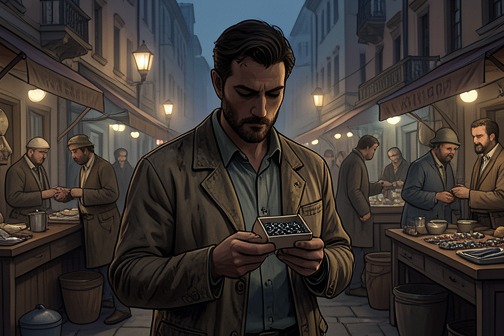
[Franz Biberkopf](entity:character-recall-character-franz-biberkopf-29eb7a5d3879)’s entry into street trading and newspaper selling is a sequence of practical experiments rather than a settled career: advised by [Meck](entity:character-recall-character-meck-6a9d5231fb62) to try itinerant trade, he joins a traders’ association, sells necktie-fasteners in Rosenthaler Platz, and then turns toward newspapers. Along the way, the attempt to earn a living exposes how precarious and improvised his position is. He has limited resources, depends in part on [Lina](entity:character-recall-character-lina-eb2d676d2420)’s help, and discovers that even the paperwork meant to establish his trade records a business he never chose.
## A livelihood in a precarious city
Meck presents trade as an alternative to both unemployment and factory work. In his view, the cold makes digging work impractical, while itinerant selling can be done in [Berlin](entity:location-recall-location-berlin-54cb4a75d0f6) or the countryside and can provide a living. His advice is not an abstract economic theory: he points to the men around them as evidence that traders can appear respectable and not visibly starved. Franz objects to Meck’s joking invocation of respectability, but the conversation places the practical question of earning money alongside the social desire to live decently.
The traders’ meeting gives that question a collective dimension. Its participants complain that local authorities have restricted where they can sell, while existing market arrangements continue to burden other vendors as well. At Magazinplatz, poor takings and wet weather have made trading scarcely worthwhile; some sellers have earned too little to cover the cost of getting themselves and their trailers home. Rail fares, stall charges, attendance fees, and the cost of moving goods all reduce the proceeds. The dispute shows that a stallholder’s livelihood depends not only on what can be sold, but also on access to a site and the expenses imposed before a sale is made.
## Joining the association
Franz approaches the meeting’s hunchbacked speaker to praise his argument against the city council. The speaker asks whether Franz belongs to the union and invites him to join. Franz sits at the committee table among the red-faced men, exchanges greetings, receives a certificate, and promises to pay his dues by the first of the following month. The exchange is quick: approval of the speaker’s case becomes membership, and membership becomes a document in Franz’s hand.
The certificate, however, identifies him as a textile dealer. Franz says that he had mentioned stockings and pinafores, not textiles, and that the association’s representative insisted on the broader classification. Meck makes the mismatch comic by imagining Franz selling household goods or even cattle under a certificate that names a different trade. Beneath the joke is a small but telling uncertainty: Franz has joined an organization before settling precisely what he will sell. He waves the certificate to Meck as proof of belonging to the Berlin regional branch, while also noting that he will not pay until the promised date.
A later reflection emphasizes the practical knowledge he believes he gains from people who talk to him and explain things. Money, brandy, and a few pence in union dues are not, in that account, the central measure; what matters is common sense and understanding what is happening around him. The lesson fits his new circumstances. Trade requires not just goods and a certificate, but the ability to read other people, rules, costs, and opportunities before they leave him at a disadvantage.
## From hawking goods to newspapers
After two days the weather grows warmer, but Franz has sold his overcoat. He is wearing thick underclothes Lina obtained for him and stands outside Fabisch and Company, a clothing shop in Rosenthaler Platz, touting necktie-fasteners. The scene makes his livelihood tangible: he has a particular item to sell, a place from which to attract customers, and a sharply reduced reserve of clothing. Lina’s assistance with the underclothes is part of the practical support surrounding his attempt to get by.
Street trading does not hold him for long. Watching the life of the street between [Alexanderplatz](entity:location-recall-location-9ddde9cf858f) and Rosenthaler Platz with Lina, Franz decides that he would rather deal in newspapers. The decision comes from what he has been told, Lina’s ability to help, and his own sense that the work appeals to him. The repeated route and routine of moving around the city make selling seem accessible, but the change is still his own initiative: he considers the idea, sketches on a beer-wet tabletop, and says he will register somewhere to begin.
His departure turns intention into action. At noon in Rosenthaler Platz, Lina brings him sandwiches while he is standing at his selling place. Franz leaves the case, rack, and cardboard box in her arms and goes to ask about newspapers. The objects mark the transition between forms of street work: instead of continuing to tend the display he has been using, he entrusts its equipment to Lina and sets out to arrange a new line of trade.
## An improvised start
The episode ends not with a confirmed newspaper business or a demonstrated income, but with Franz going to inquire about how to enter the trade. Its decisive change is a shift in direction: from Meck’s general recommendation of itinerant selling, through a brief effort hawking necktie-fasteners, to a more deliberate plan to sell newspapers. The association certificate promises institutional recognition, yet its mistaken description of Franz’s goods shows how uncertain that recognition is. His movement between stalls, paperwork, and registration captures a livelihood assembled one decision at a time, under pressure from costs and limited means.
Event 7
Franz turns to selling populist newspapers and breaks with Dreske
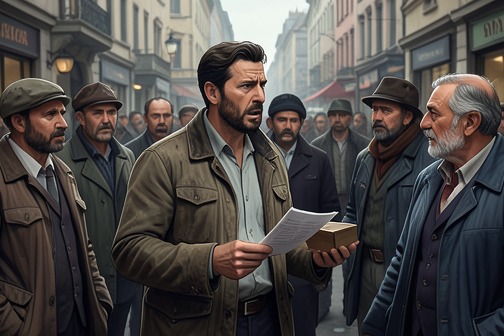
[Franz Biberkopf](entity:character-recall-character-franz-biberkopf-29eb7a5d3879)’s political turn becomes a personal break when his populist newspaper selling brings him into conflict with [Georg](entity:character-recall-character-georg-0017986e531f) Dreske, a former comrade from the war. Their argument begins with Franz’s armband and widens into a dispute over law and order, the meaning of revolution, and why their earlier collective efforts failed. The separation is not resolved: Franz leaves with his political certainty intact, while Dreske’s appeal to solidarity remains unanswered.
## Franz’s newspaper trade and political outlook
Franz now sells only populist newspapers. He says he has nothing against Jews, but supports law and order, extending that preference even to the imagined order of paradise. His political identity is therefore presented not as a detailed program but as a strong attachment to order and a mistrust of revolutionary politics. He has also seen the [Stahlhelm](entity:organization-recall-organization-9e599a575f84) and its leaders, whose appearance and organization impress him. The novel associates his stance with public encounters: he sells at the exit of the underground station at [Potsdamer Platz](entity:location-recall-location-f9bcba9efaa5) and in the Friedrichstrasse passage below [Alexanderplatz](entity:location-recall-location-9ddde9cf858f) station, and shares an opinion expressed by a war veteran he had encountered at [Neue Welt](entity:location-recall-location-fc9de4b0ff44).
This public-facing trade makes his convictions part of his daily work. Franz carries political newspapers into streets and passages where people move through the city, and the papers give his outlook a visible, repeatable form. Yet the encounter with Dreske shows that selling them is not merely a way to earn a living. The armband identifies Franz to people who know him, making his chosen affiliation a matter for argument among former comrades.
## The armband in the bar
In [Elsasser Strasse](entity:location-recall-location-elsasser-stra-e-cfd3b3840e34), union members laugh when Franz enters a bar at noon. He has kept his armband in his pocket, apparently to avoid drawing attention to it; they take it out again. Franz dismisses them. The small gesture turns an item of political display into the immediate cause of a larger dispute: what does the emblem mean, and what has Franz’s change of allegiance accomplished?
Dreske, a 39-year-old grinder who is locked out of work, waves the armband and challenges Franz to account for it. Franz replies by comparing political colors to cigar bands: a label does not improve what is inside. What matters, he argues, is the substance beneath the marking. He also presents himself as someone who has experienced the same upheavals as the others rather than as an outsider to their history. The comparison lets him question the armband’s practical value without admitting that it has no significance to him; he still retrieves it and puts it away in his jacket.
Dreske answers calmly. He has known Franz since they fought together at Arras and Kovno, and tells him that he has been deceived, not only by the armband but by the larger political choice it represents. His criticism carries the weight of shared experience: he is not addressing a stranger whose past can be dismissed, but a man whose history he believes should have taught him better.
## Disputed memories of war and revolution
The argument turns on what the comrades’ shared past proves. Franz recalls the years after the war, when inflation, paper money, and shortages of meat and butter followed the military experience. He treats these conditions as evidence that political upheaval did not deliver the transformation its advocates promised. In his account, the war and the postwar crisis alike left ordinary people running about without changing the outcome; he also recalls taking potatoes from farmers. His recollection reduces grand political claims to the hardship and improvisation people experienced on the ground.
The discussion then moves to revolution. Franz ridicules it as talk that ends with the flag put away and ordinary domestic life resumed. He contrasts revolutionary declarations with what he sees as the disorder of the previous upheavals. The opposing account in the conversation stresses betrayal by the leaders in 1918 and 1919, including the murders of Karl Liebknecht and Rosa Luxemburg, and points to Lenin’s Russia as an example of people acting together. The two positions thus assign responsibility differently: one emphasizes failed discipline and the inability to achieve anything lasting; the other insists that collective action was betrayed and that solidarity remains possible.
Franz does not answer that appeal by offering a rival account of how solidarity might work. He says that the group’s present effort will come to nothing, while declining to claim that his own armband will necessarily achieve anything. He invokes peace and the freedom of people to work, then dismisses the old political dispute as something he and his companions should no longer have to endure. His language sounds conciliatory, but its effect is separation: he will not join their project or accept their reading of the past.
## The break with Dreske
Dreske’s response is hesitant. He swallows his beer, moistens his mouth, and stammers as he speaks. His manner contrasts with the scale of the issues under discussion: instead of a forceful public speech, the appeal for continued solidarity comes from a former comrade struggling to make himself heard in a bar. He wishes Franz luck with his new life, then notes that Franz will not join the customary January march to Friedrichsfelde in memory of Karl Liebknecht and Rosa Luxemburg. The absence is a concrete consequence of Franz’s political turn, separating him from a shared ritual as well as from Dreske’s interpretation of history.
Franz picks up the armband, puts it into his windcheater jacket, and walks slowly back to his table. He does not reconcile with Dreske or reconsider his newspaper trade. The scene closes on the practical continuation of his choice: he will go on selling his papers. The movement from a visible emblem to one tucked away in a pocket captures the unresolved quality of the break. Franz does not discard the armband, but neither does he restore his former comradeship; the object remains with him as the argument ends in withdrawal rather than agreement.
Event 8
Franz leaves Henschke’s tavern after a clash with left-wing patrons
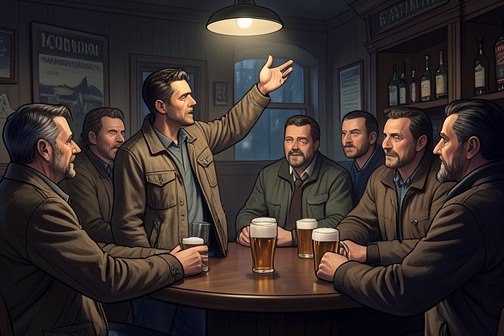
[The confrontation at Henschke’s pub](entity:action-recall-action-the-confrontation-at-h-6af285d6ee83) turns a quiet evening into a rupture between [Franz Biberkopf](entity:character-recall-character-franz-biberkopf-29eb7a5d3879) and [Georg](entity:character-recall-character-georg-0017986e531f) Dreske. A dispute over a meal and an armband becomes a clash over political allegiance, wartime sacrifice, and revolutionary change. Franz leaves the pub shaken, his attempt to explain himself unresolved; outside, he meets [Lina](entity:character-recall-character-lina-eb2d676d2420) and chooses to continue the evening elsewhere.
## Setting and Buildup
When Franz enters, the pub is nearly empty. Georg Dreske, young Richard, and three others sit at a separate table; Franz knows only some of them. Two newcomers fall silent as he comes in, then watch him while leaning toward each other and clinking their glasses. The bald-headed landlord, Henschke, stays occupied at the beer tap and sink rather than moving among his customers. The room’s quiet is strained from the start, and the newcomers’ attention makes Franz’s arrival feel like an intrusion before anyone has openly challenged him.
The men begin singing the Internationale. The scene places the song amid ordinary pub drinking, with talk of other songs and drinking giving way to a more pointed expression of group identity. Franz is thinking about a poem and about the men outside, and is called on to provide a song after an earlier promise. Before the request can settle into a shared performance, one of the newcomers crosses the room. His posture and dress—the tall figure buttons his jacket and tightens his belt—turn the approach into a deliberate challenge.
The first exchange is not yet an argument about parties. The newcomer sits astride Franz’s table and asks what he has eaten. Franz answers that it was bread and cheese, then responds to the intrusion with an insult. The mundane meal becomes the pretext for a contest over who may question whom. Franz rises, and the confrontation shifts from words to action: he tips the table, sending the man, plates, a beer mug, and a mustard pot to the floor. A plate breaks. Henschke immediately stamps on the pieces and warns that fighting is not permitted in his pub, while the newcomer insists that the matter is about paying for what has been broken.
## The Political Clash
The argument quickly leaves the damaged table behind. The tall man calls Franz a fascist and demands his armband, accusing him of carrying the swastika emblem associated with the political group he names. These are the challenger’s accusations, not a neutral account of what Franz carries. The demand makes a visible object the focus of a larger dispute: the men treat it as evidence of Franz’s political allegiance, while Franz answers by claiming the authority of his own experience and convictions.
Franz becomes increasingly agitated. He speaks over the others and defends the soldiers who, he says, went into the trenches for the people now stirring up trouble. His speech insists on order and condemns those who would bring about another revolution; it ends in a threat against revolutionaries. The pub’s tumult and Franz’s loud, disordered delivery present his defense as both forceful and unstable. His appeal to wartime sacrifice does not bridge the political divide. Instead, the scene makes clear how his demand for order places him against the men singing the socialist anthem.
The response is not a decisive victory for either side. The others fall quiet; the tall man remains at the back, snorting and winking at Dreske. Franz’s outburst is followed by a sudden inward collapse of tension: the dark cloud moves away, and his face turns pale and slack. The narration then sets the pub’s argument against a stark account of economic pressure: timber magnates demand profits, Krupp’s pensioners starve, and unemployment stands at one and a half million, up by 226,000 in a fortnight. That insertion widens the scene beyond the men’s personal antagonism, placing their talk of order and revolution beside material hardship without resolving their disagreement.
## Departure and Immediate Aftermath
Dreske tells Franz to leave, saying that he has talked enough. Franz takes his cap and apologizes that they are parting this way over something like this. He holds out his hand, but Dreske does not take it and sits down instead. The offered handshake gives the scene a clear personal consequence: the dispute does not end with the broken plate or the landlord’s warning, but with a gesture of reconciliation left unanswered.
Outside, Franz is in the cold, and Lina has just arrived in front of the pub. He walks slowly and would rather return to explain why he thinks the others are wrong. Yet he also recasts the men as hot-blooded and inexperienced, imagining that prison or other hard experience would make them understand. His attempt to soften his judgment does not bring him back inside or repair the separation from Dreske. He tells Lina that he has had enough of smoky pubs and speaks of a small goldfinch that might die while the people inside do not care. The remark shifts his attention from political confrontation toward a vulnerable living creature, but it does not undo what has just happened.
Franz and Lina take a tram to Walterchens Ballhaus to go dancing. Lina has brought him a crumpled Sunday copy of the Peace Messenger, though Franz says he does not sell that paper. He squeezes her hand and approves of the paper’s name and its headline, which links unhappiness with the possibility of happiness. The sequence ends not with renewed political agreement, but with a change of company and setting: from a pub where a song divides the room to a night out with Lina.
## Place in the Novel’s Urban World
The scene belongs to a novel attentive to how people gather, consume entertainment, and encounter public life in [Berlin](entity:location-recall-location-berlin-54cb4a75d0f6). Elsewhere, a cinema in Münzstrasse draws a packed audience to a noisy film, where laughter spreads through the room; a dance venue at [Neue Welt](entity:location-recall-location-fc9de4b0ff44) offers merrymaking and a prize for the slimmest calves. Those scenes show leisure organized around shared spectacles and repeated pleasures. At Henschke’s, collective singing also brings people together, but the song makes political difference audible rather than dissolving it into entertainment.
The pub episode also sits beside the book’s recurring images of force and repetition. At [Alexanderplatz](entity:location-recall-location-9ddde9cf858f), spectators watch a pile driver repeatedly batter a pile until it disappears; the scene of the pub, by contrast, shows a social collision that cannot be neatly driven to an end. Franz’s demand for order, the newcomers’ accusation, the landlord’s intervention, and Dreske’s refusal of a handshake leave the conflict unresolved. The evening’s final movement toward dancing offers a change of scene, not a settled reconciliation or a resolution of the political divisions that produced the confrontation.
Event 9
Agamemnon’s return from Troy
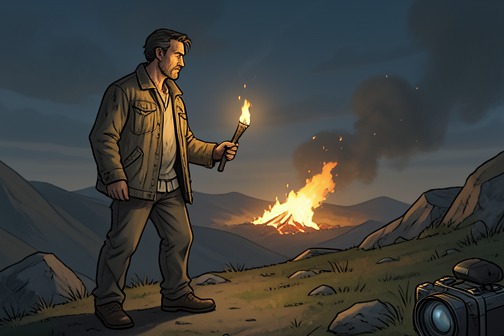
[Agamemnon’s return from Troy](entity:event-recall-event-agamemnon-s-return-from-a5252b99fe68) is presented as a homecoming whose public blaze of celebration gives way to private murder. The beacon fires carry news across distances and gather people into shared excitement, but once Agamemnon reaches home, Clytemnestra traps him in a bath and kills him with an axe. The episode links the spectacle of return to the violence that follows it, and becomes a classical counterpart to the novel’s account of violence in modern [Berlin](entity:location-recall-location-berlin-54cb4a75d0f6).
## The Beacon and the News
The account begins with a pinewood torch burning above Lake Gorgopus. A watchman sees it, lights another beacon, and passes the news onward; the signal leaps across the sea toward Arachnaeus. Each relay enlarges the celebration: what begins with one watcher’s joy becomes a message shared by thousands, then by a hundred thousand across the gulf. The fire does more than transmit information; its blaze makes the news feel immediate and collective.
That ancient signal is contrasted with the narrator’s description of wireless telegraphy. Modern transmitters use high-frequency alternating currents and tuned circuits to produce radio waves; an electron tube and microphone reproduce sound at a distance. The system works, but the account treats it as technically impressive and emotionally flat. Against it, the pinewood torch seems to burn, speak, and feel wherever its message travels. The contrast makes Agamemnon’s homecoming not just an event announced to a crowd, but a shared eruption of anticipation.
## Homecoming and Murder
The narration cuts from the expanding celebration to Agamemnon at home. The change is abrupt: the returning king has scarcely entered the house before Clytemnestra puts him in a bath and throws a fishing net over him, leaving him unable to act. She has brought an axe, and kills him with successive blows. The homecoming’s public jubilation thus ends in a confined domestic attack; the same return that had been carried across a gulf in fire ends with Agamemnon trapped in water and netting.
The account gives Clytemnestra the opportunity to announce what she has done. The senators are troubled, yet answer by remarking on her boldness. Their response does not undo the killing or restore the celebratory meaning of the return. Instead, it leaves the violence exposed as the episode’s decisive reversal: the anticipated arrival of Agamemnon becomes his death at the hands of the woman waiting for him at home.
## Consequences and Narrative Significance
The narration extends the murder into a further cycle of violence. Clytemnestra’s son Orestes later kills her, and the [Furies](entity:creature-recall-creature-furies-e837481f2851) torment him afterward. The homecoming is therefore not an isolated end point: Agamemnon’s death becomes part of a sequence in which violence passes from one generation and victim to the next.
The classical episode also frames the narrative’s turn to [Franz Biberkopf](entity:character-recall-character-franz-biberkopf-29eb7a5d3879) and [Ida](entity:character-recall-character-ida-af62302a8868). Immediately after recounting Agamemnon’s death and its aftermath, the narrator says that Ida, too, is dead, and recalls that she died hating Franz. The juxtaposition places an ancient royal murder beside the consequences of violence in Franz’s life, without making the two stories identical. The blazing beacon and the murdered homecomer give way to Ida’s death in modern Berlin, carrying the passage from collective mythic spectacle to intimate human loss.
Event 10
Orestes kills Clytemnestra
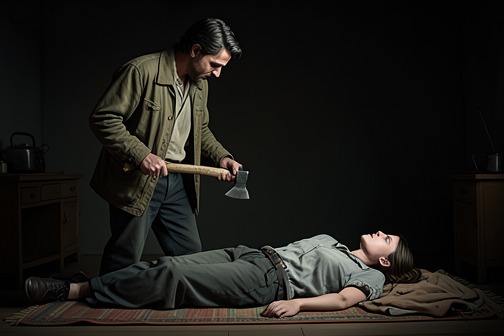
[Orestes kills Clytemnestra](entity:event-recall-event-3a9d9f22fdd7), his mother, in the aftermath of her murder of Agamemnon. The brief mythic account makes the killing a link in a cycle of violence within one family: Clytemnestra dies at the hands of the son born of her union with Agamemnon, and Orestes becomes the next object of punishment.
## Place in the Mythic Sequence
The account first identifies Orestes as the child born to Clytemnestra and Agamemnon. After Clytemnestra kills Agamemnon, the narrative turns to the son’s later act against her. The sequence binds the two deaths together rather than presenting Orestes’ deed as an isolated event: violence passes from one generation to the next.
## The Matricide and Its Aftermath
Orestes kills Clytemnestra, and the account immediately carries the consequence beyond the act itself: the [Furies](entity:creature-recall-creature-furies-e837481f2851) torment him afterward. The killing therefore does not settle the family’s violence or end its consequences. Instead, the son who kills his mother becomes subject to further pursuit and suffering.
## Narrative Significance
Set beside the story of Agamemnon’s return and death, Orestes’ act supplies a compressed classical parallel for a life marked by violence and its aftermath. The account moves from a mother’s killing of her husband to a son’s killing of his mother, then to the Furies’ punishment of the son. Its economy makes the succession itself decisive: each death gives way to another consequence rather than restoring order.
Event 11
Fall of Man

The [Fall of Man](entity:event-recall-event-663619b499e1) appears as a compact biblical account that turns the abundance of Paradise into a world marked by curse, sorrow, and toil. Its placement beside [Franz Biberkopf](entity:character-recall-character-franz-biberkopf-29eb7a5d3879)’s rejection of work gives the ancient sentence on human labor a pointed resonance in the novel’s present-day scene.
## Paradise and the Serpent
The account begins with a flourishing landscape: waters teem with fish, trees spring from the soil, and animals populate land, sea, and sky. This ordered abundance is disturbed by a rustling in a tree. A serpent comes down and speaks to Adam and Eve; it is described as more cunning than the beasts of the field. The passage establishes the serpent’s arrival as the break in an otherwise teeming, harmonious world, though it does not narrate the pair’s response or specify the act that leads to the subsequent curse.
## The Sentence of Toil and Sorrow
The serpent is cursed to crawl on its belly and eat dust, and enmity is set between it and the woman. Eve is told that childbirth will bring sorrow. The ground is cursed for Adam’s sake: it will produce thorns and thistles, and he will eat the herb of the field. The consequences named here extend beyond a single punishment. The account links human life to painful reproduction and difficult subsistence, while making the soil itself resistant to effortless provision.
## The Myth beside Franz’s Refusal
The biblical passage is interwoven with a scene in which Franz sits among men absorbed in talk of wealth and declares that no more work will be done. The juxtaposition does not make the myth the cause of his decision; instead, it places his refusal beside a foundational account of toil as a condition of human life. The sentence that the ground will yield thorns and thistles sharpens the contrast between the biblical burden of labor and Franz’s insistence that he will not lift a finger.
An iron crowbar is in Franz’s hands as he sits and then leaves the house. Afterward, he recalls having gone to see [Minna](entity:character-recall-character-minna-da125658d71d) and proposes going to her again. The passage thus moves from a mythic explanation of hardship back into the concrete objects and unsettled relationships of Franz’s life, without resolving the tension between the curse of labor and his refusal of it.
Event 12
Job’s trial and healing

[Job’s trial and healing](entity:event-recall-event-9cffbf3bf8b8) turns total dispossession into a struggle over whether the sufferer can accept help. [Job](entity:character-recall-character-job-8aff911842b2) lies in a cabbage patch beside a chained watchdog, among fields and animals that were once his, while a voice presses him to recognize both his loss and his refusal. He asks to be healed even if the speaker is Satan; after a night of cries and denial, he falls silent, and his first boils heal. The episode presents recovery not as a simple reward but as a passage through shame, resistance, and the terrifying possibility of dependence.
## Loss and abasement
Job has lost everything a person can lose. He lies in a cabbage patch near the dog’s kennel, keeping just beyond the animal’s reach. The watchdog barks, growls, strains at its chain, and snaps when Job tries to move. This immediate danger makes his helplessness bodily and exposed: he cannot rise without provoking the creature that guards the place where he has been cast down.
The landscape is a catalogue of former ownership turned into estrangement. The palace, gardens, and fields once belonged to Job, as did the goats driven past him to graze. Yet he no longer recognizes the watchdog or the cabbage patch, and the voice emphasizes that he cannot recognize the goats either. Loss has not merely removed his possessions; it has made familiar things strange and placed him beneath the world he once commanded. The episode’s setting therefore gives dispossession a visible shape: a former owner lies on the ground beside the remains of his estate, unable to claim or even fully identify it.
## The voice and the plea for healing
The voice questions Job about those he mourns, asking whether he laments his sons and then his daughters. Job answers that no one need pray for him when he is dead: he calls himself poison to the earth and imagines that people will vomit after he is gone. His suffering includes not only bodily affliction but a conviction that his existence has become repellent and should be forgotten. The voice identifies his deepest pain as his unwillingness to be weak: he wants either to fight his condition or to be entirely obliterated, with thought itself gone.
Against that choice between resistance and annihilation, Job finally makes a direct appeal. He has asked the voice many questions and now asks it to heal him, whether it is Satan, God, an angel, or a human being. When the voice identifies itself as Satan, Job does not withdraw the request; he repeats it. The exchange makes the plea more than a confident appeal to a known source of mercy. Job asks for healing despite uncertainty about who offers it, and despite the possibility that aid may come from an adversary.
## Resistance, silence, and change
The voice asks whether Job will accept healing from anyone at all. Job continues to demand healing, but the voice grows weaker and withdraws. The watchdog barks, and Job listens fearfully, believing he must either be healed or die. A terrible night follows. The voice insists that God and Satan, angels and human beings all want to help him, though for different reasons, while Job repeatedly answers no and tries to shout it down. Its words rise above his cries and remain one step ahead of him through the night.
Toward morning, Job falls face down. He is silent, and on that day his first boils heal. The sequence does not describe the disappearance of all his afflictions or explain the mechanics of his cure; it marks a first change after his prolonged refusal and exhaustion. That limited outcome matters. The episode connects healing to the end of the night’s contest, but does not turn recovery into an instant or complete restoration. Silence, rather than a triumphant declaration, is the point at which the first visible sign of healing appears.
## Biblical pattern and the novel’s framing
The episode’s pattern returns in the vision of a father and son climbing through mountains and valleys toward an altar. The son fears the knife and the father says that the Lord commands the sacrifice; the son eventually offers his neck willingly, and the Lord calls for the knife to be cast away. Both figures fall on their faces, and both are permitted to live. This later scene does not reproduce Job’s trial, but it shares its pressure on willingness, fear, obedience, and survival. In each, life continues after a confrontation with what seems to demand submission to death.
The Job episode also sits within a novel that places biblical language beside the precarious lives of [Franz Biberkopf](entity:character-recall-character-franz-biberkopf-29eb7a5d3879) and [Mieze](entity:character-recall-character-mieze-07daf8e08629). In one scene, Franz falls asleep while thinking about Tegel and sees the mountain journey; the sacred narrative enters a disordered present through sleep rather than through a formal explanation. Elsewhere, the figure of [Death](entity:character-recall-character-b309ce745d9e) sings that his task is to preserve, unsettling the expected division between destruction and renewal. These recurrences give Job’s healing a wider narrative resonance: suffering is shown as a trial in which help can be resisted, survival can follow terror, and deliverance remains partial rather than securely explained.
Event 13
Franz Biberkopf kills Ida
[Franz Biberkopf kills Ida](entity:event-recall-event-091e6c5990e3), whose death becomes a measure of the violence’s lasting consequences. She dies five weeks after the attack at Friedrichshain hospital; the narrative then contrasts her burial and enduring hatred of Franz with his eventual release from prison.
Event 14
Franz’s release from prison
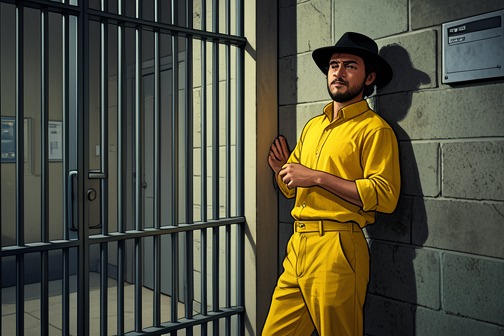
[Franz Biberkopf’s release from Tegel](entity:event-recall-event-dc67a9d99a90) Prison is presented not as a triumphant return to freedom but as a passage into fear, estrangement, and the demands of city life. After four years inside, he hesitates at the prison gate, then rides into [Berlin](entity:location-recall-location-berlin-54cb4a75d0f6) and finds that the ordinary world seems difficult to inhabit. The event’s force lies in this reversal: the prison door opens, but freedom does not immediately feel like release.
## The threshold at Tegel
The day before, Franz had been hoeing potato fields with the other prisoners in prison clothing. Now he wears a yellow summer coat and stands outside the gate, with the black iron doors closed behind him. Although his sentence is over, he does not move. Trams pass while he presses his back against the prison wall, and a guard walks by more than once. The narrative stresses his reluctance to cross the threshold: the outside world is not yet a place he can simply enter.
Eventually Franz makes himself board a tram. The departure is described as painful and involuntary, as if the vehicle were pulling him away before he was ready. He keeps turning toward the red wall until the tram rounds a bend and trees and houses block his view. The separation is therefore both physical and psychological: Tegel recedes from sight, but the release does not dissolve his attachment to the place or his apprehension about what comes next.
## A city made strange
The tram carries Franz through Seestrasse, where passengers get on and off and newspaper sellers call out their wares. Police uniforms, traffic, shop windows, and the movement of strangers arrive as a rush of unfamiliar stimuli. Franz gets off and finds himself among a crowd, trying to stand upright and compose himself. At Rosenthaler Platz, cobbles are being torn up and wooden planks laid down; he walks across them with the people around him, hoping that mingling with the crowd will quiet his fear.
Instead, the crowd seems at once lively and lifeless. People laugh, smoke, read newspapers, and wait together, yet Franz experiences them as stiff and almost absorbed into the pale buildings around them. Shop displays of suits, coats, skirts, stockings, and shoes are visible, but the movement outside them seems to lack life. Even the ordinary sight of people drinking beer and eating meat unsettles him. The scene makes everyday urban habits strange by showing them through the perception of a man who cannot yet feel at home among them.
Franz understands that he cannot return to the prison, but the city does not feel like a refuge. He has travelled too far from the gate to turn back, and the release leaves him with the task of entering more deeply into the world outside. The decisive change is not simply that he is free to move; it is that he must find a way to live amid people and routines that presently seem alien.
## Freedom shadowed by [Ida](entity:character-recall-character-ida-af62302a8868)’s death
The narrative sets Franz’s completed sentence beside the death of Ida, the woman he killed. Ida dies after her injuries lead to further complications, and she is buried in the [Landsberger Allee cemetery](entity:location-recall-location-53f85b2ecd3f). She dies hating Franz. The contrast is stark: while he emerges from prison alive and physically robust, Ida remains underground, and the consequence of his violence cannot be undone by the end of his term.
In retrospect, the four years are not presented as a resolution of what happened. The account emphasizes that the man responsible for Ida’s death is walking free while she is gone; it also notes that her sister was not spared from his pursuit. The release therefore carries an ethical weight alongside Franz’s personal disorientation. His liberty marks the end of confinement, not the repair of the harm that preceded it.
## The release remembered as punishment
Later, after [Otto Lüders](entity:character-recall-character-otto-l-ders-644db073991b)’s betrayal has left Franz withdrawn and desperate, the release returns in his thoughts as an explanation for his distress. He recalls that he was let out while the others remained behind, still digging potatoes, and describes the experience as punishment. The memory reverses the expected meaning of release: those still imprisoned have the familiar routine of work and confinement, while Franz has been cast into a world he cannot manage. When [Lina Przyballa](entity:character-recall-character-lina-przyballa-8165e8dcff5f) visits, he is unable to explain his condition plainly and asks her to tell others there has been a death in the family.
The novel also places this suffering within recurring images of affliction and threatened sacrifice. Its account of [Job](entity:character-recall-character-job-8aff911842b2) lying dispossessed in a cabbage patch gives loss a stark, exposed form; later, a vision of a father and son at an altar turns submission and the possibility of death into a trial that ends with both being spared. These passages are not part of the release itself, but they deepen the book’s pattern of punishment, endurance, and survival. The prison gate is an early threshold in that pattern: Franz leaves confinement, yet the experience of being delivered into freedom remains bound to fear and to the consequences of his past.
Event 15
Lüders betrays Franz
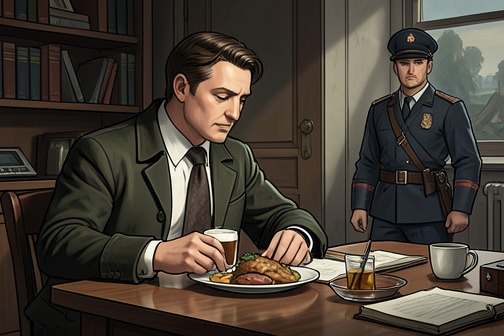
[Lüders betrays Franz](entity:event-recall-event-31f490c06227) by using the details of Franz’s successful sale to a widow to return to her home, take the goods, and extort money and other belongings. The episode reverses the meaning of Franz’s small commercial success: what he presents as honest work becomes, in [Lüders](entity:character-recall-character-c647125301da)’s hands, an opening for coercion. Franz learns that the parcel is gone only after the theft has taken place; his shock, and Lüders’s quick retreat when he sees him, make the breach between the two men visible before either explains it.
## Disclosure and opportunity
The betrayal begins with a boast. At a meal, Franz opens his fist to show Lüders the money he has made in a short time, insisting that it came through fair dealing rather than theft. He recounts ringing a widow’s bell to sell shoelaces, being invited in for coffee, and making a sale worth twenty marks. He also tells Lüders that he left his stock at her house and gives enough detail to locate her near [Elsasser Strasse](entity:location-recall-location-elsasser-stra-e-cfd3b3840e34). The exchange is casual and companionable: the men eat and drink together, and Lüders receives a share of the money. But Franz’s confidence has supplied Lüders with both a destination and a pretext for returning.
Franz’s account mixes practical sales details with the private circumstances of the visit. He mentions the widow, the coffee, and the goods left behind, treating the encounter as an unusually profitable piece of street trading. Lüders listens closely. The next morning he watches for Franz, then goes to the address on his own. The contrast establishes the betrayal’s cause without requiring a separate confession: what Franz has disclosed as part of friendly conversation is converted into a plan to exploit the woman and dispossess her.
## Lüders returns to the widow
At the widow’s door, Lüders presents himself as a shoelace seller and then claims he has come to collect the stock Franz left there. When she tries to shut the door, he wedges his foot into it and presses his way inside. He asks for the parcel, which she fetches, and thereby secures the goods Franz had left in her care. His stated purpose is collection, but he does not leave after receiving them.
Instead, Lüders prolongs his stay with requests and talk. He asks for coffee, comments on the warmth of the room, and questions the widow about her husband and children. She says she is busy and asks him to go. He notices her fear and imagines that the familiarity of the visit may give him an advantage, while his own nervous thoughts repeatedly return to the possibility of being discovered. The scene holds together his outward performance of ease and his private apprehension: he takes off his hat, drinks, and keeps the conversation going even as he listens for sounds in the building.
At the door, after taking the parcel under his arm and appearing to depart, Lüders turns back and demands money. He uses the widow’s visit from Franz to shame and intimidate her, implying that her prior hospitality gives him knowledge with which to threaten her. She holds out coins from her purse, then empties the purse into his hand. Lüders continues searching the home, taking the embroidered tablecloth and two cushions and opening drawers in the kitchen. The widow is unable to speak and eventually collapses as he leaves. The theft is thus not limited to the goods Franz had left: Lüders takes money and household items as well, turning a false collection into an extended act of intimidation and robbery.
## Discovery and rupture
The following day, Franz receives a letter from the widow. In conversation with the landlord, he asks whether anything else has been delivered and learns that a boy collected the parcel the previous night. Franz’s response is not an immediate confrontation. He sits by the window holding the letter limply, his mouth tightened, staring across the table. The simple information that the stock has been fetched changes the meaning of Lüders’s absence and of the earlier visit: the parcel is no longer where Franz left it, and Lüders has been to the house.
Lüders enters, sees Franz sitting there, and immediately turns around and leaves. The movement supplies a second, unmistakable sign of the breach. Franz does not pursue him or call him back. The landlord wonders why Lüders has run off, while Franz remains seated and struggles to take in what has happened. He drinks brandy, then broods over the letter, unable to make sense of it; the narration describes him growing pale and heavy, his head falling forward as if he were asleep. His stillness contrasts with Lüders’s hurried escape and marks the immediate consequence of the betrayal as shock rather than retaliation.
## Narrative form and significance
The episode is built around a delayed recognition. First comes Franz’s cheerful account of the sale; then the narration follows Lüders to the widow’s door and through the theft; only afterward does Franz receive the information that connects the missing parcel to Lüders. The reader sees the betrayal unfold before Franz fully understands it. That sequence makes the gap between confidence and knowledge central to the event: Franz’s openness is not merely misplaced in retrospect but becomes the practical means by which Lüders can reach the widow.
The account also shifts closely between outward action and the men’s private thoughts. Lüders’s polite requests and his pressure on the widow are set beside his anxious attention to the stairs and his fear of being caught. Franz’s later confusion is rendered through his arrested posture, repeated brooding, and inability to respond to the landlord. These changes in focus keep the episode from treating the theft as a bare transfer of property. The parcel, purse, tablecloth, and cushions register the material damage, while Franz’s failure to rise or confront Lüders registers the personal wound. The betrayal ends in an abrupt separation: Lüders withdraws, and Franz is left holding the letter without yet finding words or action for what it has revealed.
Event 16
Franz breaks down and goes into hiding over Lüders
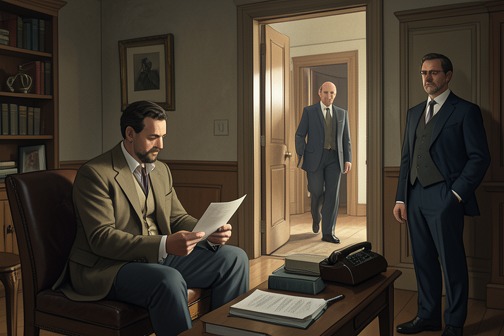
[Franz Biberkopf](entity:character-recall-character-franz-biberkopf-29eb7a5d3879)’s withdrawal after [Lüders](entity:character-recall-character-c647125301da)’s betrayal is a collapse expressed less through explanation than through objects, gestures, and disappearance. A letter leaves Franz unable to confront Lüders; when Lüders later comes to him, Franz drives him out with cold water, then washes the room as if he could remove the whole encounter. By night Franz has moved again, and [Lina](entity:character-recall-character-lina-eb2d676d2420) and [Meck](entity:character-recall-character-meck-6a9d5231fb62) cannot find him. The episode makes the damage legible while keeping its precise cause partly withheld: the letter’s contents remain unknown, even as its effect reorganizes Franz’s life.
## The Letter and the First Collapse
The morning after a day spent sulking, Franz receives a letter from a woman through the landlord. His questions about a parcel of stock and whether anything else has arrived initially keep the scene in the register of ordinary business. But once he reads the letter, he sits by the display cabinet with it slack in his left hand. Lüders enters, sees him, and immediately turns around and leaves. Franz does not pursue him. He remains seated, stunned by what he has read and by the sight of the man he now associates with it.
The landlord notices Lüders’s abrupt departure and asks why he has run off, but Franz can barely take in the conversation. Offered brandy, he accepts it, drinks, and returns to the letter in his thoughts. He wonders what it is about and why the writer has sent it; the narrative does not disclose its words. That omission matters: the reader sees the injury through its consequences rather than receiving an explanatory account that would settle what Franz knows or feels. While Franz tries to make sense of the letter, his head grows heavy and his body gives way. His legs seem to slide into an emptiness; he slumps forward onto the table and drops down.
When he raises his head, Franz is still in the same room, looking across the tabletop and blowing dust from it. The landlord’s practical questions about the stock and Lina’s expected arrival pull him back toward routine, but he recognizes that the shock has overwhelmed him. He recalls prison and the men still digging potatoes behind it, and thinks that he must continue outside, taking a tram after being released. He stands and insists that he is on his own feet, then tells the landlord to say that there has been a death in the family if Lina comes looking for him. The invented family bereavement gives him an excuse to avoid her without explaining the actual crisis.
## Withdrawal and the Room Left Behind
That afternoon Lina comes to Franz’s room intending to leave a brown cardigan she has knitted for him. Instead, she finds him at home at a time when he would normally be out working, sitting on his bed with a table pulled close and his alarm clock dismantled. He scarcely looks at her. When Lina says the clock was all right, Franz insists that it makes a whirring noise and does not strike properly; he puts it down and scrapes at his teeth. His absorption in the broken-open clock is a stark contrast to the trade and social routine by which Lina expects to recognize him. She leaves the cardigan hidden and decides to let him sleep off what she assumes is a hangover.
When Lina returns that evening, Franz is gone. He has paid, packed all his belongings, and told the landlady to write “Travelling” on the police registration form. He has left no possessions behind. The room’s abrupt emptiness turns a private breakdown into a practical disappearance: there is no destination for Lina to pursue, only a false description of his departure and the fact that he has taken everything with him. Lina searches for Meck, who has moved and is difficult to locate; she runs from pub to pub before finding him. Meck initially thinks Franz is tough and resourceful enough to stay away for a while, but Lina’s insistence that something is wrong brings him to the landlady. Her account confirms that Franz left in a rush and that his behavior had changed.
## Lüders’s Visit and Franz’s Rejection
Meck’s instinct leads him to Lüders. At first Lüders claims Franz has dumped him and owes him money, a story Meck does not believe. Their conversation produces no admission. Later, in a pub, Lüders approaches Meck and complains that Meck had nearly killed him the previous day by striking him on Franz’s account. He then suggests that Franz is mad. Meck defends his friend, and Lüders finally recounts visiting him in a room near his old flat, three houses farther on. People had seen Franz enter with a cardboard box and a pair of boots; he had been taken to an upstairs room in the building across the back.
Lüders found Franz lying on the bed with his boots still on and his feet hanging down. He had an open knife in his left pocket and a few marks in his other hand, which he placed on the table. His voice was hoarse; he moved restlessly, showed the bumps on his head from Meck’s blows, and spoke with resentment. Franz sometimes looked hard, sometimes twitched with visible nervous strain. He pointed to the door and quietly ordered Lüders to leave. When Lüders asked for a note proving that he had visited, or suggested that Meck or Lina could come around, Franz stood upright and moved to the washstand.
## Water, Cleansing, and Further Disappearance
Franz flung the washbasin’s water across the room at Lüders’s feet. When Lüders reached for the door, Franz took the jug and threw its remaining water at him, splashing his throat and mouth. Lüders escaped and shut the door behind him. The cold water gives Franz’s rejection a physical force, but the scene does not resolve the grievance: Lüders is expelled, not questioned, and the letter remains unexplained. Afterward Franz throws jugful after jugful into the room and splashes water through the air, thinking that it all has to be clean and has to go. He opens the window, worries that water will drip onto people below and stain things, closes it, and lies flat on the bed.
The action carries the language of death and return to earth through the room, turning an ordinary washbasin and jug into instruments of a private, improvised purification. Yet this ritual does not restore Franz to the people trying to reach him. That night he is no longer living there, and Meck cannot discover where he has gone. Meck takes Lüders to local cattle traders to question him about Franz and the letter, but Lüders remains adamant; the men eventually let him go. Meck judges that Lüders got what was coming to him, while Lina and Meck search across half of [Berlin](entity:location-recall-location-berlin-54cb4a75d0f6) without finding Franz.
## Aftermath and Narrative Significance
The episode ends not with a settled explanation or reconciliation but with absence. The reader has seen the letter’s power, Franz’s refusal of Lüders, and his cleansing of the room, yet cannot inspect the letter or locate Franz afterward. This gap shapes the event: a familiar routine—business, a room, a clock, a visit—becomes strange through Franz’s silence and sudden disappearance. The dismantled alarm clock, like the water thrown across the room, offers visible activity without giving a full account of what has broken inside him.
At the beginning of the next book, the narration cautions that Franz has not really met with disaster and anticipates the general reader’s question about the fuss. It distinguishes Franz from that reader: he understands that his simple resolution must be flawed somewhere, though he cannot say where, and this uncertainty plunges him into deep sadness. The retrospective comment does not erase the force of his flight; it reframes it as the moment when he recognizes a flaw in his attempt to live by his resolution, without yet being able to name it. His disappearance is therefore both an immediate retreat from Lüders and a crisis in Franz’s confidence in the course he has chosen.
Event 17
Gerner joins a burglary gang and is arrested
[August Gerner](entity:character-recall-character-august-gerner-0d78ac240615)’s turn from caretaker to burglar ends in arrest, as the place he is supposed to watch becomes the route into a stolen-goods operation. The episode follows his growing resentment of his circumstances, his invitation into a burglary gang, and the mistaken confidence with which he and [Gusti](entity:character-recall-character-gusti-39af373745ea) believe they can profit from the theft without being caught.
## The encounter in the yard
On a Saturday night, August Gerner notices burglars prowling around the yard. When the gang spots him, its members flee over a wall, leaving one man behind. Rather than report them or drive them away, Gerner calls after the departing men and says he wants to join them. His offer sounds suspicious to the remaining burglar, who worries that the caretaker might be setting a trap. Gerner insists that he lives there and has been waiting for something to come his way. The man eventually accepts the explanation and follows him across the yard.
Gerner makes the invitation concrete by taking the burglar into his own building. He rings the downstairs bell, opens the door, and presents himself as the person in charge of the premises. Gusti, his wife, is initially startled, but she welcomes the visitor inside. The contrast establishes the unusual security of Gerner’s position: as caretaker, he can admit a burglar openly, while the stranger has to decide whether that apparent welcome is genuine. What begins as a chance encounter thus gives Gerner an entry into the very criminal activity his post might have enabled him to prevent.
## A chance at legitimate work
Later, a tall young visitor arrives to speak with Gerner about business. Their conversation turns to the familiar idea that one must take risks to get ahead. Gerner and the visitor trade inherited sayings and examples from their own lives and neighborhood; Gusti listens, pleased that the guest has stayed and that Gerner cannot dismiss him as someone she has frightened away. Detectives then arrive with insurance officers. They ask Gerner to assist with inquiries into the burglaries behind the building and to take part in a special surveillance operation, with the company and insurance firm covering the costs.
The offer briefly places Gerner on the opposite side of the crime: he is asked to help watch for the burglars. But the discussion and the company’s presence do not keep him from the gang. After the officials leave, the visitor remains with Gerner and Gusti, and the three spend hours together. The visitor’s attention and opinions impress Gerner; afterward, Gerner regards the young man as capable and himself as a worn-out old man who may still have something to offer. Gusti and the visitor also develop a private attachment, later reflected in letters from him. This connection becomes important when the burglary plan resumes: the official offer of surveillance has not made Gerner an ally of the police, and his household is already entangled with someone connected to the operation.
## Gerner joins the burglary
Gerner considers trying the job without the other men. He argues that the building’s ground-floor position and his home’s location beside the yard give him an advantage, while partnerships invite trouble. Gusti says she cannot help because of her varicose veins and denies that fear is the reason. Though she outwardly assents, the narration makes clear that she inwardly opposes the plan. Gerner nevertheless decides to proceed on his own, with Gusti shut in the cellar with him.
As they prepare to begin, someone knocks. The repeated, soft knocking first leaves them uncertain about who is outside; then Gerner recognizes a familiar signal and opens the door to the tall visitor. Gusti greets him warmly, and Gerner realizes that the visitor’s arrival is not a coincidence. Before Gerner can settle back into the job, three more men knock and join them. He feels that he has lost control in his own house, but he decides to work with the group that night and considers warning the police if they intrude on his affairs again. His complaint that the men are exploiters is especially ironic: he resents having to share the proceeds even as he continues to participate.
The group works for two hours in the cellar. They carry most of their haul into Gerner’s flat: coffee, currants, sugar by the sackful, and crates of spirits and wine, amounting to half the storeroom. Gerner is angry at the share taken by the others. Gusti defends her inability to carry more by pointing again to her varicose veins, while Gerner blames her supposed failure to prepare for the work. At the same time, she is attentive to the tall visitor, who takes pride in her in front of the gang. Gerner has moved from admitting a burglar to his building to acting as the organizer of a theft there, yet he still resents the division of its proceeds.
## Arrest and exposure
After the others leave, Gerner locks the flat and drinks with Gusti. They sample the different kinds of alcohol systematically, from the early hours until morning, and become too drunk to open up when the doorbell rings around noon. When Gusti finally sends Gerner to the door, detectives enter and find the stolen goods spread through the passage and living room: sacks, crates, bottles, and straw. The supplies that he hoped to keep or sell have become immediate evidence of the theft.
Gusti tells the inspector that they are decent people and suggests that someone else brought the crates into the flat while they slept. Gerner likewise claims not to have heard anyone break in, even as he presents the burglars as the same men who had been operating behind the building. His explanations do not prevent the police from taking them to the station. Gusti tries to retrieve two letters from the tall visitor, but an officer notices and tells her to leave them in place. The letters expose the continuing connection that had developed in the household, while the goods in the flat expose Gerner’s participation in the burglary. The episode establishes his arrest; it does not state the outcome of any later proceedings.
## Significance
Gerner’s caretaker role makes the reversal particularly sharp: he has access to the yard, the building, and the flat where the stolen stock is concealed, but that access does not protect him once the police arrive. Nor does the apparent chance to assist a surveillance operation redirect him toward lawful work. Instead, the episode’s recurring language of risk and speculation accompanies a practical gamble, first in welcoming a suspicious stranger and then in attempting a burglary. Gerner imagines that he can control the job and its rewards; the noon discovery turns that confidence into arrest, with his own home serving as the clearest record of what he has done.
Event 18
Franz returns to selling newspapers
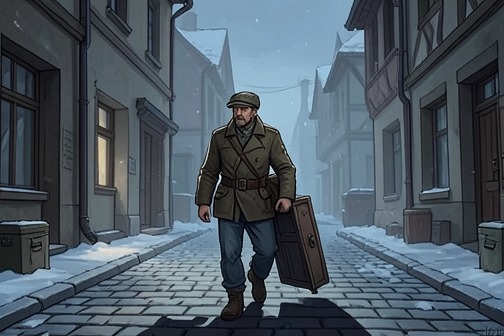
[Franz returns to selling newspapers](entity:event-recall-event-ea380c6cf42b) after a sequence of small, hard-won acts of self-command. The return is not presented as a clean conversion: first he has to leave the scene of a burglary, resist the pull of alcohol, and find a way to move forward with little money and no settled plan. His eventual stand on [Alexanderplatz](entity:location-recall-location-9ddde9cf858f) gives that uncertain recovery a visible form—rucksack, newsvendor’s cap, and a new district—but does not erase the vulnerability that precedes it.
## Leaving the burglary scene
Franz has kept apart from the conversations in the hall and yard, listening while the joiner and his wife are led through the building and out to the Black Maria. The public spectacle recalls his own earlier experience of being taken away, and he watches the couple’s shame with a mixture of recognition and resentment toward the people who gossip from the safety of their homes. When the crowd remains gathered, he stands at the front door in freezing weather, shifting from one leg to the other and asking himself what to do next. He does not go back upstairs. Instead, he turns from the gossiping group and walks aimlessly down [Elsasser Strasse](entity:location-recall-location-elsasser-stra-e-cfd3b3840e34) toward Rosenthaler Platz.
That departure is the first change in his immediate circumstances: he gets out of the building, but has not yet found a destination. The brief rhythmic cue of a horse beginning to trot again sits beside this uncertain movement, while Franz’s own pace is repeatedly interrupted by hesitation. A pub appears before he has even reached the corner of the square, and the absence of the bottle he left upstairs becomes a crisis. His hands go to his pockets automatically; then he argues himself toward and away from entering, knowing that drinking could leave him flat on his face and bring him back to the old woman’s place. The memory of the arrested couple and the Black Maria recurs as he urges himself to keep walking.
## Food, thirst, and a decision
Franz reaches Alexanderplatz with only 1 mark 55 in his pocket. He makes himself enter a pub restaurant, where he eats a proper meal for the first time in weeks: veal stew with potatoes. The meal reduces his thirst, and he rubs the 75 pfennigs remaining between his fingers. This pause does not resolve his financial insecurity, but it gives him a concrete alternative to drinking and allows his attention to turn from immediate appetite toward a possible next step.
His body remains uncomfortable. His tongue is numb and bitter, his throat burns, and he decides that he needs more mineral water. As he drinks the cool, carbonated water, he settles on visiting [Minna](entity:character-recall-character-minna-da125658d71d). The decision follows an earlier attempt at contact: he had sent her a fillet, while she had refused the aprons. He now thinks of her as someone he can approach and perhaps ask for a few coins until Thursday. The episode therefore moves from an aimless walk, through a meal and an effort to manage his thirst, to a specific person and a practical hope, without suggesting that Minna has agreed to help him.
## The return to newspaper selling
A later scene marks the material change that gives this episode its subject. Franz has his rucksack again and is selling newspapers, but he has changed districts: he has left Rosenthaler Tor and set up on Alexanderplatz. He is described as fit again, five feet eleven inches tall, slimmer, and carrying his weight better; the newsvendor’s cap identifies his new working role. The contrast is visible in his appearance as well as in his activity. Earlier, he had studied his own pale, flabby face in a mirror and judged himself harshly; now the account presents him upright and working in the crowded square.
His station is at the Alexanderplatz exit of the underground, opposite the UFA picture house. Newspaper selling puts him among the square’s stream of commuters and passers-by, but it is also a means of earning money in a city where his earlier attempts to secure a footing have repeatedly faltered. As he looks down Münzstrasse, he remembers the two Jewish men he met when he was down on his luck and considers visiting them to sell a newspaper. The thought connects his present trade to an earlier encounter, while his readiness to offer the paper regardless of whether they approve of it shows the practical, unsentimental terms on which he approaches the sale.
## A provisional recovery
The return to work is a change of condition, not proof that Franz has escaped the habits and pressures that threaten him. In the earlier sequence, a pub is enough to reactivate his urge to drink, and each step away from it requires a renewed decision. Food and mineral water help him get through that immediate crisis; the later rucksack and stand show him again in paid street work. The movement from cold indecision to a fixed place in the square gives the episode its modest reversal: Franz is no longer merely walking without direction, but selling papers in a district he has chosen. Yet the account keeps that advance concrete and limited—he has a job, a cap, and a place to stand, while the need for money and the possibility of drinking remain part of the world around him.
Event 19
Franz takes part in Reinhold’s exchange of girlfriends
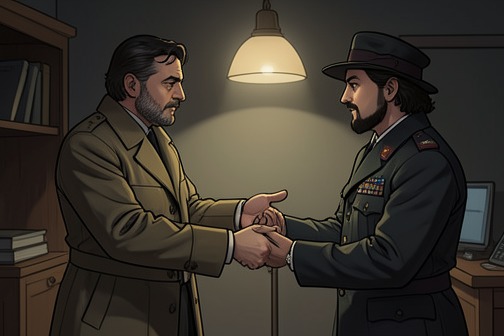
[Franz takes part in Reinhold’s exchange of girlfriends](entity:event-recall-event-0e8d908d0b5d) through a sequence of comic handovers that exposes the unequal terms of their friendship. [Reinhold](entity:character-recall-character-reinhold-0fde6be20b54) cannot bring himself to end relationships, while Franz treats taking over his women as a favor and a source of amusement. The joke acquires practical consequences: the women move between households, and the exchange eventually leaves Franz with [Cilly](entity:character-recall-character-cilly-cc83290d65dc), whom he chooses not to pass on.
## Reinhold’s predicament and the first exchange
One night, Reinhold, in his army overcoat, talks to Franz about women. He has fallen in love with the wife of a brewery driver, who has already left her husband for him; now Reinhold no longer wants her. His difficulty is not that she has refused to leave, but that she does not accept his repeated attempts to tell her their relationship is over. He imagines that the ending must be put in writing, and complains that she says she does not understand. Franz finds the problem ridiculous. A man who can enter a gasworks with dynamite, he thinks, should be able to dismiss a woman. Reinhold’s fear and stammering strike him as absurdly out of proportion to the simple solution Franz proposes.
Reinhold asks Franz to take the woman off his hands, on the assumption that Franz can later reject her in turn. Franz agrees enthusiastically, promising to do Reinhold a favor. The exchange is presented less as a serious negotiation than as a joke between men: Reinhold can no longer manage the relationship, and Franz relishes the chance to take his place. Their agreement makes a woman’s change of partner into an arrangement conducted between the two men, even as her own decisions disrupt their plan.
## Fränze and the boots
The next day, Fränze arrives at Franz’s home carrying a pair of stout boots that Reinhold has sent. Franz is delighted when he learns her name: Franz and Fränze seem, to him, a fitting pair. He privately treats the boots as payment for accepting Reinhold’s problem, comparing them to thirty pieces of silver and noting their value. That night he accompanies her to look for Reinhold, who is absent as planned. Fränze becomes angry, and Franz calms her in his room. The following morning she returns to Reinhold and tells him that she no longer needs him because she has found someone else; she refuses to say who.
Franz then appears at Reinhold’s wearing the new boots. They are so large that he has to wear two pairs of woollen socks, a practical detail that makes the gift into a visible comic prop. The two men embrace and slap each other on the back. Franz insists that he has done Reinhold a favor, although he does not want recognition for it. The boots thus mark both sides of the exchange: they are the material gift Reinhold sends through Fränze, and the joke Franz carries back to Reinhold after becoming her new partner.
Fränze falls in love with Franz and settles into his home. He watches her take up familiar domestic tasks, including mending his clothes and cleaning his boots. The sight of her cleaning Reinhold’s boots makes him laugh, because their size suggests that the two men might fit into them together. They try the joke physically, but cannot both get into one boot. The scene makes the men’s shared claim on the objects—and their joking intimacy—more conspicuous than any romantic ideal attached to the exchange.
## The failed transfer and Cilly’s arrival
Franz later tries to pass Fränze on to the hunchback, whom he visits to ask whether he wants to take her. The hunchback sees practical advantages: he could stop working, draw sick pay, and have her run errands, but he is not willing to settle down with her. At noon the next day, Franz picks a quarrel with Fränze over something trivial. She erupts, he shouts back gleefully, and within an hour the arrangement has been made: the hunchback helps her pack, Franz leaves in a rage, and she moves in with the hunchback because she has nowhere else to go. He goes straight to a doctor to be signed off sick; that night, he and Fränze grumble about Franz. What Franz has treated as a playful favor ends with a displaced woman and a household organized around the practical value of her labor.
Cilly arrives next, carrying a fur collar that Reinhold has asked her to bring Franz. Franz approves of the gift and jokes that Reinhold sends him food and clothes whenever he has too much, recalling the boots Fränze brought. He shows Cilly those oversized boots and invites her opinion. Dressed smartly in a black coat with fur trim, she puts her feet into them. Franz recalls the earlier joke and slips one of his feet into the boot behind hers; when she tries to run away, they hop about together, and he puts his other foot into the second boot. They topple over. The narrator’s mock announcement of private consultation turns their physical play into a comic spectacle, while keeping the exchange’s material signs—fur, coat, dancing shoes, boots—at its center.
## Cilly stays and the friendship continues
Cilly asks Franz not to tell Reinhold about their encounter, and Franz agrees. That night she comes to stay for good, bringing her nearly new coat and dancing shoes. Franz notes that Reinhold gave her these things, joking that Reinhold buys them all on credit. As with Fränze, clothes accompany the woman’s movement from Reinhold’s life into Franz’s household. But this time the sequence does not end with Franz arranging another transfer. He is delighted whenever he meets Reinhold, and Cilly remains with him.
The episode therefore changes the terms of Franz and Reinhold’s friendship without breaking it. Franz worries about what will happen when the month ends and Reinhold, usually taciturn, speaks to him again; he is glad when they meet sooner at the [Alexanderplatz](entity:location-recall-location-9ddde9cf858f) underground station. Reinhold asks whether Franz has plans for the evening. Franz agrees to go with him, expecting perhaps a dance, but Reinhold leads him toward the [Salvation Army](entity:organization-recall-organization-salvation-army-2702293c985d) meeting on Dresdner Straße because he wants to listen. The unexpected invitation carries their bond beyond the girlfriend exchange: after the comedy of passing women and gifts between households, Reinhold draws Franz into an unfamiliar setting, and Franz follows with curiosity.
Event 20
Franz refuses to take Trude
[Franz refuses to take Trude](entity:event-recall-event-188a2450bcf9) from [Reinhold](entity:character-recall-character-reinhold-0fde6be20b54) after [Cilly](entity:character-recall-character-cilly-cc83290d65dc) forces him to face what Reinhold’s treatment of women means. The episode turns a routine exchange between friends into a moral confrontation: Franz first sees himself as helping Reinhold, but comes to recognize that accepting another woman would make him part of a cycle of harm. He intervenes for [Trude](entity:character-recall-character-trude-e0f87b7f6866), rejects the material advantages Reinhold’s arrangements have brought him, and asks Reinhold to change. Yet he does not renounce their friendship, leaving the scene’s central contradiction unresolved.
## Background: Friendship and the exchange of women
Reinhold asks Franz to take Trude, continuing a pattern in which he gives up one woman and moves on to another. Franz initially agrees to speak with Cilly about it. The decision seems to him an ordinary favor to a friend, even though it would involve another woman being passed between men. His own reflection on trafficking in women interrupts that easy acceptance: he suddenly wants something different and no longer wants to take part.
Cilly’s account gives the pattern a history and a human cost. She describes Reinhold as a man who picks women up and discards them, insisting that she was neither his first nor his eighth, but more likely one among a very large number. Her comparison of him to a sparrow, pecking and snatching at women, makes his conduct sound both habitual and predatory. She recalls meeting him in a dance hall on Chausseestrasse, and describes how he could appear to transform himself from a shabby, exhausted man into a polished, talkative dancer. The change in presentation helps explain how he repeatedly attracts women; it does not excuse what follows.
Cilly’s warning is personal rather than detached. She tells Franz that Reinhold has no real claim to friendship and that Franz should report him to the police, even mentioning the possibility of a reward from [Berlin Police Headquarters](entity:location-recall-location-dd99c2da91df). The suggestion sharpens the choice before Franz: he can continue to shelter Reinhold under the name of friendship, or acknowledge the damage Cilly says he is doing. Franz knows some of what she describes, but knowledge has not yet made him act.
## Cilly challenges Franz’s complicity
When Franz explains that he has spoken with Reinhold and intends to help him, Cilly becomes angry and then breaks down. She calls Franz worse than Reinhold because Franz understands what is happening yet still helps him. Her response also makes visible the material side of the arrangement. Franz has received boots from Reinhold, just as a fur collar had earlier come through one of Reinhold’s women. These gifts are not incidental: they show that Franz has benefited from the same network he is now being asked to extend by taking Trude.
Franz at first tries to calm Cilly and insists on his loyalty to Reinhold. He invokes Reinhold’s supposed need for support, including the possibility that he might go to a [Salvation Army meeting on Dresdener Straße](entity:location-recall-location-279d59d03ce2). But Cilly’s distress, and the sight of the boots, make his defense harder to sustain. He takes the boots and throws them on top of a cupboard. The gesture does not undo his earlier complicity, but it gives his change of mind a visible form: he will not let the gifts decide what he does next.
Franz tells Cilly not to leave and asks her to speak to Trude the next morning, after Reinhold has gone out. He offers to stand by her and proposes that the three of them talk. This is a shift from treating Trude as a problem to be transferred to treating her as someone entitled to hear what is happening and decide what to do. Franz’s promise remains tentative—he does not yet know exactly how he will help—but he has stopped agreeing to take her off Reinhold’s hands.
## Franz intervenes for Trude
At midday, Trude comes to Franz and Cilly’s home. She is pale and sad, and Cilly tells her plainly that Reinhold is upsetting her and does not care about her. Trude bursts into tears and cannot understand why the two of them have summoned her. Franz tries to reassure her without denouncing Reinhold outright: he calls Reinhold his friend and refuses to hear him condemned, but describes his conduct toward women as cruel and ruthless. He tells Trude not to let Reinhold frighten her into leaving, and says she can depend on him, though his offer to do something more remains unfinished.
The encounter exposes the strain in Franz’s position. He wants to protect Trude from being discarded, but still wants to preserve Reinhold’s standing as his friend. He can name the cruelty while resisting the conclusion Cilly has drawn about the man who commits it. The episode therefore does not present a clean conversion from complicity to moral certainty. Franz’s intervention is real, but it begins within the language of loyalty that has helped shield Reinhold.
## The refusal becomes a confrontation
That evening, Reinhold picks Franz up from his stand in bitter cold and treats him to hot grog. After some preliminary talk, he raises Trude directly: he has had enough of her and wants to get rid of her that day. Franz answers that he has another woman already, and says he will not give up Cilly. He describes Cilly as settled with him and a decent woman, then urges Reinhold to behave like a decent human being and stop the cycle.
Reinhold wonders whether Franz’s objection has to do with the fur collar. He imagines what Trude might bring him—a silver pocket watch or a fur cap with ear flaps—and thus reduces the conflict to the possible value of another gift. Franz rejects that bargain and says he will buy his own things. His answer connects the earlier boots and collar to the present decision: material benefit has been one way the arrangement draws him in, but he will no longer accept its terms.
Franz then tries to persuade Reinhold as a friend, telling him to keep Trude and get used to her. He argues that a woman is a human being, not disposable “fluff,” and contrasts affection followed by rejection with buying a sex worker who can return to the street. Reinhold listens, drinks his coffee slowly, and looks vacant. He says that if Franz will not take Trude, he need not; he managed before Franz came. He then leaves, pleading lack of time. Franz has made the refusal unmistakable, but he has not persuaded Reinhold to change.
## Aftermath and significance
The immediate result is therefore double. Trude is not handed over to Franz, and he has refused to participate in Reinhold’s next discard-and-replace arrangement. At the same time, Reinhold’s calm withdrawal leaves the underlying practice untouched. Franz has challenged his friend but continues to speak from within the friendship, a loyalty that keeps the break incomplete.
That night Franz cannot sleep. In the freezing room, with Cilly asleep beside him, he feels something inside being crushed without knowing by whom. The narrative connects his wakefulness to hatred of Reinhold, which presses through the door and disturbs him. A nearby image of a sleeping bird startled by a serpent gives the unease a form: danger has been present without being noticed. Reinhold, by contrast, sleeps beside Trude and dreams of murder. The juxtaposition does not resolve what will happen, but it makes clear that Franz’s refusal has not ended the danger surrounding Reinhold’s conduct. The episode’s decisive change is narrower and more consequential: Franz recognizes that friendship cannot justify passing another woman into the same destructive pattern, even when he is not yet ready to sever the friendship itself.
Event 21
Pums’s gang burglary and attack on Franz Biberkopf
[Pums’s gang burglary and attack on Franz Biberkopf](entity:event-recall-event-pums-s-gang-burglary-an-c83562062b19) turns a paid Sunday-night errand into a forced test of loyalty, then into a concealed assault that permanently changes Franz’s body. Recruited on the promise of wages and expenses, he discovers that the work is a burglary and is ordered to keep watch. When he tries to get away, [Reinhold](entity:character-recall-character-reinhold-0fde6be20b54) and the gang take him with them, then cast him from their car during a pursuit. The gang’s theft continues; Franz is left unconscious on the road, and his right arm is amputated in [Magdeburg](entity:location-recall-location-9fda615a8cc9).
## Recruitment and the promised job
Franz is on his way home, thinking that [Cilly](entity:character-recall-character-cilly-cc83290d65dc) should not have to wait for him, when he encounters [Pums](entity:character-recall-character-pums-e40b21f81618). Pums has noticed that something is happening between Franz and the gang’s tall member, [Emil](entity:character-recall-character-emil-7a87c696c631), and says that the man has failed to turn up. With the job due to begin that evening, Pums offers Franz five marks an hour and his expenses to take the absent man’s place. Franz hesitates at the pay, then accepts, pleased by the prospect of earning money on a Sunday.
The offer is framed as a practical favor to a gang under pressure, not as an invitation to take part in a crime. Franz tries to leave after the agreement, explaining that he wants to return to Cilly, who is at home alone. Pums refuses to let him go, insisting that the undertaking will fall apart without him. The conflict between Franz’s ordinary obligation to Cilly and his sudden, lucrative commitment establishes how readily the gang’s pressure redirects his plans.
## The burglary and the lookout
The gang travels by car and continues on foot near [Bülowplatz](entity:location-recall-location-54081c6bf1cb), passing beneath the S-Bahn railway arch. Franz expects to help collect goods. At an entrance on Kaiser-Wilhelm-Strasse, however, the men separate and enter a dark building. One of Franz’s companions takes away his cigar and disappears across the courtyard; Pums then confronts Franz with a torch and orders him back to the front of the building. He is not to carry goods but to act as lookout.
Left at the entrance, Franz hears activity in the yard and realizes that the men are breaking in and stealing. He understands that Pums runs an organized criminal outfit, and considers leaving rather than remaining responsible for the gang’s crime. Yet after Reinhold catches him and again orders him to stand guard, Franz finds himself unable to move at first. The narration renders his fear as a physical and mental paralysis: the world seems iron-hard, advancing with unstoppable force. The image gives the scene a pressure beyond the immediate threat, while keeping the cause concrete: Reinhold has struck him, and the gang has trapped him in the role of lookout.
Eventually Franz manages to leave his coat behind and move toward the yard. Gang members rush past with bundles of coats and other goods. He remains among them, without his coat, as the men load their haul and hurry between the building and the cars. The sequence makes his position increasingly precarious: he has recognized the crime and tried to withdraw, but the gang continues to treat him as part of its operation.
## Reinhold’s attack and the getaway
When the gang departs, Franz is packed into one of the cars with Reinhold beside him. The vehicles travel without lights. The men say that they are being followed, but Reinhold has already signaled to the man opposite and surreptitiously put his hand on the door handle next to Franz. The apparent pursuit provides the cover for an attack that is deliberate rather than an accident of the getaway.
As the car speeds along a wide avenue, Reinhold seizes Franz and forces him toward the open door. Franz resists, but the men overpower him; one strikes him with a stick while another hits him in the hip. Franz clings to the car’s running board until Reinhold strikes him on the back of the head and throws him into the street. The door shuts, and the pursuing car runs over him as the chase continues through the snow. The gang’s escape carries on, while Franz is left behind, injured and unconscious.
## Concealment and the lasting consequence
The gang takes Franz to Magdeburg in a private car, a journey of about two hours. He is brought to a hospital near a church and operated on that night. The medical account states that his right arm is amputated at the shoulder joint; the extent of his other injuries is still uncertain at that point. When hospital staff ask what happened, two men offer a false account involving a motorcycle accident and ask that the matter not be reported. Their invented explanation attempts to turn a calculated attack into an ordinary road mishap.
By Monday morning, the perpetrators, Reinhold among them, are drinking at their fence’s place in [Weißensee](entity:location-recall-location-3ad8e42558c9), while Franz wakes in hospital and asks where he is. He is conscious of the loss of his right arm. The contrast is stark: the gang resumes its social life and seeks to suppress the incident, while Franz faces an irreversible physical consequence. His injury is not only the outcome of the burglary but a turning point in his relation to the gang that recruited him.
## Narrative significance
The event is built around reversals in what Franz believes he has agreed to do. A paid errand becomes a lookout post; a chance to leave becomes enforced participation; and a supposed pursuit becomes the occasion for Reinhold’s attack. Each reversal narrows Franz’s choices until he is expelled from the moving car and left exposed to the consequences of the gang’s violence.
The narration also sets Franz’s bodily paralysis and the image of an iron world against his eventual effort to move. His fear initially makes escape seem impossible, but he does manage to leave the entrance hall; this partial act of resistance does not protect him once he is in the car. The episode thus distinguishes his attempt to withdraw from any claim that he has freely chosen the gang’s crime. Its final consequence—the amputation of his right arm—makes the gang’s betrayal permanent, while the men’s false story underscores their effort to erase responsibility for it.
Event 22
Franz Biberkopf’s return to crime
[Franz Biberkopf’s return to crime](entity:event-recall-event-franz-biberkopf-s-retur-49c139c852c9) follows his third arrival in [Berlin](entity:location-recall-location-berlin-54cb4a75d0f6), now without his right arm. Determined to depend on himself rather than welfare or friends’ money, he first insists on using his own name despite fearing police scrutiny; but the prospect of ordinary work soon gives way to [Willi](entity:character-recall-character-willi-0ceee85e8d6b)’s offer of goods to sell discreetly. Franz becomes a fence, and his new livelihood takes shape alongside a carefully constructed public identity: a respectable-looking suit, an [Iron Cross](entity:object-recall-object-669d9e261db8), and forged papers in the name of Franz Räcker. The change is not a simple return to an old life. It is a practical, increasingly deliberate answer to the narrow choices he sees around him, and a sharp reversal of his effort to live decently.
Event 23
Mieze’s secret work and reconciliation with Franz
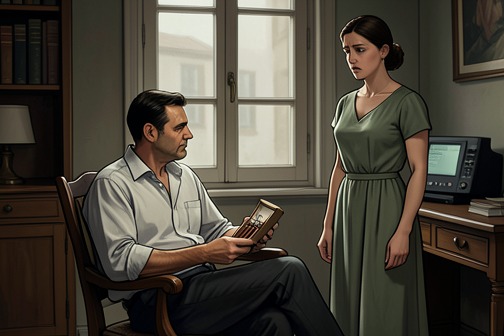
[Mieze’s secret work and reconciliation with Franz](entity:event-recall-event-mieze-s-secret-work-and-d49b52440d75) is a turning point in their relationship: a letter that seems to expose betrayal instead reveals the care behind [Mieze](entity:character-recall-character-mieze-07daf8e08629)’s attempt to provide for him. Franz first reads the signs through suspicion and jealousy. [Eva](entity:character-recall-character-eva-a4f4507c5fab) helps him understand that Mieze has been earning money because she loves him and does not want his injured arm and difficult circumstances to leave him solely responsible for their living. Their reunion restores their intimacy, though it does not end Mieze’s work or the economic pressures surrounding them.
## The Gift and the Misdelivered Letter
A few days after Franz has worried that people may be spying on him, he returns home unexpectedly at lunchtime and finds Mieze away at [Aschinger’s](entity:location-recall-location-70ec9515718a). The sitting room is clean, and she has left him a box of fine cigars, two bottles of Allasch kümmel, and a note addressed to him. He takes the gifts as affectionate attention and is pleased by the care she has put into the household money. The contrast between his cheerful response to the present and what he is about to discover gives the scene its abrupt turn.
When the doorbell rings, Franz expects the postman, but finds no one in the building. He takes a letter from the box. Inside the open envelope is a sealed letter accompanied by a note saying it was delivered to the wrong address; the note is written in disguised handwriting and bears an unreadable name. The enclosed letter is addressed to Sonja Parsunke, care of Mr. Franz Räcker, and begins as an impatient message from a man waiting for her reply. The name and intimate tone lead Franz to conclude that Mieze has received a letter from a man. Unable to continue reading, he sits with the letter and the presents before him, their meaning transformed by his suspicion.
## Eva Explains Mieze’s Choice
Franz goes to [Herbert](entity:character-recall-character-fd178cb3f9a6) rather than to Aschinger’s and shows him the letter. Eva soon joins them. After a private exchange with Herbert, she sends him away and turns her attention to Franz. The scene briefly places Franz in a confusingly intimate situation with Eva; his first response is bewilderment and concern about Herbert. Eva’s intervention, however, is not a bid to replace Mieze. She takes the letter and goes to speak with Mieze, insisting that she wants to look after a young woman who has come to [Berlin](entity:location-recall-location-berlin-54cb4a75d0f6) without much experience.
Eva returns about an hour later, composed and satisfied with what she has learned. Mieze, she reports, had been waiting for Franz at Aschinger’s. When shown the letter, Mieze did not react as someone caught in a betrayal: she asked whether Franz liked the schnapps and the canary she had bought him. Eva rejects the letter as evidence that Mieze has been unfaithful. A man may write to her, she explains, without there being anything between them; the existence of a letter does not establish a relationship.
The more important revelation is that Mieze has been earning money for Franz in secret. She wants to contribute because she loves him and does not want simply to be kept while he goes out to work and she tends the room. His damaged arm makes earning a living harder, and Eva points to the hardships he has already endured, including his time in Tegel. Mieze has concealed her work because she does not want Franz to feel ashamed or diminished by accepting her help. Eva’s account changes the letter’s place in the scene: what Franz took for proof against Mieze is less important than the practical care represented by the gifts, the clean room, and her effort to support him.
## Franz Seeks Mieze Out
Franz understands slowly. He does not seize on Eva’s explanation as a reason to turn back to her. Instead, he tells her to remain with Herbert, whom he regards as a good man who needs her. Their past closeness is acknowledged but left in the past; Eva accepts his choice and sends him to find Mieze, who may still be waiting at Aschinger’s and fears he will not come home to her.
Franz sees Mieze outside Aschinger’s, near a photographer’s display, but initially watches from across the street. He follows at a distance as she walks along the [Alexanderplatz](entity:location-recall-location-9ddde9cf858f), uncertain when to approach. A flower seller offers him a bunch, and he buys it. The flowers recall the gifts Mieze has left in their room, along with the cigars, schnapps, and canary. At the traffic island, he finally places the flowers in her hand. Mieze recognizes him, comes toward him, and takes his arm. Her relief is evident, but she is still frightened by the possibility that he might reject her. They cross the road together and continue on, no longer separated by the street or by the story Franz has made of the letter.
## Reconciliation and Its Limits
Back in their room, Franz sits with Mieze and tells her, in effect, that she can do as she likes but that he does not want to lose her. They look at the canary together. Mieze then finds the letter, shows it to him, and crumples it before throwing it aside. She indicates that this is not the only such letter she could produce. Her gesture disposes of the supposed proof without requiring Franz to establish the sender’s identity or learn more about him. The reconciliation rests instead on Franz accepting what Eva has explained and Mieze showing that the letter does not outweigh their relationship.
In the following days, Franz is calmer. He is less invested in his dubious dealings and takes setbacks with more patience. He and Mieze spend time together and regularly visit Herbert and Eva. The episode does not make their financial circumstances disappear: Mieze continues to meet a well-to-do gentleman, and Franz knows about him and presents himself as her husband. Rather than treating this as the betrayal he first imagined, Franz accepts the arrangement within the couple’s changed understanding of how Mieze earns money. The reconciliation therefore brings relief and renewed closeness, but not an escape from dependence on precarious ways of making a living. Its decisive change is in Franz’s interpretation: he learns that Mieze’s secret work is an act of support, not evidence that she has abandoned him.
Event 24
Franz’s confrontation with the anarchist at the political meeting
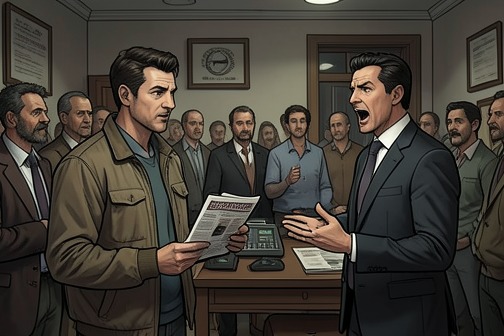
[Franz’s confrontation with the anarchist at the political meeting](entity:event-recall-event-franz-s-confrontation-w-e6c12b0d1f85) turns a casual visit with [Willi](entity:character-recall-character-willi-0ceee85e8d6b) into an argument over work, class, and belonging. Franz refuses both the label of worker and the promise of collective struggle: with one arm missing, he regards proper employment as slavery and insists on making his own way. His defiance unsettles the political categories the others offer him, but it does not become a program of solidarity. He leaves with Willi, still consumed by anger, and seeks reassurance from [Mieze](entity:character-recall-character-mieze-07daf8e08629) without receiving it.
## Setting and political context
The confrontation grows out of Franz’s uneasy curiosity about politics rather than a settled commitment. He accompanies Willi, buys pamphlets, and listens as Willi explains the discussion, but Franz’s interest comes and goes; the ideas sometimes touch him and then lose their hold. He stays with Willi nonetheless. The printed arguments concern class power, property, and the state, while the scene tests those principles against the practical question of how Franz himself lives.
The anarchist’s case attacks parliamentary politics as a cycle that leaves working-class misery unchanged. It rejects reforming the judiciary in favor of abolishing it, and proposes direct action, including withdrawal of labor, as a way to halt the machinery of the state. The accompanying pamphlet describes property and state power as forms of domination, argues that production is organized for profit rather than human need, and presents nationalism as a cover for class rule. Its call to abolish political power, rather than simply capture it, gives the discussion its radical terms.
Willi and Franz move through the room listening, but the exchange becomes personal when a grey-haired worker asks what they do. Franz initially resists answering, saying he has no interest in political discussions. The worker recasts the question as one about the men themselves and presses for an account of their work. In that shift, abstract doctrine gives way to the livelihood and social standing by which the group decides who belongs.
## The argument over work and solidarity
Franz answers that he is not a comrade: he goes about doing a bit of this and that, but does not work and lets others work for him. When the worker treats this as evidence that Franz must be a capitalist employing people, Franz points to his missing arm. He says that it is the price he paid for working, and that this is why he will not hear more about a proper job. The exchange makes bodily injury central to his objection. For Franz, labor is not an abstract duty that can be separated from its cost to the worker; his own body is evidence of what that cost has been.
The anarchist distinguishes proper from improper work, and Franz seizes on the distinction. He agrees that his work is improper, but turns the label back on wage labor: the proper work described by the anarchist is itself slavery. Franz presents this conclusion as something he has already reached without the anarchist’s help. His claim is not that the two men share a political program; it is that the anarchist’s own critique of wage labor undermines the demand that Franz submit to it.
The worker counters that refusing to work does not amount to direct action. Withdrawal of labor requires workers to act together; a strike or general strike depends on participation that Franz explicitly refuses. Franz mocks the gap between the anarchist’s rhetoric and his activity, contrasting pamphlets and speeches with the production of weapons that workers may be forced to use against one another. He says he will not make capitalists more powerful and rejects both the proposed strike and the expectation that organized workers will rescue him. Instead, he claims self-sufficiency: he will do for himself whatever he needs.
The worker’s reply is practical and collective: Franz should try to manage alone. He insists that isolated individuals cannot succeed and that organized struggle requires workers to build common understanding of state tyranny and monopoly capitalism. The two then sit facing one another in silence. The worker judges Franz stubborn and warns that he will come to a bad end, identifying solidarity as the essential thing Franz lacks. Franz and Willi prepare to leave rather than continue the argument.
## Exit and immediate aftermath
As they settle the bill, Franz turns the payment itself into a final taunt. He pays for three beers and two brandies, one mark ten in all, and calls this direct action. When the worker persists in asking what he is, Franz says that he is a pimp; Willi declines to explain himself. The worker then dismisses them as outsiders who are neither proletarians nor fellow workers. Franz answers that they will not enter the workhouse and leaves with Willi. The small, concrete act of paying does not resolve the dispute: it lets Franz mock the movement’s language while refusing the categories through which it might claim him.
Outside, the two walk arm in arm along the dusty street. Willi praises Franz for having seen the worker off, but Franz is taciturn and grim. He has left the pub full of rage and hatred, feelings the narrative presents as fermenting within him without a clear explanation. The force of the scene lies partly in that unresolved remainder: a verbal victory, as Willi sees it, does not calm Franz or settle what the argument has touched.
They meet Mieze at Mokka-fix in Münzstrasse. Franz takes her home because he needs to talk and sit with her, and recounts his exchange with the grey-haired worker. Mieze handles him gently, strokes his hands, and smiles, but Franz wants her to tell him whether he was right. Her tenderness cannot give him the certainty he is seeking. The encounter thus carries its conflict beyond the pub: the political argument ends, but its emotional agitation follows Franz into his private relationship.
## Political significance and limits
The scene refuses to make Franz an uncomplicated spokesman for either side. His account of the missing arm gives his rejection of wage labor a material basis, while his insistence on self-sufficiency places him directly against the worker’s demand for solidarity. He recognizes the contradiction in praising freedom from wage slavery while expecting workers to organize through their labor, yet his own refusal offers no collective alternative. The exchange establishes the distance between a critique of exploitation and the shared action needed to challenge it.
Nor is the confrontation a clean break with politics. Franz continues to read the Red Flag and Unemployed and visits [Herbert](entity:character-recall-character-fd178cb3f9a6) and [Eva](entity:character-recall-character-eva-a4f4507c5fab) with Willi. Eva warns him that Willi takes his money and is little better than a pickpocket; Franz agrees with her judgment, and says he has had enough politics for a lifetime. Yet he promises to drop Willi one day and is out with him again the next, even going rowing together. The episode’s ending therefore preserves the same tension that shaped its argument: Franz distrusts political involvement, remains curious about it, and cannot make his withdrawal final.
Event 25
Franz’s withdrawal from politics
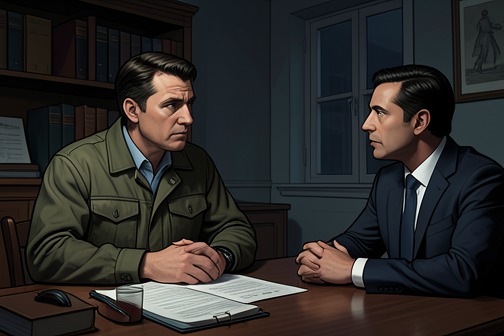
[Franz Biberkopf](entity:character-recall-character-franz-biberkopf-29eb7a5d3879)’s withdrawal from politics is a retreat from organized political argument, not a discovery that social hardship is unreal. A joiner’s account of unemployment, illness, and class inequality gives those conditions immediate force; Franz then leaves the discussion, concludes that politics does him no good, and later assures [Mieze](entity:character-recall-character-mieze-07daf8e08629) that he will avoid meetings. The decision is framed not as a conversion to a new program but as an attempt to stop struggling against a public life he finds useless to himself.
## The joiner’s material argument
The break begins in a pub, where Franz listens as a joiner rejects the idea that understanding hardship requires Marxist theory. The joiner measures life by what he needs each day and by what happens when someone is beaten, laid off, or forced onto unemployment benefits. His account turns political abstractions into household circumstances: the foreman and boss keep their places while he loses his workshop job; he has three children, the eldest with bow-legs attributed to rickets, and a wife who works selling smoked herrings while also caring for the family.
The contrast extends beyond employment. The joiner sees other families teaching their children foreign languages and taking them to the seaside, while his own family cannot afford even an outing to Tegel. When rheumatism sends him to a crowded waiting room with thirty other patients, he feels that the doctor doubts his account of his condition. A publicly funded rest cure remains out of reach until a worker is nearly incapacitated. The joiner insists that these inequalities are plain to anyone who looks, even while conceding that the political analysis he distrusts may still be true. His testimony is thus both a rejection of doctrinal instruction and a forceful description of the social conditions that politics claims to explain.
## Franz leaves the discussion
After listening, Franz says he wants to go to bed early and leaves the pub. Alone on the hot, dusty street, he hums a threatening song about Haarmann and his chopper. He stops, unable to cross the road, turns around, and walks back past the pub without going in. The joiner’s words remain with him: Franz accepts their truth but asks himself why he should bother with politics when it does him no good. The scene makes withdrawal a movement through the city as well as a conclusion reached in thought: he returns to the street, but not to the conversation.
Political language continues to crowd that street. At Rosenthaler Platz, Franz sees a newspaper seller offering the Berliner Arbeiter-Zeitung, whose headlines combine a Marxist secret tribunal with sensational allegations about a Czech Jew. Franz buys a paper bearing a green swastika. The purchase sits beside his memory of having once sold papers at the same place, and the competing slogans and headlines remain visible even as he resolves to disengage. The episode does not show him adopting a coherent alternative platform; it shows political publicity persisting around a man who has decided that taking part is futile.
## The promise to Mieze
Later, Franz tries to draw Mieze onto his lap and explains that he had gone back to Tegel by himself, having already served his full sentence. Mieze asks him not to get mixed up in politics or attend meetings. Franz says that he is not involved and agrees that he does not think he will go to any more. She puts an arm around his shoulder and rests her head against his; they say nothing further. Her concern turns his solitary decision into a promise made within their relationship, while his assent gives the withdrawal a concrete limit: he will stop going to meetings.
The narration presents the immediate comfort of that decision without making the surrounding life politically or economically secure. Franz is content to sit in pubs, sing, and play cards. Meanwhile, Mieze has met a married gentleman, nearly as wealthy as one of [Eva](entity:character-recall-character-eva-a4f4507c5fab)’s acquaintances, who is setting her up in a smart two-room flat. The contrast places Franz’s retreat alongside Mieze’s separate means of securing money and housing; it does not establish that his political withdrawal causes her arrangement.
## The city’s collective surfaces
Other scenes in the novel sharpen the difference between public crowds and private conviction. After his release from [Tegel Prison](entity:organization-recall-organization-tegel-prison-87958179be4c), Franz is overwhelmed by the tram, the streets, shop windows, and the moving crowd; he experiences ordinary city life as strange and frightening rather than as a ready-made political community. At a cinema on Münzstrasse, by contrast, laughter around a goose-girl film briefly makes him feel that he is among free people enjoying themselves. At the [Neue Welt](entity:location-recall-location-fc9de4b0ff44), beer, music, dancing, and a crowd’s repeated drinking song offer another form of collective participation, built around pleasure and forgetting trouble.
The city’s other rhythms are no less repetitive. On [Alexanderplatz](entity:location-recall-location-9ddde9cf858f), spectators watch a pile driver pound a wooden pile down until it disappears, while nearby construction and crowds fill the square. At Dobrin’s coffee shop, a well-off group laughs over jokes and display. These scenes do not explain Franz’s decision by themselves, but they place it within a novel that repeatedly sets individual distress beside public spectacle, entertainment, work, and talk. His withdrawal ends one kind of participation; the city’s noises, crowds, and competing performances continue around him.
Event 26
Franz and Reinhold’s reconciliation
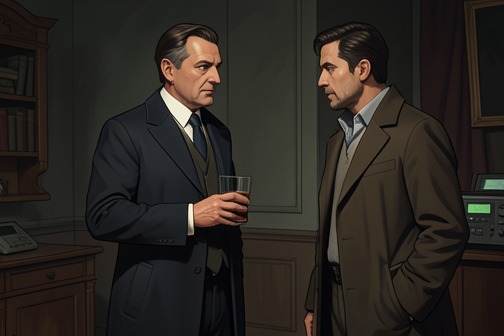
[Franz and Reinhold’s reconciliation](entity:event-recall-event-franz-and-reinhold-s-re-fb695561c61f) is a charged, temporary return to intimacy: Franz experiences their meeting as a new beginning, while [Reinhold](entity:character-recall-character-reinhold-0fde6be20b54) sees it as a chance to exploit him. The scene’s warmth is real for Franz, but it rests on a dangerous misunderstanding. Their renewed closeness precedes a night of dancing and happiness, even as Reinhold’s private intentions turn the apparent reconciliation into a trap.
## Background and Approach
Before going to Reinhold, Franz sits with the brandy [Mieze](entity:character-recall-character-mieze-07daf8e08629) has left in his room and refuses to drink it. He wants to face Reinhold sober, with no tremor in his body and no flicker in his expression. The surrounding narration breaks his resolve into marching rhythms, trumpets, and reports of people dying in disasters. That abrupt movement between his private decision and distant catastrophe gives the visit the quality of an ordeal, though Franz makes his way toward it as if advancing into battle.
He arrives in the evening and finds the door open. Reinhold asks who let him in; Franz answers that nobody did and that there was no need to ring. His insistence that he is not drunk matters to the scene: he has come by choice, not under the influence, and is prepared to meet Reinhold directly. The casual entrance begins an encounter that Franz will regard as one of the best things he has done since the car accident.
## The Conversation About the Car
The two men sit facing one another and smoke. Franz is upright and calm, pleased that he is alive and, for once, not trembling. Reinhold brings up what remains unsettled between them: the car. Franz refuses to treat discussion as a way to restore his lost arm. Instead, he says that things turned out all right and that what happened had to happen. His response does not erase the injury; it gives the injury a place in a changed account of his life.
Reinhold presses him about what he has been doing. Franz acknowledges his street selling and says that phase is over; with one arm, he cannot do jobs in the same way as before. He still has his other arm, his head, and his legs, but does not present those facts as a simple cure for his disability. The exchange marks a change in how he understands his prospects: he is no longer trying to resume the same work by sheer force. Reinhold suggests that living as a pimp must be boring, but beneath the conversation he judges Franz as someone who still has fight in him and whom he thinks can be broken.
## Affection and Deception
Franz tells Reinhold about Mieze, describing her as a good woman who earns well. Reinhold’s unspoken response exposes the crucial imbalance in the meeting: he decides that he will take Mieze from Franz and leave Franz in trouble. The apparent intimacy therefore contains two opposed purposes. Franz offers personal confidence; Reinhold receives it as information he can use against him.
Franz does not recognize that threat. He is genuinely delighted to be sitting with Reinhold, and privately ranks the encounter above political meetings and nearly above Mieze. His happiness is not merely relief at avoiding another attack: he is attached to the man whose face he is now meeting without fear. When they go downstairs, he feels newly born and imagines the people around him as friends who will not do him down. He also invites Reinhold to go dancing with him and Mieze when she returns from a few days away with her own companion, confidently predicting that she will welcome him.
## The Night and Its Reversal
Franz dances through the night, first at the [Altes Ballhaus](entity:location-recall-location-5980cd822b1f) and later in a pub with [Herbert](entity:character-recall-character-fd178cb3f9a6). [Eva](entity:character-recall-character-eva-a4f4507c5fab) is among the women he dances with, yet his thoughts remain fixed on two people who are absent: Mieze and Reinhold. He loves them both, the narration reveals, although he does not dare tell Reinhold. The dance thus extends the reunion beyond the smoking-room conversation: Franz’s renewed confidence becomes bodily exhilaration and an expansive affection that includes the very person who intends to betray him.
The narrator calls this turn a movement backward. The strong Franz, likened in the narration to a cobra, has appeared again; what looks like recovery is also a return to an older, more dangerous self. The contrast does not cancel Franz’s happiness, but it changes its meaning for the reader. He experiences the meeting as reconciliation and rebirth, while the disclosed intention toward Mieze makes clear that trust has not been restored on equal terms. The night ends in joy for Franz, with the threat still concealed within the renewed bond.
Event 27
Franz assaults Mieze after learning she loves another man
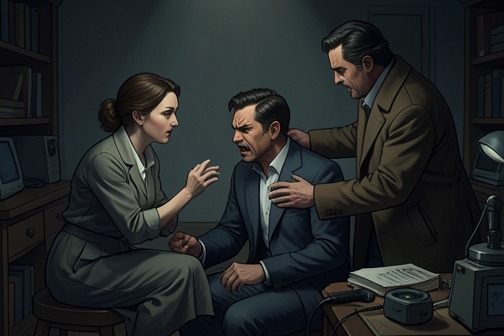
[Franz assaults Mieze after learning she loves another man](entity:event-recall-event-franz-assaults-mieze-af-333d44be5c0e), turning a private disclosure into a violent rupture in their relationship. The scene moves from her hesitant attempt to tell him about the young man to Franz’s loss of control, then to [Reinhold](entity:character-recall-character-reinhold-0fde6be20b54)’s intervention and the couple’s reconciliation. Its significance lies in that sharp reversal: [Mieze](entity:character-recall-character-mieze-07daf8e08629) remains attached to Franz even after he attacks her, while Franz’s later return to her does not erase what has happened.
## The confession and its implications
The conversation begins quietly, with Franz and Mieze sitting close together. Mieze struggles to explain that a young man has repeatedly appeared when she visits an older man and has pressed her to go out with him. She describes walking with him around [Berlin](entity:location-recall-location-berlin-54cb4a75d0f6), including Grunewald, while asking him to leave. Her account presents the meeting as something she felt pushed into, not as an encounter she had confidently chosen. Franz responds by criticizing the young man for not working, but his dismissive remark does not settle the question she has brought to him.
Mieze does not immediately name what has changed for her. When Franz asks whether she is in love with the young man, she first remains silent; then she answers yes. That admission is the decisive turn in the scene. Franz becomes frightened and physically rigid, and the narration registers his reaction through coldness and paralysis rather than through a considered reply. His thoughts briefly reach back to [Ida](entity:character-recall-character-ida-af62302a8868), making the moment resonate with an earlier history of violence. Mieze, meanwhile, stays close to him and says she has not left him: she insists that she still belongs with him and wants comfort from him.
Her position is emotionally complicated, and the scene does not reduce it to a simple choice between two men. Mieze acknowledges loving someone else but also says she has told him that she cannot leave Franz. Franz cannot hold those facts together. He treats her admission as a rejection, calls her degrading names, and repeatedly tells her to go to the other man. The gap between what Mieze says—that she is still present and seeks reassurance—and what Franz hears drives the argument toward violence.
## The assault and Reinhold’s intervention
When Mieze follows Franz as he tries to get away, he turns and strikes her, then continues the attack. The narration presents the assault as a sudden escalation from the argument, not as a planned act. Franz’s confusion and anger intensify together; the room seems to spin, and his attention shifts from Mieze to Reinhold, whom he suddenly notices in the bed. He orders Reinhold out, then moves back toward Mieze as her screaming continues.
The scene’s focus on screaming makes the violence feel like an uncontrolled force spreading through the room. Franz swings a chair and then restrains Mieze on the floor. Reinhold pulls him away before the attack can go further. He tells Franz to leave, put on his coat, and not return until he has calmed down. Franz eventually allows Reinhold to help him into his coat. Mieze, still distressed, manages to sit up and offer Franz his hat as he goes. The gesture does not make the assault harmless or settle their conflict, but it shows that their bond remains active even at the point of separation.
Reinhold’s role is practical and immediate: he stops Franz and gets him out of the room. His presence also connects the confrontation to the young man at the center of Mieze’s confession. The episode does not turn into a confrontation between the two men; instead, Reinhold’s intervention interrupts Franz’s attack and leaves Mieze and Franz to face its aftermath between themselves.
## Reconciliation and unresolved trust
The account soon shifts from the assault to Franz and Mieze together again. They laugh, lie in each other’s arms, and kiss. Franz acknowledges that he nearly killed her and badly beat her; Mieze says she is glad he has come back. Their exchange revisits Reinhold’s visit, but Franz does not demand a full explanation of what Reinhold was doing there. When Mieze asks whether he wants to know, he says no. The omission matters: the reconciliation proceeds without a complete investigation of the event that precipitated the assault.
Mieze’s central concern is that Franz might have meant to hand her over to Reinhold. Franz denies that interpretation and explains that he wanted Reinhold to see what a decent girl was like. This explanation places the encounter within Franz’s own attempt to shape Reinhold’s view of women, but it does not undo the harm caused by his jealousy. Mieze accepts his account and reassures him that she is his. Franz, in turn, asks whether she still cares for him or only for the other man. Their closeness returns, but the questions they ask reveal how insecure that closeness has become.
The reconciliation is followed by two days in which Mieze devotes herself to Franz. She stays with him and accompanies him to Erkner and [Potsdam](entity:location-recall-location-d1a1a7572934), while keeping her gentleman waiting. Their renewed intimacy is therefore shown through time spent together and acts of attention, rather than through any explicit resolution of the conflict. Mieze also decides to investigate Franz’s associations with the [Pums gang](entity:organization-recall-organization-pums-gang-e8036c9dc25b) on her own, since he will not take her to its gatherings. Her independent plan points toward a life beyond the couple’s private reconciliation.
## Narrative significance
The episode joins confession, jealousy, assault, intervention, and affection without allowing any one stage to cancel the others. Mieze’s love for another man is real, but so is her continuing attachment to Franz; Franz’s return to tenderness follows an act that has placed her safety at risk. The immediate repair of the relationship is thus unstable, founded on reassurance and avoidance as much as on renewed closeness.
The scene also makes a contrast between Franz’s declared interest in decency and his treatment of Mieze. He later presents her as an example for Reinhold, yet in the moment of jealousy he cannot respect her account or accept her divided feelings. The episode’s abrupt movement from embrace to violence and back to embrace gives that contradiction a concrete form. Mieze’s decision to explore the Pums gang’s world without Franz further complicates the apparent return to normal: their reunion is real, but it does not restore Franz’s control over her choices or close the story’s wider conflicts.
Event 28
Franz joins Pums’s gang
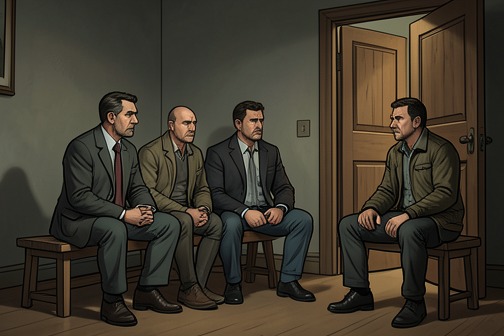
Franz joins [Pums gang](entity:organization-recall-organization-pums-gang-e8036c9dc25b) not through a formal welcome but by forcing the gang to reckon with what has happened to him. He enters [Reinhold](entity:character-recall-character-reinhold-0fde6be20b54)’s room despite their reluctance, names the loss that has turned him back toward crime, and asks to be judged as the man he is. His acceptance is conditional and suspicious: Reinhold sees a possible asset, but also someone to be controlled.
## The return to Reinhold’s room
The scene follows Franz’s imagined prospect of joining the penitent congregation and singing with others. Instead, he does not surrender to that possibility. He goes into Reinhold’s room with the rest of Pums gang, although the men have not invited him and do not want him there. His entrance is already a refusal to remain outside the life he has come to reclaim.
The gang’s questions make the decision explicit. [Karl the tinsmith](entity:character-recall-character-ed1bfb4ecb49) points out the change: Franz had been selling newspapers at [Alexanderplatz](entity:location-recall-location-9ddde9cf858f), and nobody had needed to recruit him then. Franz sits upright and says nothing for a long while. The silence holds together the two lives the room is being asked to reconcile: the man who tried to live respectably and the man now asking to enter a criminal gang.
## The case Franz makes for himself
When Franz finally speaks, he directs the gang to [Landsberger Allee cemetery](entity:location-recall-location-53f85b2ecd3f), where a woman he killed is buried. He says that he served four years for her death, that his good arm committed the violence, and that afterward he sold newspapers because he thought he could become respectable. His account does not erase the crime; it makes that earlier attempt at reform part of his claim to be understood.
Franz describes his lost arm as the warning that changed his course. Without it, he says, he stopped selling papers and stopped doing many other things. The injury is therefore more than a wound he displays to the gang: in his explanation, it has cut off the work through which he had tried to maintain an ordinary life. He does not present his return as a triumphant choice. He says that he has been dragged into crime, resisted it, and nevertheless been overwhelmed by it.
He also rejects revenge as the reason for coming. Although Reinhold threw him from a moving car and caused the injury, Franz says he has not held it against him or even mentioned it to him. He tells the gang that none of them can mend his arm. What he wants, he says, is to sit with them rather than continue running around Alexanderplatz. His appeal joins injury to belonging: the gang cannot repair the damage, but it can give him a place within the life that follows it.
## Reinhold’s terms and the gang’s acceptance
Reinhold interprets Franz’s arrival less generously. After Franz leaves, Reinhold says that because he managed to break him once, he can break him again. He calls Franz risky to deal with, but reasons that Franz is already deeply involved in criminal life and admits to being a pimp; in Reinhold’s view, there is little chance he will go straight. Franz’s claim that he has come because he can no longer sustain his former life does not reassure Reinhold. It gives him grounds to treat Franz as useful while remaining alert to possible betrayal.
Reinhold also wonders why Franz has come to the gang instead of seeking help from [Herbert](entity:character-recall-character-fd178cb3f9a6), his friend. Yet he concludes that the gang should let Franz join and deal with any tricks by force. This is acceptance without trust: Franz is admitted not because Reinhold believes his assurances, but because Reinhold thinks the gang can control him. The decision puts Franz inside the group while leaving the threat of renewed violence in place.
## A compromised return to crime
Franz picks up his hat and leaves without forcing the others to answer his account. Reinhold’s private decision follows, and the narration closes the gap between permission and action: Franz comes in. The change is decisive, but it does not resolve the conflict that brought him there. Franz has explained his return as the consequence of a life and livelihood broken by injury; Reinhold has accepted him as a man who can be used and, if necessary, broken again.
The episode thus reverses Franz’s earlier effort to make respectability a stable destination. His past killing, four-year imprisonment, newspaper selling, and damaged arm converge in a single room, where he seeks entry into the very criminal life he had tried to leave. The gang offers no restoration of the body or return to his former work. It offers only membership, under Reinhold’s suspicion, and Franz accepts that compromised place.
Event 29
Franz’s first burglary with Pums’s gang
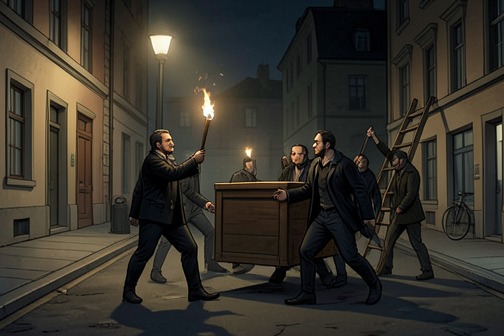
[Franz’s first burglary with Pums’s gang](entity:event-recall-event-franz-s-first-burglary-256a017fd384) marks the point at which his return to crime becomes an actual, organized undertaking rather than a possibility. On a Saturday night into Sunday morning, he takes part in a carefully prepared theft, contributes his strength to moving the stolen goods, and receives money from [Pums](entity:character-recall-character-pums-e40b21f81618). The job also changes what he can tell [Mieze](entity:character-recall-character-mieze-07daf8e08629): after keeping the crime from her for two days, he gives her his earnings and admits where they came from.
## Preparation and Setting
Before the burglary, [Waldemar Heller](entity:character-recall-character-waldemar-heller-a34833936f16) has surveyed large fashion shops in Kronenstrasse and Neue Wallstrasse. Paid for his expenses by Pums, he learns the entrances and exits, the arrangement of the buildings, who is present, and where the time clocks are. His reconnaissance makes the theft appear less like an impulsive break-in than a planned operation based on detailed knowledge of commercial premises.
The crew has also prepared the route into the building. The night before, three men enter a floor above the printers, carrying a ladder and an oxy-acetylene torch concealed in boxes. They hide the equipment behind bales of paper, and one of them drives the car away. At eleven, the others enter. The account describes a building of offices and shops, with the burglary carried out from above into a shop below; it does not identify that particular premises by name. The gang keeps watch on both the window and the yard while the tinsmith uses the torch to cut through the floor. An umbrella is pushed into the opening to catch falling debris, limiting the chance that the work will draw attention below.
## The Burglary
Franz is there for the first time, seated in the automobile as the operation gets under way. By then, everyone has an assigned part. At midnight Heller descends first because he knows the premises. Another man follows using an eight-foot steel ladder, which the gang extends by bringing tables beneath it. Franz remains above the opening, lying on his stomach. As the others pass up bolts of cloth, he sweeps them aside with his one remaining arm, placing them where another gang member can collect them.
His disability does not prevent him from doing strenuous work. The narration emphasizes the force of his grip and notes that even [Reinhold](entity:character-recall-character-reinhold-0fde6be20b54) is impressed by what he can manage. In this operation Franz is not simply present or waiting for instructions: he becomes a productive member of the crew, assigned a task that depends on his strength. The stolen goods are gathered into baskets, and Reinhold patrols the yard exit while another man watches it. The gang avoids confronting the night watchman, reasoning that he is unlikely to risk himself for the small amount he is paid. They leave money beside his time clock rather than interfere with him.
The work is completed in about two hours. The men wait for the car, eat breakfast without drinking enough schnapps to make noise, and leave. Franz and Heller are described as making their first trip out with the gang that day. A coin toss sends Heller back down into the darkened shop; Franz’s part in the theft has already been carried out above the opening. After the gang unloads, it undertakes one more quick job, extending the night’s criminal work beyond the first premises.
## The Road Back and Its Reversal
On the return journey, the car strikes and kills a dog. Pums, who likes dogs, is upset and reproaches the tinsmith, who is driving. The others treat his concern as excessive, and Franz and Reinhold laugh at his reaction. The episode briefly disrupts the gang’s businesslike account of the night: Pums’s concern for the animal sits uneasily beside the crew’s theft and their indifference to the people whose property they have taken. The incident also gives the successful return an unwelcome consequence, though the burglary itself has proceeded without interruption.
## Payment and Confession
Franz says nothing at home about the burglary for two days. His silence ends when Pums sends him two hundred-mark notes, telling him he may return them if he does not need them. Franz can use the money, including to give some to [Herbert](entity:character-recall-character-fd178cb3f9a6) for [Magdeburg](entity:location-recall-location-9fda615a8cc9), and brings it to Mieze. The payment makes his participation concrete: he has taken part in the crime and now has earnings to hand over.
Franz first presents the notes to Mieze tenderly, then explains that he earned them and that the job was with Pums and Reinhold. He tells her not to tell Herbert or [Eva](entity:character-recall-character-eva-a4f4507c5fab), fearing that they would reject him if they knew. His confession connects the burglary to his insecurity about his missing arm and his inability to earn a living as other people do. He says that he has to work or risk going to prison. In his account, the theft is therefore at once criminal income and evidence that he can still provide something.
Mieze does not respond with uncomplicated happiness. She kisses and embraces him, but her attention to the money changes the mood; she turns pale, sits looking at the tablecloth, and cries quietly. Franz does not understand what he has done wrong and offers the money as a chance for the two of them to take a trip. She agrees, but remains overwhelmed. The scene leaves their closeness intact while making the cost of his new source of income visible in her distress.
## Significance
The burglary gives Franz a place in the gang through a specific, effective task, and payment helps him imagine himself as a provider despite his disability. Yet the job’s apparent success does not settle his anxieties: he hides it from two people whose judgment matters to him, then discloses it to Mieze in a scene where money and affection cannot be cleanly separated. The passage also sets the crew’s planned movement through commercial buildings against the city’s ordinary systems of work and transit. Elsewhere, trams link districts and fares distinguish adult passengers from students and other reduced-fare riders; at [Alexanderplatz](entity:location-recall-location-9ddde9cf858f), tram routes cross a square being torn up for the underground railway. Against that changing urban network, the burglary turns familiar business premises into a route for illicit work. Franz’s entry into the gang is thus both a practical achievement and a step into a life he cannot yet acknowledge openly.
Event 30
Mieze’s murder
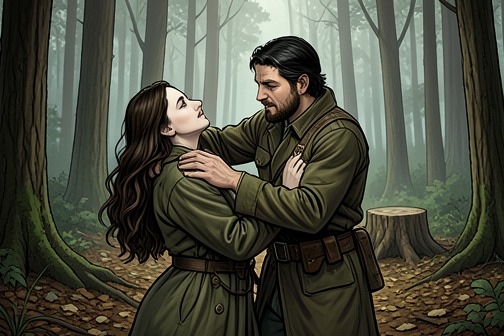
[Mieze’s murder](entity:event-recall-event-mieze-s-murder-c0797a296f1d) is the point at which [Reinhold](entity:character-recall-character-reinhold-0fde6be20b54)’s concealed violence becomes explicit: he kills [Mieze](entity:character-recall-character-mieze-07daf8e08629) in a forest hollow, reveals his role in the loss of [Franz Biberkopf](entity:character-recall-character-franz-biberkopf-29eb7a5d3879)’s arm, and then organizes the concealment of her body. The scene makes the private threat against Mieze inseparable from the earlier attack on Franz, while its recurring language of seasons sets the killing within a grim, impersonal rhythm of violence.
## The Encounter in the Hollow
Mieze is with Reinhold in the woods, but she does not want to remain with him. She tries to get away and calls for Franz. Reinhold catches her before she can escape and takes her back to the hollow. He alternates assurances that he will not force her with commands that she return and obey him. The contradiction is central to the scene: his claim to restraint does not change the fact that he controls her movements and refuses to let her leave.
The surrounding exchange establishes that Mieze is Franz’s companion and that Reinhold uses this relationship to demean and pressure her. She resists being treated as Reinhold’s possession, yet he insists on defining her through Franz and on deciding what she may do. The encounter therefore begins not as an equal meeting but as an attempt by Mieze to withdraw from a man whose threats and physical control make refusal dangerous.
## Reinhold’s Account of Franz’s Arm
As he brings Mieze back, Reinhold recounts an earlier episode involving Franz and the criminal group Reinhold worked with. Franz had objected to working with them and presented himself as respectable; Reinhold says that he nevertheless made Franz go along in a car. He then describes forcing Franz out when another car appeared, ending with the fact that Franz lost his arm in that incident.
This account changes the meaning of Franz’s disability. It is not merely a misfortune in his past: Reinhold directly connects it to his own actions and to the group’s criminal work. The revelation comes while Mieze is trapped with the man responsible, and she recognizes him as a murderer. Her alarm is thus directed both at the immediate danger to herself and at Reinhold’s proven capacity for violence against Franz. The disclosure links the two attacks without suggesting that Mieze has any power to intervene in what happened to Franz.
## The Killing and Its Seasonal Frame
Reinhold tells Mieze that he wants to deceive Franz and leave him with a lasting consequence. Mieze continues to resist and calls for Franz. Reinhold then kills her in the hollow. The narration marks the act through the repeated language of seasons: birth and death, breaking down and building up, and other opposed states recur as the violence unfolds. Rather than making the killing seem like an isolated outburst, this pattern gives it the weight of a recurring cycle whose language sounds larger and more inexorable than the people caught within it.
The scene also places the human act beside the routine of slaughtering an animal. That comparison is not an account of Mieze as less than human; it is part of the passage’s disturbing presentation of how Reinhold treats a person as something he can subdue, kill, and dispose of. The contrast between the calendar-like cadence and the specific struggle sharpens the horror: the language moves in repetitions, while Mieze’s attempt to escape and call for help remains particular and desperate.
## Concealment and Consequences
After the murder, Reinhold leaves Mieze’s body beneath branches and marks the place with a handkerchief so he can find it again. He returns with Karl, and the two search the dark woods with torches. They bring spades from the car, bury the body, cover the place with sand and branches, and try to remove signs of their passage. The killing is followed not by confession or discovery but by practical efforts to hide both the body and the evidence of the men’s presence.
Reinhold then gives Karl a valid passport and money, telling him to go into hiding while the commotion dies down. He directs Karl to [Pums](entity:character-recall-character-pums-e40b21f81618)’s address and says that Karl will have an alibi. This arrangement shows that the aftermath extends beyond the burial: Reinhold distributes resources and instructions to protect the accomplice and reduce the chance of exposure. The sequence closes on concealment in progress, leaving the murder’s discovery and its consequences for Franz outside this scene.
## Narrative Significance
The episode joins three strands of violence: Mieze’s murder, the earlier attack that cost Franz his arm, and the criminal group’s continuing methods of coercion and evasion. Reinhold’s account makes him the connecting agent between the first two, while Karl’s assistance in burying Mieze shows that the killing is followed by cooperation rather than immediate resistance. The reference to Pums’s address further places the concealment within an existing criminal network.
The seasonal refrain gives the scene a formal counterpoint to its sequence of pursuit, killing, and burial. Its repeated oppositions—life and death, destruction and repair—do not undo the murder or soften Reinhold’s responsibility. Instead, they make the event feel like a terrible repetition within the book’s larger pattern of blows and reversals. Mieze’s calls for Franz remain present against that pattern: the event is at once a calculated crime carried out by Reinhold and the destruction of a relationship whose other half is absent from the hollow.
Event 31
The Stralauer Straße burglary and gang rupture
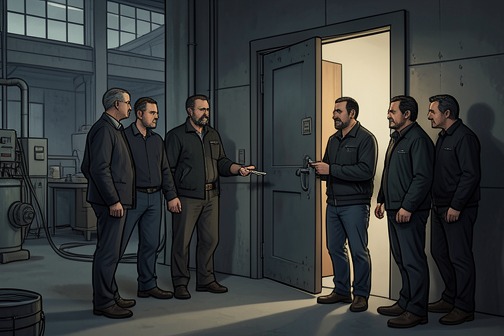
[The Stralauer Straße burglary and gang rupture](entity:event-recall-event-the-stralauer-stra-e-bu-c56e60fbb79d) is the failed robbery that brings a brewing dispute over money inside [Pums](entity:character-recall-character-pums-e40b21f81618)’s gang into the open. The crew tries to bypass Pums’s control of stolen goods and their sale by taking cash directly from a factory safe. The safe remains unopened, the gang leaves without the expected proceeds, and its members turn their frustration against the tinsmith who had been assigned to break in. Yet the episode does not produce a clean break with Pums: the gang still depends on his network of fences, so resentment and dependence persist together.
## Causes and Stakes
At the beginning of October, the disagreement concerns not simply the size of the gang’s earnings but when and by whom those earnings are controlled. Pums considers disposing of stolen goods the essential work of the outfit. [Reinhold](entity:character-recall-character-reinhold-0fde6be20b54) and others, including [Franz Biberkopf](entity:character-recall-character-franz-biberkopf-29eb7a5d3879), put greater weight on acquiring them. In their view, the proceeds should be shared after the goods have been acquired, rather than only after Pums has arranged their sale. They believe too much of the takings goes to him.
Their suspicion has a practical basis within the gang’s arrangement: Pums has a monopoly in dealing with reliable fences, who refuse to work with anyone else. He makes concessions and imposes supervision, but neither is enough to persuade the others that the enterprise is fair. They favor a cooperative arrangement; Pums answers that they already have one. The disagreement therefore turns on competing accounts of the same organization: Pums presents his control as the structure that makes the business function, while the others see it as a means of taking an excessive share.
The Stralauer Strasse job is planned as a test of that dispute. The target is a factory making cloth for bandages, in a courtyard building. The crew has reconnoitered the premises and knows that money is kept in a safe in the private office. Rather than take goods that would still have to pass through Pums and his fences, they intend to take cash, which they believe can be divided without his intervention. Pums goes along himself, making the attempted robbery a direct confrontation within the gang as well as a burglary.
## The Failed Safe Robbery
The crew enters two at a time by the fire escape and takes its time unscrewing the office door’s lock. The tinsmith works on the safe with a blowtorch. The office offers little else: the gang finds only a small amount of money and some postage stamps, along with two tanks of petrol in the corridor. They wait for the tinsmith to finish, but he burns his hand while working on the safe and cannot continue.
Reinhold takes over, but he is out of practice. Pums then tries the blowtorch himself, without success. The safe remains closed, and the situation grows more urgent because the watchman is expected soon. The carefully chosen plan—to take money directly and avoid Pums’s dealings in goods—has yielded no meaningful return. With the burglary unfinished and time running out, the crew has to leave.
## Retaliation and an Unsettled Rupture
Before they go, the gang takes the petrol tanks and drenches the office furniture and safe. The fire is intended as retaliation against Pums, whom the others want to make pay for the failed job and the larger dispute. But the match is thrown too soon: Pums is singed, and his back is burned. As the crew runs down the steps, its members alert him to the watchman. Pums barely makes it to the car. The attempt to strike at his authority thus ends not with money secured or control wrested from him, but with a hurried escape and an injury to the very man the crew set out to punish.
The gang mocks Pums as an exploiter and a crook, yet the quarrel does not free its members from his influence. Pums can still rely on his contacts to form or maintain an outfit, and the gang’s access to reliable fences remains tied to him. At a Thursday meeting in the sports club, he is expected to explain himself. He can point to written invoices and argue that he does the best he can; the others suspect that they will be unable to prove he has taken more than his share. They imagine the club dismissing their complaint on the grounds that Pums is doing his best, even if he receives something extra. The gang expects to keep following him while continuing to regard him as a shark. Its rupture is real, but its dependence prevents it from becoming a clean departure.
## The Tinsmith as Scapegoat
The failed robbery also changes who bears the gang’s anger. The tinsmith’s injury prevents him from finishing the safe, and the others blame him for making them look foolish. They call him clumsy and decide that they can do without him. He is sent to a doctor, despite having done good work for them before. The immediate technical failure becomes a convenient focus for rage that had been building over Pums’s share and authority.
The tinsmith’s own grievances give this scapegoating a wider personal context. He feels that the gang has repeatedly left him to bear the consequences: he recalls losing his business, drinking, and returning home on New Year’s Eve to find his wife gone. He also resents Reinhold’s involvement with [Mieze](entity:character-recall-character-mieze-07daf8e08629). In his view, Mieze had been with him before Reinhold took her away, and Reinhold later killed her; he remembers having helped Reinhold carry her and says that he would have taken the blame for him. These are the tinsmith’s bitter recollections, not a resolution of the gang’s present dispute. They show how the failed job reopens older injuries and loyalties, while the man blamed for the safe remains bound to a crew whose members have already given him reasons to feel betrayed.
## Significance
The episode joins an economic conflict to a botched criminal operation without allowing either to settle the other. The gang’s plan makes its challenge to Pums concrete: cash in a safe is supposed to be easier to divide fairly than goods controlled through his contacts. But the safe cannot be opened, and the fire produces damage rather than a new distribution of money. The practical failure sharpens the internal conflict while leaving its underlying arrangement intact.
The blame directed at the tinsmith further exposes the imbalance between the gang’s collective grievance and its treatment of an individual member. The crew questions Pums’s share, yet when the robbery fails, it punishes the worker whose injury interrupted the plan. Pums remains powerful because of his control of the fences; the tinsmith becomes expendable because he cannot complete the immediate task. The attempted break with the gang’s existing order therefore ends in a revealing reversal: the members attack Pums, then continue to trail after him, while redirecting their anger toward one of their own.
Event 32
Franz Biberkopf’s fatal assault on Ida
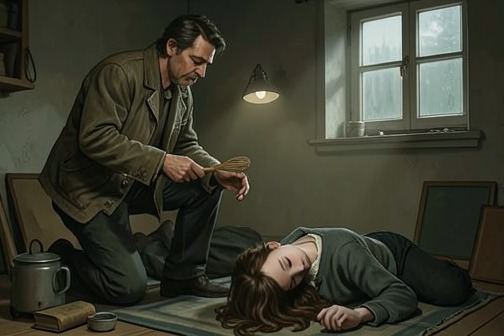
[Franz Biberkopf’s fatal assault on Ida](entity:event-recall-event-franz-biberkopf-s-fatal-6f53c86bd86a) is the crime that leads to his imprisonment and, years later, the past that returns to torment him during his breakdown at [Buch Asylum](entity:organization-recall-organization-buch-asylum-c3625f7be8d8). The novel places the event between two accounts: a detached reconstruction of the quarrel and a hallucinatory scene in which [Ida](entity:character-recall-character-ida-af62302a8868) confronts Franz with what he has done. The distance between his legal sentence and the death he must face gives the episode its lasting force.
## Background and Circumstances
Franz is introduced as a former furniture remover and cement worker who has been released from prison and wants to live decently in [Berlin](entity:location-recall-location-berlin-54cb4a75d0f6). That aspiration is shadowed by an earlier act of violence: he had attacked Ida, his girlfriend, during a quarrel in the flat of her sister, [Minna](entity:character-recall-character-minna-da125658d71d). The novel’s account makes clear that the confrontation did not begin as an abstract moral case. It arose between people with an intimate history, and the argument touched Franz’s sense of honour, a self-image that the narration presents as badly compromised by his conduct.
The dispute escalated after Ida used insults that provoked Franz. He was agitated and physically strained, and he seized a small wooden cream whisk. He struck Ida twice with it. Her sister entered from the next room, interrupting the attack; Franz then withdrew to escape her reproaches. A police patrol picked him up near his home that night. These circumstances mark both the violence of his act and the interruption that prevented the quarrel from continuing: the sequence ends not with a reconciliation, but with arrest and the beginning of Franz’s punishment.
## Reconstruction and Responsibility
The narrator first presents the assault in a strikingly clinical register. Rather than relying on the [Furies](entity:creature-recall-creature-furies-e837481f2851) of classical tragedy to explain what happened, the account invokes physical laws and proceeds as if the force and consequences could be itemized. It identifies the whisk, the blows and their effects, then describes the physical and physiological consequences in technical language. The method makes the violence legible as an action with material consequences; it does not make Franz’s responsibility disappear into fate or supernatural vengeance.
That forensic manner also jars against the intimate setting and the narration’s descriptions of Ida as a young woman known to Franz. The contrast refuses to let the episode settle into a simple tragic emblem. Franz’s violence is at once a specific assault in Minna’s home and an act the text dissects with almost procedural precision. The classical comparison with Orestes is raised only to be set aside: the narrator distinguishes Franz’s ordinary, contemporary crime from the grandeur of ancient tragedy. The episode remains consequential without being ennobled.
The narrative also distinguishes what happened from how the case was legally classified. During the later scene at Buch, Franz insists to Ida that the court convicted him of assault, not murder, and that he served his sentence at Tegel. His recollection of the court’s judgment becomes a defense, but it does not undo the novel’s account that Ida died as a consequence of his attack. The gap between the legal category he invokes and the death he must confront becomes central to the episode’s return.
## The Return at Buch Asylum
During Franz’s breakdown, the assault comes back not as a calm recollection but as a scene he experiences in the present. Ida appears to him in the kitchen, repeatedly bending as if hurt. Franz begs the unseen assailant to stop, then recognizes that Ida identifies him as the person who beat her to death. His response is immediate denial: he invokes the court and his sentence, as though the distinction between assault and murder could settle the accusation.
The scene then changes its shape. Ida stops bending, sits with her head lowered, and appears to grow smaller and darker until Franz sees her in a coffin. He tries to make it go away but cannot reach it or move it. The coffin vanishes amid his tears, yet the grief continues. The sequence turns the fact of Ida’s death into an image that Franz cannot control: his legal defense can be spoken, but it cannot remove the coffin or restore the woman before him.
This return is part of the asylum’s broader confrontation with Franz’s past. During the same breakdown, [Death](entity:character-recall-character-b309ce745d9e) rebukes him over [Mieze](entity:character-recall-character-mieze-07daf8e08629), emphasizing that she had cared for him and died while he had been absorbed in his rivalry with [Reinhold](entity:character-recall-character-reinhold-0fde6be20b54) and his own claims to toughness. The two women’s deaths are not presented as identical events, but Ida’s appearance gives the accusation against Franz an earlier source. His history of violence and his self-presentation as a wronged, honourable man are brought into conflict as he is forced to witness what his account of himself leaves out.
## Narrative and Thematic Significance
The episode moves between incompatible-seeming registers: a narrator’s cool, almost scientific reconstruction and Franz’s fragmented, anguished encounter with Ida. The first insists on sequence and consequence; the second stages the emotional return of a fact he tries to contain within the language of court proceedings. Together, they prevent the crime from being reduced either to inexplicable fate or to a legal label. The assault has a concrete setting, an immediate interruption, and a consequence that survives Franz’s completed sentence.
Its recurrence also changes the meaning of Franz’s wish to live decently. At the beginning of his post-prison life, he can treat a new start as if the past were finished. At Buch, Ida’s accusation exposes the limits of that separation: serving time is not the same as confronting the person who died. The novel gives no simple resolution in which Franz’s suffering cancels his responsibility. Instead, Ida’s image disappears while his grief remains, leaving him face to face with a past that punishment had contained but not erased.
Event 33
Reinhold runs over Franz Biberkopf
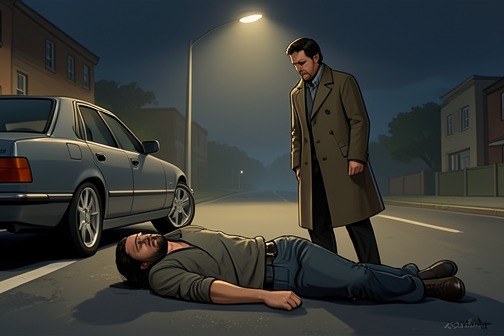
[Reinhold runs over Franz Biberkopf](entity:event-recall-event-reinhold-runs-over-fran-47f57d6f8137) in a deliberate attack that leaves Franz without his right arm, a lasting bodily consequence that reshapes his life without ending his attachment to his assailant. The novel discloses the assault retrospectively: Franz names [Reinhold](entity:character-recall-character-reinhold-0fde6be20b54) as responsible, while later testimony and recollection expose the strange distance between the injury’s severity and Franz’s refusal to condemn him.
## Disclosure and Circumstances
At four in the afternoon, Franz returns to [Eva](entity:character-recall-character-eva-a4f4507c5fab) and [Herbert](entity:character-recall-character-fd178cb3f9a6) and speaks at length for the first time. He has read in the newspaper that [Karl the tinsmith](entity:character-recall-character-ed1bfb4ecb49) informed on the gang, and connects Karl with the events in [Freienwalde](entity:location-recall-location-a09319e94ffe), where [Mieze](entity:character-recall-character-mieze-07daf8e08629) was taken. Franz says Reinhold threw him under a car and ran over his arm. He interprets the attack as an effort to crush him, but says Reinhold realized he had not broken him; Franz then links that failure to Reinhold’s taking Mieze from him. His account makes the assault part of a wider sequence of betrayal and violence, while leaving some details uncertain: Franz speculates about how Mieze was transported and when she may have been killed rather than claiming to know precisely.
## Injury and Franz’s Response
The physical consequence of the attack is lasting. Later, Franz usually does not wear his artificial arm, but goes out with it on, keeping the false hand in his coat pocket and holding a cigar in his left hand. The changed body is thus presented through an ordinary act of going out, rather than as a condition that disappears once the assault is over.
In a later confrontation, [Death](entity:character-recall-character-b309ce745d9e) recalls that Franz did not collapse when Reinhold put him under the car and drove over his arm. Under the wheels, Franz resolved to be strong. The contrast matters: the attack causes a profound bodily loss, but Franz’s immediate answer is not reflection on the people or circumstances around him. Death’s rebuke is that he fails to look properly at others or ask why events have happened. The assault therefore becomes both a physical turning point and an occasion for questioning the narrow, self-directed strength with which Franz initially meets disaster.
## Mieze and Reinhold
Franz’s account connects the attack to Reinhold’s later treatment of Mieze, but it presents Franz’s understanding of Reinhold’s motives, not an independently confirmed explanation of every step. Franz believes Reinhold took Mieze after realizing he had failed to crush Franz. The two acts become joined in Franz’s telling: his survival does not end Reinhold’s violence, but is followed by the loss of the woman he loves.
The relationship between the two men remains deeply contradictory. At Reinhold’s trial, Franz testifies that he and Reinhold had been good friends and describes Reinhold as having a terrible, unnatural compulsion involving women. He suspects Mieze resisted Reinhold in Freienwalde, but says he does not know whether Reinhold had sadistic tendencies. His testimony offers a judgment about Reinhold’s conduct while stopping short of certainty about his inner nature.
## Trial and Aftermath
At the trial, Franz gives evidence as a one-armed man whom the experts consider recovered and fit to be cross-examined. He is not indicted. Though he speaks about Reinhold and Mieze, he will say nothing further about Reinhold, his arm, their quarrel, or their fight. The omissions keep the assault from becoming a complete or settled account of their bond.
Franz and Reinhold stare at one another in court. Franz feels no pity for Reinhold in the dock, but retains a strange affection for him, looking at him steadily and imagining that he could meet him again without becoming hard-hearted. That response gives the attack an unresolved ending: Reinhold’s violence has permanently altered Franz’s body, yet it has not severed Franz’s emotional connection to him.
Event 34
Mieze’s murder in Freienwalde
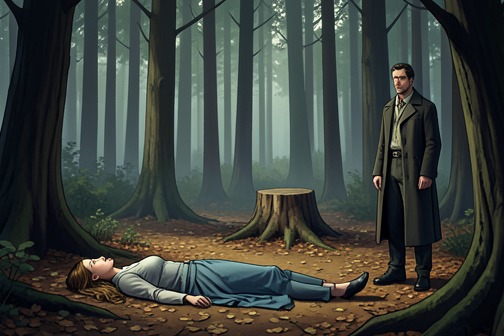
[Mieze’s murder in Freienwalde](entity:event-recall-event-mieze-s-murder-in-freie-c632fe7464fc) is the violent end of her devotion to [Franz Biberkopf](entity:character-recall-character-franz-biberkopf-29eb7a5d3879) and the crime that brings [Reinhold](entity:character-recall-character-reinhold-0fde6be20b54) and [Karl the tinsmith](entity:character-recall-character-ed1bfb4ecb49) before the court. The killing itself is not presented as a fully witnessed scene: the narrative reconstructs it through a forest search, conflicting accounts, the recovery of [Mieze](entity:character-recall-character-mieze-07daf8e08629)’s body, and the later trial. That indirect telling makes the murder both a personal loss and a criminal case, while showing how quickly a loved person can be reduced to evidence and suspicion.
## Circumstances and the journey to [Freienwalde](entity:location-recall-location-a09319e94ffe)
Mieze, whose name was [Emilie Parsunke](entity:character-recall-character-a27afabd06f3), had come from [Bernau](entity:location-recall-location-8509a4b652ee) to [Berlin](entity:location-recall-location-berlin-54cb4a75d0f6) after her mother left the family home. She met [Eva](entity:character-recall-character-eva-a4f4507c5fab) and, through her, entered a life in which she found a steady relationship with Franz Biberkopf. The account describes her as devoted to him. It does not present her as unaware of the dangers around her, but emphasizes the sincerity and constancy of her love.
Mieze went to Freienwalde to protect a friend. The account identifies the destination and her purpose, but does not supply a complete, independently witnessed sequence of the encounter that ended in her death. At the trial, Franz says he suspects that Mieze resisted Reinhold and that Reinhold killed her in a fit of rage. This is Franz’s explanation, not a scene the narrative confirms through direct observation. The court identifies Reinhold as the murderer, but the precise immediate exchange remains mediated through later testimony.
The trial records the crime as the murder of Emilie Parsunke, from Bernau, on [September 1, 1928](entity:time-recall-time-september-1-1928-5c56a83ef4e6), in Freienwalde near Berlin. The difference between that official name and the name by which Franz knew her gives the case two registers: Emilie Parsunke is the woman entered into the proceedings, while Mieze is the beloved person Franz remembers.
## The search and recovery
The investigation first turns on disturbed ground in the forest. Police officers bring spades, and Karl the tinsmith indicates a hollow where the earth appears to have been recently moved. The search finds signs that something has been buried, including a scrap of pink material, but the body is not recovered there. Karl’s insistence that the officers keep digging does not settle what happened; instead, the failure to find Mieze intensifies suspicion and leaves the search unresolved.
The magistrate questions Karl about his contact with Mieze and Reinhold. Karl says that Mieze was alive the last time he saw her, during the afternoon, and that he was not with her later that night. He also admits that he helped Reinhold carry her. When asked where he went afterward, Karl explains that Reinhold gave him a passport and money, and that he left so he would have an alibi if the matter came to light. Karl’s account thus places him in the handling of the body while distinguishing that act from the killing. His willingness to help Reinhold had been bound up with friendship and payment; his later cooperation with the authorities follows a separate rupture between the two men.
Two days later, Mieze’s body is found about a mile from the first hollow. Two horticultural workers come forward after seeing a broad-shouldered man carrying a heavy box through that part of the forest and later sitting in a hollow. Their report directs the police to search likely hollows. In one, officers uncover a cardboard box containing women’s clothing; soon afterward, a box is found in another hollow with Mieze’s body inside, tightly bound with window-blind cord. The workers’ account, the disturbed ground, and the recovered box form a chain of clues, but the investigation still depends on statements by people connected to the crime.
## Accusations and the trial
Once police question Reinhold, he recognizes that suspicion is closing in and turns it toward Franz. He argues that Franz could have been responsible and that Karl’s evidence does not prove Reinhold’s guilt. He then warns Franz that Karl has informed on the group and urges him to disappear. Franz leaves within a quarter of an hour; Reinhold helps him pack and accompanies him to Wilmersdorf, where Eva arranges lodging with a longtime friend. The effort to redirect suspicion therefore changes Franz’s position as well as Reinhold’s: he is drawn into the investigation and forced into flight, although he is not indicted.
At the trial, Reinhold and Karl the tinsmith—identified in the proceedings as Matter, alias Oskar Fischer—face charges relating to the murder and to helping and abetting. Franz gives evidence after being judged recovered and fit to be cross-examined. He says Mieze had no affair with Reinhold, describes himself and Reinhold as friends, and attributes Reinhold’s conduct to his destructive compulsion to pursue women. Asked whether he knows of sadistic tendencies, Franz does not claim certainty; he offers his suspicion about what may have provoked the killing. When questioning turns to Reinhold’s youth and drinking, Franz answers only within the limits of what he knows.
Franz refuses to discuss other matters that could clarify his relationship with Reinhold, including his injured arm, their quarrel, and their fight. The silence leaves parts of their history outside the courtroom even as Franz’s testimony helps explain his view of the crime. He is not indicted, and his appearance as a witness does not dissolve the personal attachment that complicates his judgment of Reinhold.
## Loss, evidence, and narrative significance
The account of Mieze’s death insists on the gap between the person she was to Franz and the official handling of her remains. After the body is recovered, procedures of identification and documentation transform her into part of a criminal investigation. A wax likeness preserves her appearance as an exhibit, but preservation is not restoration: the image stands for the woman without returning her to her relationships or her life. The contrast makes the investigative process necessary yet chillingly incomplete. It can establish evidence and identify a victim, but cannot undo the loss or fully contain what she meant to those who loved her.
The murder is narrated alongside the ordinary machinery of Berlin life rather than enclosed within a single crime scene. Elsewhere, the text lists tram routes and fares, describes the roadworks at [Alexanderplatz](entity:location-recall-location-9ddde9cf858f), and returns to the pile driver striking the ground near [Aschinger’s](entity:location-recall-location-70ec9515718a). These public rhythms—transport, construction, commerce—contrast with the hidden movement of a body through the forest. The contrast does not explain the crime; it situates private violence within a world that continues to circulate and work around it.
Mieze’s death also reorganizes the relationships around the case. Karl’s account exposes his paid assistance to Reinhold and his later decision to inform on him. Reinhold’s accusation sends Franz into hiding, while the trial brings Franz back into public view as a witness rather than a defendant. For Franz, however, the proceedings do not turn Reinhold into a stranger. The case supplies a legal account of murder, but Franz’s restrained testimony and continuing attachment preserve an emotional contradiction the verdict cannot settle: the man he regards as a friend is also the man held responsible for Mieze’s death.
Event 35
Discovery of Mieze’s body

The discovery of [Mieze](entity:character-recall-character-mieze-07daf8e08629)’s body in the [Freienwalde](entity:location-recall-location-a09319e94ffe) forest turns a suspected murder into a material, publicly reported case, but not through a single clean revelation. Police first dig at a hollow identified by [Karl the tinsmith](entity:character-recall-character-ed1bfb4ecb49) and find signs of disturbance without finding her. Two days later, witness accounts lead them to another hollow, where an initially misleading box gives way to the corpse itself. The search makes the landscape a field of clues, while the gap between Karl’s directions and the body’s actual location deepens suspicion rather than resolving it.
## The First Hollow
Karl the tinsmith walks with the police and points out a hollow where he says the girl was buried. The soil is loose and churned over; fir cones lie at the bottom. The officers dig, but Mieze is not there. A scrap of pink lace, dirty and slimy with soil, is brought up and shown to the magistrate. It might have come from a sleeve, and its color appears to fit the description of the missing woman’s clothing, but the fragment does not establish where the body is or who moved it.
The excavation has a peculiar evidentiary force: the disturbed earth indicates that something had been buried, while the empty hollow suggests that the search has arrived after another act of concealment. The officers consider that someone may have dug there only the previous day or that day. They question Karl about when he last saw the girl. He says she was alive when he saw her that afternoon, denies being with her later, and acknowledges that he helped carry her. The exchange puts him close to the disposal of the body without, by itself, proving that he took part in the killing.
## Karl’s Account Under Question
The magistrate presses Karl about his movements on the night after the incident. Karl says that he left with a passport [Reinhold](entity:character-recall-character-reinhold-0fde6be20b54) had given him, intending to secure an alibi in case the matter came to light. He explains that Reinhold paid him and that they had been on friendly terms. That explanation is unsettled by Karl’s further admission: he is in prison because Reinhold informed on him over a night watchman affair. Their association, as Karl describes it, contains both practical cooperation and betrayal.
Karl also characterizes Reinhold as brutal and says that Reinhold wanted to get rid of him, though he does not claim that Reinhold physically attacked him. The questioning therefore leaves several matters unresolved: Karl has helped carry Mieze, has an account of her being alive earlier in the day, and has an alibi connected to Reinhold, a man he now says betrayed him. His directions take the police to disturbed ground, but not to the place where the body will be found.
## Witnesses and the Heavy Box
Two days after the first search, Mieze’s body is found roughly a mile from that hollow, elsewhere in the same forest. The report in the newspapers prompts two horticultural workers to come forward. They recall seeing a man alone in that part of the forest carrying a very heavy box. He sat down in a hollow to recover his breath; when the workers returned about half an hour later, he was still there, in his shirtsleeves, but the box was gone. Their account supplies a route and a distinctive action, though it does not yet identify the man or prove what the box contained.
The workers describe him as about five feet nine inches tall and broad-shouldered, wearing a black bowler hat and a light grey summer suit with a pepper-and-salt jacket. He dragged his legs as if in poor health and had a high forehead marked with horizontal lines. Since the area contained many hollows and police dogs could not help, investigators dug up the likeliest sites. In one, a few spadefuls down, they found a large brown cardboard box tied with string.
## The Box and the Confirmation
The first box does not immediately disclose the body. It contains pieces of women’s clothing: a torn blouse, long light-colored stockings, an old brown wool dress, dirty handkerchiefs, and two toothbrushes. Though wet, it is not soaked through and seems not to have been there long. The clothes make the find look relevant, but the discrepancy is decisive: Mieze had been wearing a pink blouse, and the dead woman is not yet in this box. The search has encountered another piece of concealment, not its conclusion.
Soon afterward the box is found in a different hollow. This time the corpse is inside, crouched and tightly bound with window-blind cord. The physical details—the box, the cord, and the body’s cramped position—confirm that Mieze has been hidden and transported through the forest. That night, police stations throughout the districts and their outlying areas are busy circulating descriptions of the suspect. The discovery thus produces both confirmation and a new investigative problem: the body is recovered, but the person seen carrying the heavy box must still be identified.
## Narrative and Investigative Significance
The sequence delays certainty by separating signs from their explanation. Loose soil and pink lace point toward a burial but yield no body; the workers’ account narrows the search to a man and a heavy box; the first box offers clothing that seems incriminating but is not the corpse; only the second hollow gives the investigation its central physical confirmation. Each clue changes the meaning of the previous one without making the search effortless or complete.
The forest is rendered less as an empty backdrop than as a difficult investigative space: it has many hollows, the dogs provide no help, and the body’s concealment forces repeated digging. The eventual recovery also sharpens the uncertainty around Karl. He directed the police to evidence of a burial, but not to the place where Mieze lay; his statements and history with Reinhold leave him entangled in the case without settling his responsibility. The discovery establishes the crime’s concealed aftermath and sets the police pursuit in motion, while leaving the suspect’s identity and the chain of responsibility to be pursued beyond the hollow.
Event 36
Franz Biberkopf’s arson attack on Reinhold’s hideout
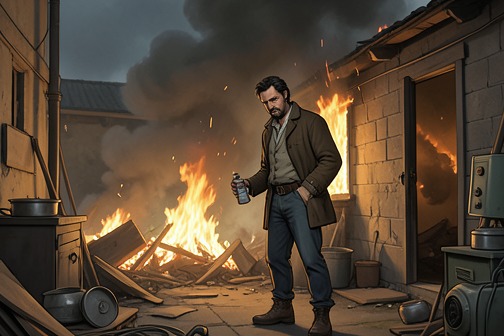
[Franz Biberkopf’s arson attack on Reinhold’s hideout](entity:event-recall-event-franz-biberkopf-s-arson-7a4e7c212e82) turns grief into a direct but unsuccessful act of retaliation. Franz prepares and sets a fire in the house where he expects [Reinhold](entity:character-recall-character-reinhold-0fde6be20b54) to be, hoping to drive him out; the building burns, but Reinhold remains absent. The episode therefore makes its central reversal plain: Franz can damage the place associated with his enemy, yet cannot reach the man or undo the killing that has left him feeling powerless.
## Circumstances and Preparation
The scene begins with other voices treating Franz as someone who has lost control and should be sent to [Wuhlgarten](entity:location-recall-location-867eca04f601). Against that background, the narration shifts from talk about his condition to deliberate preparation: one night, he works inside the house and hides a can of paraffin and a bottle. The account does not explain the mechanics further, but the concealed materials establish that the fire is planned rather than an accident.
Franz also tries to make Reinhold answer him. He calls for him to come out, addressing him with hostile accusations, but the house answers as if it could speak: it says Reinhold is not there and invites Franz inside to look around. Franz’s reply—that he cannot search every nook—leaves the essential obstacle unresolved. He is trying to force an encounter with someone who remains out of reach, and the house becomes both the target of his action and the barrier between his demand and any actual confrontation.
## The Fire and Its Intended Effect
The next morning, Franz is at the house shortly after the woman delivering the newspapers. The narration marks his return through a brief, striking personification: the lamp-posts seem to see him running and rock at the sight of the fire. Smoke and flames rise from the skylights. By seven, the fire brigade has arrived; the description establishes a substantial blaze without turning the scene into an account of firefighting or physical harm.
Franz is not at the house when the brigade arrives. He is sitting at [Herbert](entity:character-recall-character-fd178cb3f9a6)’s, clenching his fists, and speaks as if the burning has accomplished a practical purpose: Reinhold will have nowhere to live and will need to find somewhere else. He acknowledges that the place was deliberately set alight. The attempt is thus both an attack on Reinhold’s shelter and a message intended to make him appear. The fire is visible, the intention is explicit, and yet the person Franz wants to confront does not emerge.
## A Retaliation That Does Not Find Its Target
Franz expects the destruction of Reinhold’s residence to smoke him out, but that expectation fails. Reinhold does not appear. [Berlin](entity:location-recall-location-berlin-54cb4a75d0f6) continues noisily around the event, while the newspapers carry no report that he has been caught. Franz imagines that Reinhold has escaped abroad and that the authorities will never find him. The narrative gives no confirmation that this fear is true; what it establishes is Franz’s inability to locate Reinhold or obtain any public sign that the pursuit has succeeded.
That absence changes the meaning of the fire. It may burn the place Franz associates with Reinhold, but it gives Franz no meeting, arrest, or assurance of justice. The gap between the result he expects and the one he receives is crucial: a conspicuous act of revenge produces no visible consequence for its intended target. Franz has acted, but the action does not restore his sense of agency. The fire cannot reach backward to alter what Reinhold has done, and it cannot make Reinhold answer for it in this scene.
## Grief, Public Space, and the Ending
After the failed attempt, Franz stands before [Eva](entity:character-recall-character-eva-a4f4507c5fab), weeping with his head bowed. He says that Reinhold has killed the girl and that Franz can do nothing to stop him; he describes himself as finished and repeats that the situation is not right. Eva tells him that nothing has changed and asks why he believes himself finished. Their exchange sets her response beside his despair, without suggesting that her reassurance resolves it. His grievance is not only that Reinhold remains free, but that Franz sees himself as unable to protect the person who was killed or answer the harm done.
The ending moves away from the house and into a crowd in Berlin. [Sarug and Terah](entity:character-recall-character-bcc071c269ea), identified as angels, walk beside Franz and speak with one another; Franz is silent, though the narration makes his violent weeping audible to them. Police officers pass on patrol without recognizing him. This final contrast denies the scene a conventional resolution: the fire has not produced Reinhold, the police do not identify Franz, and Franz does not speak his way out of grief. The attack’s decisive consequence is instead the exposure of its limit. Franz can set the house alight, but he remains alone within a crowd, accompanied only by the angels as he weeps.
Event 37
The Alexanderquelle police raid and Franz Biberkopf’s arrest
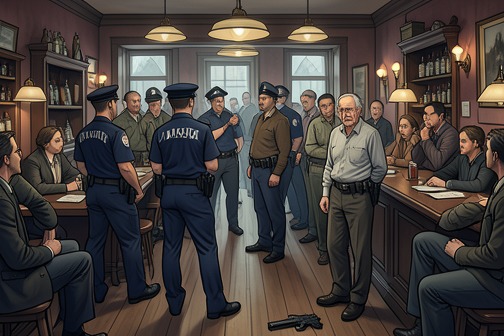
[The Alexanderquelle police raid and Franz Biberkopf’s arrest](entity:event-recall-event-the-alexanderquelle-pol-402e25134869) turns an ordinary Friday-night police roundup into an armed confrontation, and then into the disclosure of a concealed identity. As officers clear the [Alexanderquelle pub](entity:location-recall-location-a37a57fafead), an elderly man slips inside, watches the operation, and acquires a gun left on the floor. When the police finally order him out, he refuses and fires at an approaching officer. The force used to subdue him ends the confrontation, but his arrest reveals that the apparent old man is [Franz Biberkopf](entity:character-recall-character-franz-biberkopf-29eb7a5d3879), disguised with a grey wig and already sought in connection with a murder case.
## The roundup reaches the Alexanderquelle
The raid is one stop in a broader police operation. Officers first surround the Rückerdiele pub on Rückerstrasse, take its customers away in a truck, and then divide their forces among additional locations. The Alexanderquelle pub, at the corner of Prenzlauer Allee and Münzstrasse, is packed with people collecting themselves after payday: they drink, listen to music and the radio, and continue talking even as detectives enter and announce the roundup. The police take customers away in batches, with vehicles moving back and forth to police headquarters.
The pub’s routine does not immediately yield to the officers’ authority. Customers protest, joke, and ask about work they will miss; a woman in the passage cries that she has not registered at her new address. In the ladies’ toilet, another woman continues screaming while police manage the crowded room. These exchanges make the roundup at once an exercise of state power and a disruption of people’s immediate concerns: wages, employment, paperwork, and getting home. The police keep emptying the pub, but the room remains unsettled, with officers and customers negotiating each departure in turn.
## The disguised man waits
At about a quarter to eleven, after the raid has been under way for some time, a grey-haired man enters despite the police presence at the door. The officers’ attention is drawn elsewhere—to people trying to enter and to police marching from across the street—so he passes them and goes upstairs with a beer. Other people remain nearby, laughing and talking as if the operation were not their concern. The man sits alone and observes the nearly emptied room.
His place at the edge of the roundup changes when his foot touches an object beside the wall. It is a gun, apparently abandoned by someone; he picks it up and now has two weapons. He interprets the raid with bitter suspicion, imagining that the decision to make arrests serves police officials’ public image and private advancement, and noting that the operation takes place on a Friday when people have their pay. His comments do not halt the procedure, but they place the state’s orderly operation beside the disorder and self-interest he believes it conceals.
## Refusal and gunfire
An officer comes upstairs to hurry the remaining people out and asks the old man whether he has paid. The man replies that he has only just arrived. When told he must leave with the police, he does not move. The officer goes downstairs and confers with the others; after a short interval the police return and again order the man to come with them. The scene tightens around this refusal: the room is nearly empty, the officers are moving quickly, and the man remains seated while the roundup resumes around him.
As the young inspector leads the officers up the steps, the man pulls his left arm from his pocket and fires at the first officer rushing toward him. The narration identifies the gunman as Franz Biberkopf and links his action to his sense that the police have pursued him long enough. He stands, but officers close in and strike him; his thoughts turn to his artificial arm and to the recent loss of [Mieze](entity:character-recall-character-mieze-07daf8e08629). Before he can fire again, he collapses beside the bannister. He has stopped resisting, and the officers push aside the furniture, turn him over, and discover the artificial arm and two guns. They also find that he is wearing a wig. They pull him to his feet and take him away handcuffed by his left arm.
## Identification and consequences
The arrest moves from the pub into the police and court system. Outside, a crowd gathers in Münzstrasse after hearing that shots have been fired. At police headquarters, officers process the people taken in the roundup, check papers, search them, and question them; Franz is brought in for questioning but does not speak. His injuries are noted, and he is presented last and remanded in custody.
The official account of the raid identifies him as a particularly valuable arrest. The artificial right arm and grey wig, considered alongside a photograph already held by the police, expose the disguise: the arrested man is Franz Biberkopf. The investigation connects him to the murder case of [Emilie Parsunke](entity:character-recall-character-a27afabd06f3) in [Freienwalde](entity:location-recall-location-a09319e94ffe), where he is regarded as a possible accomplice, and records his prior convictions for manslaughter and procurement. The authorities also state that he had evaded the requirement to register with the police. Thus the roundup reveals more than the identity of one armed man: a seemingly routine arrest has brought into custody a person already connected to a serious investigation and long sought by the police.
The sequence contrasts the machinery of mass arrest with the fragile boundary between an unnoticed individual and a public suspect. The pub is emptied through repeated, procedural actions—orders, transport, searches, forms—until the man who slipped past the officers becomes the operation’s most consequential prisoner. His arrest also joins the immediate disturbance to the novel’s earlier pressures: Franz had been expelled from [Berlin](entity:location-recall-location-berlin-54cb4a75d0f6) by an official order and placed under welfare supervision, while the city’s crowds and streets had already overwhelmed him after his release from Tegel. At the Alexanderquelle, his evasion ends not through a planned surrender but in a collision with the police that exposes his disguise and returns him to custody.
Event 38
Reinhold’s capture after Konrad’s tip
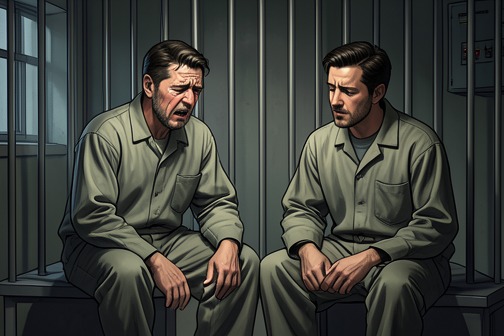
[Reinhold’s capture after Konrad’s tip](entity:event-recall-event-reinhold-s-capture-afte-13b6d080540a) is a chain of disclosures, recognition, and calculation rather than a planned police pursuit. [Konrad](entity:character-recall-character-a5d00e07bda5) lets [Reinhold](entity:character-recall-character-reinhold-0fde6be20b54)’s identity escape while boasting to a friend; the friend later confirms it against a police poster naming Reinhold in the [Freienwalde](entity:location-recall-location-a09319e94ffe) murder of [Emilie Parsunke](entity:character-recall-character-a27afabd06f3) and offering 1,000 marks. His report brings Reinhold back to [Berlin](entity:location-recall-location-berlin-54cb4a75d0f6), where he is held awaiting trial. The episode also turns Reinhold’s prison misery into a reversal: the visits and relationships that have repeatedly shaped his fortunes become part of the route to his downfall.
## The disclosure
The sequence begins with Konrad visiting Reinhold in [Brandenburg penitentiary](entity:location-recall-location-8fb916822257). Reinhold clings to him and tells him everything. Konrad listens, repeatedly affirming that he understands, until he knows the full story. The visit exposes Reinhold’s inability to bear confinement: he weeps with rage, desolation, and anger at his fate, while Konrad’s reassurance that four years is not long enough to comfort him. Reinhold feels trapped and cannot imagine enduring the sentence. His distress establishes the stakes of the later news: this is not merely the discovery of a wanted man, but the arrival of a fresh disaster in a life already narrowed by prison.
After the visit, Konrad goes to Berlin and receives a warm welcome from Reinhold’s girl. He spends days telling her what has happened and receives money from her. The narration then shifts to Konrad’s encounter in Seestrasse with a former reform-school acquaintance, now unemployed. Konrad boasts about how well off he is, pays for his companion at a pub, and goes with him and some girls to the cinema. Later, after the women have left, the two men remain together in the friend’s room into the early hours. In this atmosphere of showing off, Konrad reveals that Reinhold is wanted for a serious crime. He gives the name Moroskiewicz as well as Reinhold’s own name, and describes him as an unusually capable man outside prison. As soon as he has spoken, Konrad realizes his mistake. The friend promises to keep quiet, and accepts ten marks from him.
## The poster and the decision to inform
The promise does not hold. On Tuesday, the former schoolmate goes to [Berlin Police Headquarters](entity:location-recall-location-dd99c2da91df) and looks at the wanted posters. At first, he is unsure whether the man Konrad described is actually the person being sought, or whether Konrad had been exaggerating. The poster settles the question: it identifies Reinhold in connection with the murder of Emilie Parsunke in Freienwalde and advertises a reward of 1,000 marks. The name, the crime, and the sum transform a boast into information with a price attached.
The friend is overwhelmed by the size of the reward and sets off at once. He returns that afternoon with his girlfriend. She says she has met Konrad and that he had asked after the friend, raising the possibility that Konrad might discover who informed. But the friend’s unemployment and the reward weigh more heavily in their decision. His girlfriend argues that Reinhold is a murderer, that Konrad is unlikely to know who made the report, and that 1,000 marks is too much to dismiss while they are out of work. The scene makes the tip an act of self-interest under economic pressure: the reward is not an incidental detail but the decisive inducement that overcomes the promise of silence.
The friend goes inside and tells the inspector on duty what he knows: the name Moroskiewicz, the name Reinhold, and the connection to Brandenburg. He does not explain how he obtained the information. Because he has no identity papers, he and his girlfriend have to remain at the police headquarters for the time being. The report is therefore direct, but the source of the information stays concealed from the authorities in the moment. Konrad’s confidence has set the chain in motion; the poster and the reward complete it.
## Confirmation and return to Berlin
The consequences reach Konrad through a newspaper. On Saturday, he travels to Brandenburg to visit Reinhold, carrying various things from Reinhold’s girl and from [Pums](entity:character-recall-character-pums-e40b21f81618). In the train compartment he finds an old Thursday-evening edition of the Lokalanzeiger. Its front page reports that the Freienwalde murderer has been caught while living in prison under a false name. The newspaper’s date and headline make the capture public before Konrad can reach Reinhold. The rails continue to carry him toward the visit as he reads the news, while the report leaves him with the knowledge that his disclosure has helped bring this about.
The account compresses the transition into a blunt confirmation: Reinhold has been caught and taken back to Berlin, and Konrad recognizes his own part in it. The newspaper does more than confirm the result of the tip. It links the false name disclosed in conversation to the official identification and turns Konrad’s private indiscretion into an irreversible consequence. The narration supplies no account of the arrest itself; instead, the printed report, encountered on the journey to the prison, marks the distance between what Konrad intended to share and what has happened to Reinhold.
## Downfall and unresolved future
The aftermath gathers together the episode’s recurring connection between Reinhold’s relationships and his changing fortunes. The narration observes that women and love have brought him both good and bad luck throughout his life, and that in the end they have contributed to his downfall. His girl’s welcome and money belong to the immediate aftermath of the prison visit; Konrad’s access to Reinhold’s confidences and his later journey with gifts connect private ties to the events surrounding the capture. The decisive tip, however, comes from the unemployed acquaintance, who acts for the reward after consulting his girlfriend. The result is not presented as a single person’s deliberate design but as a sequence in which money, confidence, and personal connections converge.
Taken back to Berlin, Reinhold behaves like a raving lunatic. The authorities come close to placing him in the same institution where his former friend [Franz Biberkopf](entity:character-recall-character-franz-biberkopf-29eb7a5d3879) has been confined, but Reinhold eventually settles in [Moabit penitentiary](entity:location-recall-location-aa96988cb91d). He waits there to learn how his trial is progressing and what news may come from Buch from Franz Biberkopf, whom the narration describes as his accomplice or instigator. The capture thus closes the immediate question of where Reinhold is, but not what will become of him. His trial remains ahead, and the account leaves his future expressly unresolved.
Event 39
The trial and conviction of Reinhold
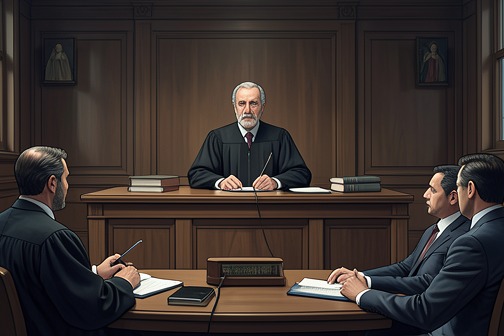
The trial of [Reinhold](entity:character-recall-character-reinhold-0fde6be20b54) is both a criminal proceeding and the final public reckoning with the violent entanglements surrounding [Mieze](entity:character-recall-character-mieze-07daf8e08629)’s death. [Franz Biberkopf](entity:character-recall-character-franz-biberkopf-29eb7a5d3879), once suspected of complicity and mentally ill after her murder, is not indicted: he appears instead as a one-armed witness whom the experts deem recovered and fit to be questioned. His testimony identifies Reinhold as Mieze’s killer, but the encounter between the two men exposes a more complicated bond than the courtroom can settle. The trial ends with Reinhold accepting a ten-year sentence for voluntary manslaughter and with Biberkopf’s grief breaking through his composure.
## The case and its public stakes
The proceedings concern the killing of [Emilie Parsunke](entity:character-recall-character-a27afabd06f3), whom Biberkopf calls Mieze, in [Freienwalde](entity:location-recall-location-a09319e94ffe) near [Berlin](entity:location-recall-location-berlin-54cb4a75d0f6) on [September 1, 1928](entity:time-recall-time-september-1-1928-5c56a83ef4e6). Reinhold is tried for the killing; [Karl the tinsmith](entity:character-recall-character-ed1bfb4ecb49), identified in the proceedings as Matter and as Oskar Fischer, is implicated in connection with it. The public attention extends beyond the charge itself. Biberkopf’s missing arm, his relationship with the murdered woman, his underworld connections, his mental illness after her death, and the suspicion that he had been an accomplice all make him a conspicuous figure at the trial. Yet the formal distinction is decisive: he is there to give evidence, not to stand accused.
The experts’ reports establish that Biberkopf has recovered sufficiently to be cross-examined. That finding places his former breakdown beside his present role as a witness without erasing either. The trial can ask him to account for what he knows, but his history and his visible disability also turn him into an object of public interest. The proceeding therefore brings the private catastrophe into a public, legal setting while leaving the inner history of the men only partly accessible.
## Biberkopf’s testimony
Biberkopf tells the court that Mieze had no affair with Reinhold and describes himself and Reinhold as good friends. He characterizes Reinhold as compulsively drawn to women and says that this disposition led to the killing. Asked whether Reinhold had sadistic tendencies, he says he does not know. He did not know Reinhold in his youth, either, and cannot supply a fuller account of that earlier life. The testimony distinguishes what Biberkopf asserts from what he can only infer: he suspects Mieze resisted Reinhold in Freienwalde and that Reinhold killed her in a fit of rage, but presents this as his explanation, not as something he witnessed.
Cross-examination also turns to Reinhold’s drinking. Biberkopf recalls that Reinhold did not used to drink, and that he once could not tolerate even a drop of beer, taking soft drinks and coffee instead. He does not know how much Reinhold drank after he began. The detail offers the court a fragment of change in Reinhold’s habits, but not a complete history or a conclusive explanation of the crime.
Once these answers have been given, Biberkopf says no more about Reinhold. He does not explain his own arm, the quarrel between them, or the fight that preceded their separation. The silence is conspicuous because these omissions concern precisely the history that might clarify the friendship he has just described. The evidence does not make that silence a legal defense or a reconciliation. Instead, it leaves the courtroom with Biberkopf’s testimony about Mieze and Reinhold, and with a personal conflict he refuses or is unable to unfold there.
## The men in the courtroom
Reinhold and Biberkopf meet each other’s gaze across the courtroom. Biberkopf shows no pity for Reinhold in the dock, whose life is now at stake, but the narrative registers a strange affection between them. The two responses coexist: Biberkopf can look steadily at the man connected to Mieze’s death and still retain an attachment to him. The scene does not turn their former friendship into forgiveness. Its force lies in the unresolved persistence of feeling alongside knowledge of the harm.
Reinhold, for his part, considers exposing the whole [Pums gang](entity:organization-recall-organization-pums-gang-e8036c9dc25b) if the trial goes badly, especially if Biberkopf speaks against him. Seeing members of the gang, [Eva](entity:character-recall-character-eva-a4f4507c5fab), and detectives in the public gallery makes him reconsider. He reasons that he will need friends after prison and sees Biberkopf’s decent conduct as a reason not to retaliate. His decision not to give evidence against the others is therefore bound up with self-interest and expectation of future loyalties, not simply with regard for Biberkopf. Biberkopf understands that Reinhold’s silence gives him no debt of gratitude. Their mutual restraint has unequal meanings: Reinhold weighs what may help him later, while Biberkopf neither presents the silence as a favor nor abandons his attachment.
## Verdict, grief, and aftermath
Reinhold receives ten years’ imprisonment for voluntary manslaughter. The judgment also describes him as alcoholic, compulsively disposed, and marked by a depraved youth; he accepts the sentence. The outcome is specific, but it does not resolve every question raised in the testimony. Biberkopf’s account of the killing remains partly conjectural, and the trial does not produce a fuller explanation of the rupture between the two men.
When the verdict is announced, Eva cries out and sobs. Her grief is for Mieze, and it breaks into the formal order of the courtroom. Biberkopf turns from the witness box toward her, crumples, and covers his forehead with his hand. The narrative’s reaper imagery returns at this moment, joining Mieze’s death to his sorrow and to the sense that she had protected him. His composure as a witness gives way not when he describes Reinhold, but when another person’s grief makes Mieze’s absence newly present.
Immediately after the trial, Biberkopf accepts an offer of part-time work as a doorman at a medium-sized factory. The brief account of this next step places ordinary employment after the public drama of the verdict; no further details of his life are supplied. The story identifies the trial as its climax, the turning point from which the preceding events can be seen in a new light. Its close therefore sets legal judgment beside unresolved attachment, bereavement, and a modest return to work, without claiming that the sentence has repaired what happened.
Event 40
Franz Biberkopf’s breakdown and transformation at Buch asylum
[Franz Biberkopf](entity:character-recall-character-franz-biberkopf-29eb7a5d3879)’s breakdown and transformation at [Buch Asylum](entity:organization-recall-organization-buch-asylum-c3625f7be8d8) is the novel’s symbolic death-and-rebirth sequence: after becoming almost entirely unresponsive in custody, he is transferred to the asylum’s secure ward, where medical intervention fails to reach him and an allegorical encounter with [Death](entity:character-recall-character-b309ce745d9e) recasts the crisis as a reckoning with his past. The episode ends not with a return to his former self but with his release as a weakened, altered man who can walk through [Berlin](entity:location-recall-location-berlin-54cb4a75d0f6) without the disorientation that marked his earlier return from prison.
## Transfer and confinement
After Franz is found rigid and unresponsive in police custody, a doctor examines him and he is taken to the hospital at [Moabit penitentiary](entity:location-recall-location-aa96988cb91d). There, too, the staff cannot get a response from him. When he refuses nourishment for two days, he is sent to Buch Asylum for observation. The transfer is presented as necessary both because his condition is severe and because the authorities need to determine what has happened to him.
At first, Franz is placed in an observation room. For weeks, his only clear signs of life are that he keeps his eyes shut, lies rigid, and repeatedly pulls off his shirt. Since he will not eat, staff feed him through a tube with a mixture of milk, egg, and a little brandy. He grows so weak that one orderly can carry him to the bath. He sometimes makes sounds there and opens his eyes, but staff cannot understand what he is trying to communicate. The contrast between his former physical strength and his helplessness makes the breakdown visible without making it legible to those around him.
The secure ward stands apart from the buildings for patients who have not committed crimes. It occupies exposed, level countryside, with few trees or shrubs between it and the weather. This separation gives Franz’s confinement both an institutional and a starkly physical setting: he is removed from ordinary life and placed in a ward defined by observation, restricted movement, and exposure to the changing conditions outside.
## Treatment and disputed diagnosis
Franz resists the doctors’ efforts to feed him. When the tube is used, he tries to vomit the food back up, turning treatment into a struggle over who can determine what happens to his body. Staff continue their interventions as he weakens: they speak to him, check his pulse, change his position, and give him injections, including caffeine, camphor, glucose, and salt. His resistance is not presented as evidence that he is merely pretending. Rather, the scene shows a patient whose reasons and condition remain inaccessible to the people attempting to manage him.
The doctors disagree, implicitly and explicitly, over how to explain his state. They agree that he is stuporous, but some of the younger doctors consider a psychological origin and hope that conversation might draw him out of his isolation. They try addressing him as if he can hear them, hoping to establish contact. When this approach fails, one trainee arranges electrical stimulation of his upper body and the area around his jaw and throat. The senior physician is skeptical of explanations that give the psyche too much power over physical illness. The episode therefore distinguishes what the doctors observe from what they infer: Franz’s immobility is plain, but its cause is contested, and the novel does not treat medical authority as a single, settled voice.
## The encounter with Death
Within the ward, the narration shifts from clinical observation to an allegorical confrontation. Death addresses Franz as someone who has spent his life trying to preserve himself rather than face what his experiences demand. The address recalls earlier crises: after [Otto Lüders](entity:character-recall-character-otto-l-ders-644db073991b) cheated him, Franz turned to drink and withdrew; when his arm was injured and his life was endangered, he fled rather than confront the possibility of death. The encounter thus connects the asylum crisis to a longer pattern of retreat and self-preservation, rather than presenting it as an isolated illness.
The vision takes the form of repeated blows and a struggle to move forward. Franz crawls toward a ladder and screams, while the scene’s relentless recurrence makes the destruction symbolic rather than a medical report. Piece by piece, the old Franz is imagined as being cut away, yet the body in the vision keeps moving and remains alive. Outside that inner experience, people at his bedside see none of the screaming: they check his reflexes and pulse and notice only that he has opened his mouth. The sharp division between the visible patient and the ordeal represented in the vision leaves the reader with two simultaneous accounts of his suffering.
Franz’s change also becomes a reckoning with responsibility. At one point he weeps from suffering and from recognition of what he himself has done. Later, as he receives images of Otto Lüders, [Reinhold](entity:character-recall-character-reinhold-0fde6be20b54), [Ida](entity:character-recall-character-ida-af62302a8868), and [Mieze](entity:character-recall-character-mieze-07daf8e08629), he identifies himself as guilty and as having acted like a brute and a monster. The figures are not interchangeable: they bring distinct injuries and relationships from his past into the room, making the crisis a confrontation with a history of harm as well as a fear of death.
## Mieze and the old Franz’s ending
At noon, Mieze appears to Franz as he remembers her from their meetings in the street and at the pub. She comes close when he asks, gives him both hands, and kisses him. He asks her to stay and help him, but she tells him she is dead and cannot remain. The encounter gives his grief a personal form: amid the institutional routines around him, Mieze’s appearance connects the transformation to the loss that has become central to his final crisis.
The novel calls the event the death of Franz Biberkopf, formerly a transport worker, burglar, pimp, and killer. This is not the announcement of a separate physical death followed by an ordinary recovery. Instead, the narrative marks the old Franz as finished and distinguishes him from the man who will rise from the bed. The difference is expressed through identity as well as condition: the new man bears the same identity papers and looks like Franz, but the narration says that he has another name in another world. The transformation is therefore neither a simple cure nor a restoration of the life he had before.
## Release and return to Berlin
When Franz begins to speak and focus his eyes, detectives and doctors question him for different reasons. The detectives want information about his past and about the case involving Mieze; the doctors want a diagnosis. He learns that Reinhold has been captured, but he does not immediately give the detectives an account of the past. The doctors eventually conclude that he was not feigning his condition: the earlier prospect of catatonia recedes, and they understand the crisis as psychological trauma followed by a coma-like state.
Asked about the earlier events in [Freienwalde](entity:location-recall-location-a09319e94ffe), Franz denies involvement and does not incriminate Reinhold. Producing an alibi is beyond him for several days; when he does speak, he offers only fragments and asks to be left alone. His silence preserves the old rule of loyalty to his accomplice even as his earlier self has been declared ended. The police continue investigating other parts of his history, including the injury to his arm, but the immediate episode concludes with Franz leaving the asylum rather than being drawn back into the old account of himself.
On discharge, he receives his belongings from storage. His jacket still bears blood from the earlier blow by a police truncheon; he declines the false arm and leaves the wig behind. The police warn that they will keep him under observation outside. At Stettiner Bahnhof, however, the buildings no longer seem to sway or threaten to collapse as they did when he first came back from [Tegel penitentiary](entity:location-recall-location-ab9b755596e5). Weak and moving slowly, he walks along Invalidenstrasse and Ackerstrasse toward Brunnenstrasse, past the yellow market hall, looking calmly at the shops, houses, and people. The ending joins vulnerability to a modest but decisive change: Franz is not restored to strength, but he can again inhabit the city without seeking refuge in its dark courtyards.
Event 41
Graf Zeppelin’s flight over Berlin
The [Graf Zeppelin’s flight over Berlin](entity:event-recall-event-graf-zeppelin-s-flight-92798dac6b03) is presented both as a major public spectacle and as the payoff to weeks of newspaper attention. The airship’s arrival is celebrated by crowds despite poor visibility, while the surrounding narrative sets this display of German aviation against a city marked by rain, construction, and [Franz Biberkopf](entity:character-recall-character-franz-biberkopf-29eb7a5d3879)’s search for [Reinhold](entity:character-recall-character-reinhold-0fde6be20b54).
## Publicity Before the Flight
Newspapers had devoted extensive coverage to the Graf Zeppelin and its forthcoming journey, discussing the airship’s construction, its commander, and the prospects of success. Leading articles praised German efficiency and the performance of Zeppelin airships, and argued that airships—notwithstanding publicity surrounding aeroplanes—represented the future of air travel.
That promotion was accompanied by a report that the airship was not flying anywhere because Eckener did not want to expose it to unnecessary risk. The later account of its passage over [Berlin](entity:location-recall-location-berlin-54cb4a75d0f6) reverses that expectation: the much-discussed enterprise proceeds, and its arrival makes the airship’s promise visible above the city.
## Route and Arrival
The flight begins at Friedrichshafen at 2:17 a.m. under a bright, starlit sky. To avoid the bad weather forecast for central Germany, the airship takes a route through Stuttgart, Darmstadt, Frankfurt am Main, Giessen, Kassel, and Rathenow. It passes over Nauen at 8:35 a.m. and Staaken at 8:45 a.m., then appears over Berlin shortly before nine.
Despite the rain, rooftops fill with eager spectators who greet the airship with cheers. It makes a loop over eastern and northern Berlin; at 9:45 a.m., the first landing rope is dropped in Staaken. The account gives the event the precision of a public timetable, turning a distant technological undertaking into a sequence of observable times and places.
## The City as Spectator
The flight enters a Berlin already represented through motion and disruption. At [Alexanderplatz](entity:location-recall-location-9ddde9cf858f), roads are being torn up for the underground railway, and trams cross the square while people navigate planks laid over the construction. Elsewhere, tram routes, fares, and passenger rules map the ordinary systems that carry residents through the city. Against that practical urban circulation, the airship becomes an exceptional spectacle: a machine watched from rooftops rather than encountered as part of a daily commute.
The contrast is sharpened by the November setting. Rain has replaced the summer sunshine associated with [Mieze](entity:character-recall-character-mieze-07daf8e08629)’s journey to [Freienwalde](entity:location-recall-location-a09319e94ffe), and Franz and [Herbert](entity:character-recall-character-fd178cb3f9a6) are away from home, searching for Reinhold. The Zeppelin’s passage does not resolve their pursuit; instead, its public visibility cuts across a private, unresolved hunt. The city can turn its attention upward and cheer while violence and loss continue within its streets.
## Significance in the Narrative
The episode’s montage joins technical reporting, patriotic publicity, urban infrastructure, and personal distress without making them parts of a single cause-and-effect plot. Before the flight, newspaper commentary presents the airship as evidence of national capability and a sign of aviation’s future. Over Berlin, that abstract promise becomes a real object above the rooftops, drawing a crowd even in bad weather.
Yet the scene offers no simple image of collective triumph. The cheering spectators belong to the same rainy city in which Franz and Herbert search for a man connected to Mieze’s death. By placing the Zeppelin’s carefully reported arrival beside this pursuit, the narrative lets public spectacle and private catastrophe occupy the same urban moment without pretending that one cancels the other.
Event 42
Battle of Kunersdorf
The [Battle of Kunersdorf](entity:event-recall-event-battle-of-kunersdorf-cc5564f56d1b) enters the book through a footnote’s cautious historical interpretation: an otherwise unidentified passage probably alludes ironically to Frederick the Great’s reaction to the losses he suffered there. The reference makes the battle a precedent for a ruler’s moment of apparent national catastrophe, while the footnote’s qualification leaves the connection suggestive rather than certain.
## Historical Context
The note places the battle during the Seven Years War and says Frederick suffered great losses. It associates that defeat with his declaration, “I do not wish to survive the fall of my country. Farewell forever.” The words frame the military setback as a crisis so severe that the survival of the state itself seemed in doubt.
## Allusion and Interpretation
The footnote describes the possible reference as ironic, not as a straightforward retelling of the battle or proof that the surrounding passage directly quotes Frederick. Its interpretation depends on the contrast between the historical ruler’s dire farewell and the book’s unidentified passage. The battle thus supplies a historical echo of defeat and threatened national collapse, but the note preserves uncertainty about how deliberately that echo is used.
Event 43
Baden Uprising
The [Baden Uprising](entity:event-recall-event-bb75cb11f9bb) was a failed revolutionary uprising in Baden in 1848–1849. The book identifies it through the [Heckerlied](entity:expression-recall-expression-heckerlied-dd49c4754cf4), a revolutionary song linked to the revolt, making the event present here through the political language that survived it rather than through a narrated account of its course.
## Historical Reference
The evidence establishes the uprising’s location, date range, and failure, but gives no account of its participants, causes, or military course. It therefore marks the event only in outline: a revolution in Baden that did not succeed.
## The Uprising in Revolutionary Song
A line in the Heckerlied is identified as coming from the revolutionary song associated with the failed uprising. The note also records that the song circulated in many variations. The event’s limited appearance thus carries a cultural afterlife: its association with the song persists, though the evidence does not specify how or when the different versions developed.
Event 44
Battle of Fehrbellin
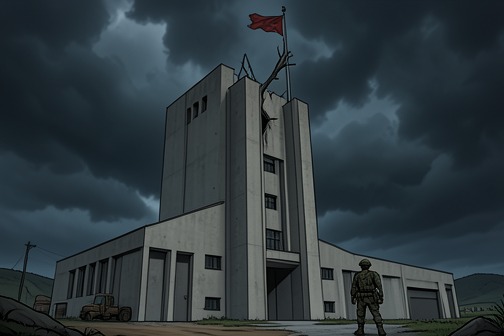
The [Battle of Fehrbellin](entity:event-recall-event-8b373ad1b30c) is invoked in connection with Heinrich von Kleist’s play Prinz Friedrich von Homburg, where the battle’s heroic associations become the foil for comic treatment of the ordinary. The novel’s reference presents the event not through a battle scene, but through the contrast between remembered military triumph and theatrical banality.
## Historical Reference
The accompanying note identifies Prinz Friedrich as the heroic victor of the Battle of Fehrbellin. It supplies no account of the battle’s course or consequences; its emphasis is on the victory’s place in the play’s heroic frame.
## Theatrical Reworking
The play’s tenth and eleventh scenes are described as a parody. The historical victory therefore functions as a point of contrast: the elevated register of the heroic is set against the banal, and the reference to Fehrbellin helps make that comic disparity legible.
## Narrative Significance
The battle reaches the reader indirectly, through an explanatory reference to a play and its parody rather than through narrated military action. Its significance here lies in that change of scale: a celebrated victory supplies the heroic backdrop against which ordinary, comic material is measured.
Event 45
Proclamation of the German Republic
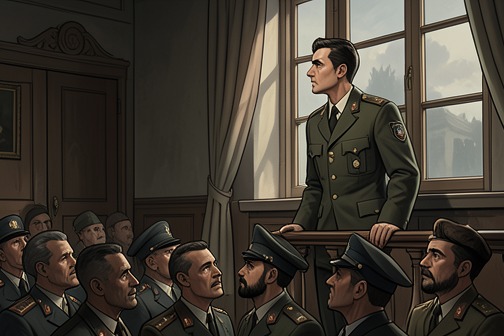
The [Proclamation of the German Republic](entity:event-recall-event-14ccb592c969) was Philipp Scheidemann’s public declaration from a window of the [Reichstag](entity:organization-recall-organization-e11b5fdd170b), made amid the collapse of the Kaiser’s rule and the possibility of revolution. Its significance lay both in announcing a new republican order and in the political calculation behind the announcement: Scheidemann acted to forestall a workers’ revolution led by communists under Karl Liebknecht.
## Political Background
Scheidemann was a member of the [Social Democratic Party of Germany](entity:organization-recall-organization-34d0c1f5380a). The proclamation came after Kaiser Wilhelm II’s abdication, when a workers’ revolution remained a possible outcome of the upheaval. The account presents this prospect not as a remote backdrop but as the immediate political pressure against which Scheidemann acted.
The declaration therefore marked a contest over what would follow the monarchy. By speaking before a possible communist-led revolution could determine the course of events, Scheidemann sought to establish a republic in advance of that alternative. The episode connects the founding of the new political order to an effort to contain revolutionary momentum.
## The Declaration
Scheidemann made his speech from a window of the Reichstag, the parliamentary building. The elevated, public setting gave the announcement a visible point of address: it was not merely a private response to the abdication, but a speech that heralded the beginning of the [Weimar Republic](entity:state-recall-state-weimar-republic-7b6ddce58a78).
The account identifies the speech’s political purpose as pre-emption. Its force thus rests on the conjunction of declaration and timing: Scheidemann announced a republic while a communist-led workers’ revolution was still possible. The proclamation named a new direction for Germany, while attempting to prevent that direction from being set by a rival revolutionary leadership.
## Political Aftermath and Significance
In 1919 Scheidemann became Chancellor. He resigned after a few months because he disagreed with the terms of the Treaty of Versailles. His brief tenure and resignation place the proclamation within a continuing struggle over the republic’s political course: the figure who had heralded its beginning later left office over the terms imposed on Germany after the war.
The episode is consequently both a founding announcement and an act of political intervention. It inaugurated the republic in public, but the stated motive also reveals the conflict shaping that beginning: the attempt to replace imperial rule while forestalling a more radical workers’ revolution.
Event 46
Murders of Karl Liebknecht and Rosa Luxemburg
The murders of Karl Liebknecht and Rosa Luxemburg enter the text through a note on the workers’ movement song “[Auf, auf zum Kampf](entity:expression-recall-expression-auf-auf-zum-kampf-551ee59fbe43).” The note says that the text quoted in the book was written by Berthold Brecht in 1919 in their honor, making the song a concise reference to the killings and their political memory rather than a narrated scene of violence.
## Reference Through Song
The event is identified by the note’s explanation of the song: it was written in 1919 to honor Karl Liebknecht and Rosa Luxemburg. This is the only supplied account of the murders themselves. The evidence does not describe their circumstances, identify perpetrators, or give a fuller chronology, so the event remains a historical reference rather than a developed episode in the narrative.
## Political Remembrance
The song’s connection to the murdered figures places their deaths within the book’s references to the workers’ movement. Its commemorative purpose is explicit, but the text does not supply further details about the song’s use or reception. The brief note thus preserves a specific link between political song and remembrance without expanding it into a separate account of the killings.
Event 47
Nungesser and Coli transatlantic flight disappearance
The [Nungesser and Coli transatlantic flight disappearance](entity:event-recall-event-08dd10cb46cd) was a failed 1927 attempt to fly nonstop from New York to Paris. French [First World War](entity:time-recall-time-first-world-war-440b2b40da3f) pilot Charles Nungesser and François Coli departed in the aircraft L’Oiseau Blanc, a Levasseur, one week before Lindbergh. Their aircraft crashed, turning a prize-backed bid for a landmark crossing into a disappearance whose circumstances the account does not further detail.
## The Prize and the Attempt
A New York hotelier had offered $25,000 for the first nonstop flight between New York and Paris. The prize made the crossing a contest with a sharply defined goal: reach the other city without stopping. Nungesser and Coli took off in 1927 to attempt it, positioning their flight in the same race that Lindbergh would soon win.
Nungesser was a flamboyant French fighter pilot from the First World War, born in 1892. The account identifies Coli as his companion on the attempt and names their aircraft as L’Oiseau Blanc, a Levasseur. These details place the disappearance within the period’s conspicuous pursuit of long-distance aviation records, while the account itself supplies no further information about Coli or the plane.
## Crash and Disappearance
Nungesser and Coli crashed after taking off, according to the historical note. It gives no crash site, precise timing, or account of what happened to either man afterward. The event is therefore presented as a disappearance rather than as a fully documented sequence of events; the available evidence does not establish additional circumstances or explicitly describe their fates.
## Historical Record
The episode appears in a numbered historical note associated with the book’s Eighth Book. In a few lines, the note joins the prize, the aircraft, the pilots, and the failed flight, setting their attempt beside Lindbergh’s without elaborating on the contrast. The compressed account preserves the central reversal: a highly publicized bid to connect two cities nonstop ended not in arrival but in a crash and an unresolved disappearance.
Event 48
Italia airship disaster
The [Italia airship disaster](entity:event-recall-event-b45b1194c8b1) is the historical catastrophe behind a cryptic statement in the novel: the airship crashed on ice at the North Pole on May 25, [1928](entity:time-recall-time-1928-fc81a0c15d2b), during Umberto Nobile’s series of flights around the pole. The allusion draws attention both to the accident and to the failed response to it.
## The Crash and Rescue Efforts
The airship’s crash left its crew in need of rescue. The account characterizes the attempts to save them as disastrous, negligent, and incompetent; the failure of the rescue effort is central to what the novel’s reference evokes, though the available account gives no further details about the crew’s fate or the operation’s course.
## The Allusion in the Novel
The event is identified through an explanatory note as the subject of Döblin’s cryptic statement. Its significance in the novel lies in the gap between the compressed allusion and the catastrophe it invokes: a crash on Arctic ice followed by rescue attempts described as failures of competence and care. The reference thus reaches beyond the airship’s fall to the human response that followed it.
Event 49
Kingsford Smith and Ulm’s flight to Australia
[Kingsford Smith and Ulm’s flight to Australia](entity:event-recall-event-4f581df3827b) was a long-distance journey completed on June 9, [1928](entity:time-recall-time-1928-fc81a0c15d2b). The book records it in an explanatory historical note, giving the route, aircraft, crew, and staged timings rather than narrating the flight as a scene in the main story.
## Route and Timing
The four-person party covered 7,316 miles from the United States to Australia, traveling by way of Hawaii and Fiji. They left San Francisco on May 31. The first leg to Honolulu took 27 hours; they continued to Fiji on June 3, arriving after a further 34 hours. The final leg to Australia lasted 21 hours, completing the journey on June 9.
## Aircraft and Crew
The flight was made in a Fokker F.VIIb-3m. Charles Kingsford Smith and Charles Ulm were accompanied by James Warner, the radio operator, and Harry Lyon, the navigator. The note presents the journey as a coordinated undertaking, identifying the crew’s roles alongside the aircraft and route.
## Place in the Book
The event appears in an endnote as historical context, with precise dates and flight durations. Its compressed itinerary gives the reader a factual record of the journey: successive ocean-crossing legs, separated by named stops, culminating in arrival in Australia. The book does not develop the flight into a character episode or describe its reception; its significance here lies in the concise chronology and particulars preserved by the note.
Event 50
Primo de Rivera coup
The [Primo de Rivera coup](entity:event-recall-event-9d105c0340ef) was a military takeover in Barcelona on September 13, 1923, led by Captain General Miguel Primo de Rivera. It overthrew the government and began a dictatorship justified as a temporary remedy for political and economic disorder. The account places the coup within a longer crisis of authority: Primo de Rivera eventually lost the support of the king and army, resigned in 1930, and the monarchy gave way to the [Second Spanish Republic](entity:time-recall-time-69755e3c897f) in 1931.
## The Coup and Its Justification
On September 13, 1923, Miguel Primo de Rivera headed a military coup in Barcelona and overthrew the government. He presented his intervention as a means of overcoming political and economic problems, abolishing corruption, and restoring order. He claimed that democratic rule would return once those aims had been achieved. The account records that much of the public supported him, indicating that his seizure of power was accompanied by popular approval as well as military action.
King Alfonso named Primo de Rivera prime minister. The appointment gave the new ruler royal backing, even as the coup had displaced the existing government. The stated promise of restored democracy thus framed the dictatorship as provisional, though the supplied account does not describe how that promise was put into practice.
## Economic Crisis and Loss of Support
By the end of the [1920s](entity:time-recall-time-1920s-24ba8b2198dc), the economic boom in Spain had ended as the [Great Depression](entity:time-recall-time-ce283107ccf3) was beginning. In 1929 a poor harvest and rampant inflation compounded the downturn. Government spending on public works projects was blamed by many for worsening conditions. These pressures form the economic setting for the account of Primo de Rivera’s declining support, though they are not presented as the sole cause of his fall.
Primo de Rivera lost the support of both the king and the army. On January 28, 1930, he resigned. The contrast with the coup’s founding promise is marked: a regime established in the name of restoring order ended after its political and military backing had ebbed.
## Aftermath and Historical Frame
The collapse of Primo de Rivera’s rule preceded a wider change in Spain’s political order. The king subsequently lost the army’s support and abdicated on April 14, 1931; the Second Spanish Republic followed. The account presents these developments as part of the coup’s historical aftermath, while distinguishing the dictator’s resignation from the monarchy’s later fall.
The retrospective note extends the chronology beyond the establishment of the republic. Two years after the king’s abdication, Primo de Rivera’s eldest son, José Antonio, founded the [Spanish Falange](entity:organization-recall-organization-5d7042eb202a). When the [Spanish Civil War](entity:event-recall-event-49f09e853580) began in July 1936, both of Primo de Rivera’s sons were imprisoned and executed; the Nationalists led by Franco won the war and established a fascist regime. These later events do not constitute the coup itself, but place it within the political history that followed.
Event 51
Primo de Rivera’s resignation

[Primo de Rivera’s resignation](entity:event-recall-event-5b5d03a047cf) on January 28, 1930, marked the collapse of a dictatorship established through a military coup and weakened by economic decline and the withdrawal of royal and military backing. The episode links a promise to restore democratic rule to the failure of the regime to retain the support on which its authority depended.
## Coup and Promise of Restoration
On September 13, 1923, Captain General Miguel Primo de Rivera led a military coup in Barcelona, overthrew the government, and established himself as dictator. He presented the dictatorship as a temporary response to political and economic problems, corruption, and disorder, claiming that democratic rule would be restored once those problems had been overcome. Much of the public supported him, and King Alfonso appointed him prime minister.
That initial support gave the regime a basis for claiming public legitimacy, but its promise of a return to democracy remained conditional on its success in restoring order and resolving the country's problems. The later loss of support from both the king and the army exposed the fragility of that arrangement.
## Economic Decline and Loss of Support
By the end of the [1920s](entity:time-recall-time-1920s-24ba8b2198dc), the economic boom in Spain had ended as the [Great Depression](entity:time-recall-time-ce283107ccf3) began. The account identifies a poor harvest in 1929 and rampant inflation as features of the downturn. Many blamed government spending on public-works projects for worsening economic conditions.
The evidence connects this deteriorating climate with Primo de Rivera's political isolation: he lost the support of the king and the army before resigning. It does not describe a single decisive confrontation or a specific act that directly forced his departure; instead, it presents the resignation as the endpoint of a regime whose political backing had eroded amid economic trouble.
## Resignation and Aftermath
Primo de Rivera resigned on January 28, 1930. His departure did not restore the monarchy's stability. The king subsequently lost the support of the army and abdicated on April 14, 1931; the [Second Spanish Republic](entity:time-recall-time-69755e3c897f) followed.
The historical note also traces later developments in Primo de Rivera's family and Spain's politics: two years after the abdication, his eldest son, José Antonio, founded the Falange. Both of Primo de Rivera's sons were imprisoned and executed when the [Spanish Civil War](entity:event-recall-event-49f09e853580) began in July 1936, and Franco's Nationalists won the war and established a fascist regime. These later events extend the note's political chronology beyond the resignation itself; they are not presented as consequences directly caused by it.
Event 52
Establishment of the Second Spanish Republic
The establishment of the [Second Spanish Republic](entity:time-recall-time-69755e3c897f) is presented as the political outcome of the collapse of Primo de Rivera’s dictatorship and the abdication of King Alfonso. In the historical account, it follows a sequence of lost support and failed claims to restore order, rather than appearing as a separately described public ceremony.
## Background and Political Crisis
Primo de Rivera led a military coup in Barcelona on September 13, 1923, overthrowing the government and establishing himself as dictator. He claimed that he would restore democratic rule after overcoming political and economic problems, abolishing corruption, and restoring order. Much of the public supported him, and King Alfonso appointed him prime minister.
By the end of the [1920s](entity:time-recall-time-1920s-24ba8b2198dc), the economic boom in Spain was ending as the [Great Depression](entity:time-recall-time-ce283107ccf3) began. A poor harvest in 1929 and rampant inflation worsened the downturn; many blamed government spending on public works. Primo de Rivera lost the support of both the king and the army, undermining the authority on which his rule depended.
## From Dictatorship to Republic
Primo de Rivera resigned on January 28, 1930. The account then traces the weakening of the monarchy: King Alfonso subsequently lost the army’s support and abdicated on April 14, 1931. The Second Republic followed. The sequence links its establishment to the breakdown of the dictatorship and the monarchy, without specifying the details of a proclamation or the institutional arrangements that followed.
## Historical Significance
The event marks a change of regime within a compressed chronology: a coup justified as a temporary route back to democracy gave way to dictatorship, and the dictator’s resignation did not restore the monarchy’s stability. The account identifies the Republic’s emergence as the consequence of that wider political loss of support, while leaving the act of establishment itself undescribed.
Event 53
Spanish Civil War
The [Spanish Civil War](entity:event-recall-event-49f09e853580), which began in July 1936, appears in the book’s historical notes as a turning point in Spain’s political history: the conflict ended with victory for Franco’s Nationalists and the establishment of a fascist regime.
## Background and Outbreak
The note places the war after the end of the [Second Spanish Republic](entity:time-recall-time-69755e3c897f) and the founding of the Falange by José Antonio, the eldest son of Miguel Primo de Rivera. It reports that both of Primo de Rivera’s sons were imprisoned and executed when the war began, connecting the family’s political history to the conflict’s outbreak.
## Outcome
The Nationalists, led by Franco, won the war and established a fascist regime. The note thus presents the conflict not only as a civil war but also as the route to a decisive change in Spain’s government.
Event 54
Second Battle of the Aisne on the Chemin des Dames
The [Second Battle of the Aisne on the Chemin des Dames](entity:event-recall-event-cb7dd169419f) is the 1917 [First World War](entity:time-recall-time-first-world-war-440b2b40da3f) battle identified by the novel’s explanatory notes as the historical reference behind an allusion to the Chemin des Dames. Its scale is conveyed through casualty figures: 40,000 French losses on the first day alone, and hundreds of thousands of French and German casualties by the battle’s end.
## Setting and Identification
The battle took place along the Chemin des Dames ridge, north of Paris. The notes place it among three First World War battles fought along that ridge, distinguishing the 1917 [Second Battle of the Aisne](entity:action-recall-action-second-battle-of-the-a-d513058daa99) as the specific historical event meant by the reference.
## Casualties and Scale
The notes report 40,000 French casualties on the first day. By the end of the battle, the toll had reached 271,000 French casualties and 163,000 German casualties. The contrast between the first day’s losses and the final totals gives the allusion its weight: the battle’s violence was not confined to a single catastrophic opening, but accumulated on a vast scale.
## Reference in the Novel
The battle appears here through explanatory notes rather than through a narrated combat scene. The note identifies the historical referent and supplies its casualty figures, anchoring the Chemin des Dames allusion in the First World War’s human cost. The available account does not describe the battle’s tactics or individual participants; its emphasis is the ridge, the year, and the scale of loss.
Event 55
Battle of Langemarck (1914)
The [Battle of Langemarck (1914)](entity:event-recall-event-1914-7317c2016181) was fought near Ypres during October and November 1914. In the novel’s historical notes, it anchors Langemarck in the [First World War](entity:time-recall-time-first-world-war-440b2b40da3f)’s early fighting and is carefully distinguished from the later events that made the place a site of chemical warfare and renewed battle.
## Fighting near Ypres
The note identifies heavy fighting at Langemarck during October and November 1914. It does not specify the course or outcome of the 1914 fighting; its emphasis is on locating the battle in the wider chronology of the war.
## Langemarck after 1914
Langemarck’s wartime history continued beyond the 1914 battle. In April 1915, the Germans first used poison gas there, and Langemarck fell to them after that attack. The Allies used gas at Loos five months later. These events belong to the following year, not to the Battle of Langemarck (1914).
## Recapture in 1917
The note records that British forces recaptured Langemarck on 16 August 1917, after the [Third Battle of Ypres](entity:event-recall-event-2238bc5a96dc). This later change of control completes the brief chronology: fighting in 1914, the first gas attack and German capture in 1915, and British recapture in 1917. Keeping these episodes distinct prevents the battle’s name from collapsing several separate wartime events into one.
Event 56
Third Battle of Ypres
The [Third Battle of Ypres](entity:event-recall-event-2238bc5a96dc), also known as the Battle of Passchendaele, appears in an endnote as the conflict associated with the British recapture of Langemarck in 1917. The reference places the battle within a longer chronology of fighting around Ypres and the [First World War](entity:time-recall-time-first-world-war-440b2b40da3f)’s use of poison gas, but gives no account of the battle’s course or casualties.
## Historical Context
The endnote locates Langemarck near Ypres, where heavy fighting took place in October and November 1914. It adds that German forces first used poison gas there in April 1915, and that the Allies followed with gas at Loos five months later. These details establish a sequence of battles and changing methods of warfare in the region before the 1917 events.
## Langemarck and the 1917 Battle
According to the note, Langemarck fell to German forces after the first gas attack in April 1915. British forces recaptured it on August 16, 1917, in the chronology associated with the Third Battle of Ypres. The reference thus identifies the place not through a description of combat, but through a reversal of control set against the broader battle.
## Narrative Reference
The battle is mentioned in an explanatory historical note rather than staged as an episode in the novel’s action. Its brief appearance links the place-name Langemarck to a wider wartime history, while the note’s chronology supplies the specific connection: the British recapture of the town in 1917. No further details about the battle itself are provided.
Event 57
Hindenburg’s round-the-world flight
The round-the-world flight is recorded as a historical reference, not shown as an unfolding scene. The book’s factual note connects the first flight around the world to Dr. Hugo Eckener and the Graf Zeppelin, providing a precise point of reference without describing the voyage itself.
## Historical Identification
The note identifies Dr. Hugo Eckener as an airship designer and pilot who lived from 1868 to 1954. It also names him as company manager of Luftschiffbau Zeppelin between the First and Second World Wars, situating his aviation work within the company’s history.
## Eckener and the Graf Zeppelin
Eckener commanded the Graf Zeppelin for most of its flights, including the first flight around the world. The reference thus associates the achievement with both the airship and the person whose design, managerial, and piloting roles are recorded together; it gives no itinerary, date, or account of the flight’s progress.
## Narrative Placement
The event enters the book through a numbered factual note rather than through the plot’s street-level scenes. That compact form makes the flight a documented historical point of reference, while leaving its circumstances and experience outside the account presented here.
Event 58
Nazi seizure of power
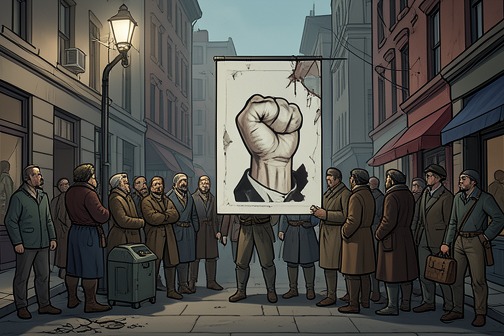
The [Nazi seizure of power](entity:event-recall-event-1ee0278982e5) is named in a historical note as the endpoint of the New Objectivity movement, placing the political event within a compressed account of cultural change. The evidence dates the movement’s end to 1933, alongside the fall of the [Weimar Republic](entity:state-recall-state-weimar-republic-7b6ddce58a78), but does not describe how the Nazis took power or narrate the event as a scene.
## Historical and Cultural Context
The note identifies New Objectivity as an art movement that arose in Germany in the early [1920s](entity:time-recall-time-1920s-24ba8b2198dc) in opposition to Expressionism. Its brief chronology ends in 1933, when the Weimar Republic fell and the Nazis rose to power. The political event therefore functions as more than a date: it marks the close of the cultural period described in the note.
## Place in the Narrative
The event appears in explanatory material rather than in the novel’s dramatized action. Elsewhere, the book presents urban life through fragments of entertainment, street commerce, transport information, and public works; the note supplies a historical frame for this social world without claiming that those everyday scenes directly depict the seizure of power.
## Scope of the Account
The reference establishes a date and a consequence for cultural history, but offers no account of the takeover’s participants, methods, or immediate political aftermath. Its emphasis is the rupture: a movement that began in the early 1920s is said to have ended with the fall of the Weimar Republic and the rise of the Nazis in 1933.